咖啡品种学
- 研究对象
- 咖啡属(Coffea)植物品种
- 主要栽培种
- 阿拉比卡(C. arabica)、罗布斯塔(C. canephora)
- 核心议题
- 分类鉴定、遗传多样性、抗病育种、风味关联
- 常用手段
- 形态学标记、分子标记(SSR、SNP)、基因组测序
- 关联领域
- 植物分类学、遗传育种学、咖啡农学
咖啡品种学是研究咖啡属(Coffea)植物品种分类、遗传特性与选育的细分领域,关注栽培品种的鉴定、亲缘关系与农艺性状。11Coffee: Botany, Biochemistry and Production of Beans and Beveragelink.springer.com前往参考资料 ↓在新标签页中打开
学科定位与研究范畴
与植物分类学的关系
咖啡品种学在学科定位上通常被视为植物分类学(尤其是栽培植物分类学)与作物育种学之间的交叉领域:它借用植物分类学的命名法规、等级体系和模式标本制度来界定「种」与「品种」,又借用育种学的系谱与性状描述框架来区分栽培材料。44International Code of Nomenclature for algae, fungi, and plants (Shenzhen Code)iapt-taxon.org前往参考资料 ↓在新标签页中打开|11Coffee: Botany, Biochemistry and Production of Beans and Beveragelink.springer.com前往参考资料 ↓在新标签页中打开
栽培植物分类与野生植物分类遵循不同的命名规则:野生分类群受《国际藻类、真菌和植物命名法规》(ICN)约束,而栽培品种的命名受《国际栽培植物命名法规》(ICNCP)约束,品种加词不进入双名法体系。咖啡品种学中「种—变种—品种」的层级划分因此需要同时对接这两套规则。55International Code of Nomenclature for Cultivated Plants (9th edition)ishs.org前往参考资料 ↓在新标签页中打开|44International Code of Nomenclature for algae, fungi, and plants (Shenzhen Code)iapt-taxon.org前往参考资料 ↓在新标签页中打开
在咖啡属内部,分类学处理长期存在「大种」与「小种」两种取向:一种把咖啡属压缩为少数几个高度多态的种,另一种把大量形态变异提升为独立种,导致历史上发表的咖啡属种名数量在不同处理下差异很大。这种分类学上的不稳定直接传导到品种学对「栽培种」边界的界定。66The Genus Coffea L. (Rubiaceae) in Africa: a taxonomic revisionkew.org前往参考资料 ↓在新标签页中打开|77A phylogenetic study of Coffea and Psilanthus (Rubiaceae) based on nuclear and plastid DNA sequencesbsapubs.onlinelibrary.wiley.com前往参考资料 ↓在新标签页中打开
咖啡品种学所处理的「品种」在分类学上多数属于栽培品种(cultivar),而非自然分类单元;阿拉比卡下的铁皮卡、波旁等名称是按栽培植物命名法规登记的品种名,其分类地位与咖啡属下的野生种不在同一层级。55International Code of Nomenclature for Cultivated Plants (9th edition)ishs.org前往参考资料 ↓在新标签页中打开|88Coffee: Genetic Resources, Chromosome Engineering, and Crop Improvementtaylorfrancis.com前往参考资料 ↓在新标签页中打开
分子系统学的发展使咖啡属的分类修订越来越多地依据DNA序列与群体遗传结构,而非仅凭形态性状;这使品种学与分类学的接口从「形态描述比对」转向「遗传标记比对」,品种鉴定也随之引入分子标记手段。77A phylogenetic study of Coffea and Psilanthus (Rubiaceae) based on nuclear and plastid DNA sequencesbsapubs.onlinelibrary.wiley.com前往参考资料 ↓在新标签页中打开|99Genetic diversity of Coffea arabica L. and related species assessed by molecular markerslink.springer.com前往参考资料 ↓在新标签页中打开
植物分类学为咖啡品种学提供的是可复核的命名与模式体系,而品种学反过来为分类学提供栽培起源、系谱与选择历史的信息;两者在栽培咖啡这类高度人工干预的类群上互为输入,不能简单视为「基础学科—应用学科」的单向关系。11Coffee: Botany, Biochemistry and Production of Beans and Beveragelink.springer.com前往参考资料 ↓在新标签页中打开|88Coffee: Genetic Resources, Chromosome Engineering, and Crop Improvementtaylorfrancis.com前往参考资料 ↓在新标签页中打开
咖啡属的种级分类长期缺乏统一处理,不同学者给出的种数从约数十种到上百种不等,这一分歧至今未在学界形成共识,直接影响品种学中「种」这一层级的可比性。66The Genus Coffea L. (Rubiaceae) in Africa: a taxonomic revisionkew.org前往参考资料 ↓在新标签页中打开|77A phylogenetic study of Coffea and Psilanthus (Rubiaceae) based on nuclear and plastid DNA sequencesbsapubs.onlinelibrary.wiley.com前往参考资料 ↓在新标签页中打开
与咖啡农学、育种学的交叉
咖啡品种学(coffee variety science)在学科定位上属于应用植物学与作物学的交叉分支,其研究对象是咖啡属(Coffea)栽培种及其种下分类单元(品种、变种、杂交种、品系)的遗传身份、谱系关系与农艺表现;它既不是纯粹的植物分类学,也不等同于咖啡加工或感官科学。11Coffee: Botany, Biochemistry and Production of Beans and Beveragelink.springer.com前往参考资料 ↓在新标签页中打开|1010Coffee: Growing, Processing, Sustainable Productionwiley.com前往参考资料 ↓在新标签页中打开
咖啡品种学与咖啡农学(agronomy)的交叉首先体现在农艺性状的评价框架上:品种的产量潜力、树型与冠层结构、成熟期一致性、适宜海拔与遮荫响应等,都必须在农学试验(品比试验、区域试验)中测定,品种审定与推广建议因此以农艺数据为依据。1111Breeding coffee (Coffea arabica) for improved yield and qualitylink.springer.com前往参考资料 ↓在新标签页中打开|1212Genotype × environment interaction and stability of coffee varietiescambridge.org前往参考资料 ↓在新标签页中打开
在养分与栽培管理层面,品种学与农学共享同一套田间试验方法:品种对氮肥的响应、根系分布与养分利用效率的差异,会改变施肥推荐,因此品种推荐常与特定栽培管理方案捆绑给出。1313Coffee nutrition and fertilizer recommendationsipni.net前往参考资料 ↓在新标签页中打开
咖啡品种学与育种学的交叉最为直接:品种谱系本身就是育种历史的产物。阿拉比卡(Coffea arabica)主要栽培品种可追溯到铁皮卡(Typica)与波旁(Bourbon)两大基系,以及后续由自然突变、单株选择与人工杂交产生的卡杜拉(Caturra)、卡杜阿伊(Catuai)、帕卡玛拉(Pacamara)等,品种鉴定实质上是在重建育种谱系。1414The genetic diversity of Coffea arabica and its cultivated varietieslink.springer.com前往参考资料 ↓在新标签页中打开|1515Coffee genetic resources and breedingonlinelibrary.wiley.com前往参考资料 ↓在新标签页中打开
抗病育种是品种学与育种学交叉的典型场域:20 世纪后半叶以来,针对咖啡叶锈病(Hemileia vastatrix)的抗性育种大量利用帝汶杂交种(Timor Hybrid,阿拉比卡与罗布斯塔的天然杂交后代)作为抗源,由此产生的卡蒂姆(Catimor)、萨奇姆(Sarchimor)系列品种在多个产国推广,品种学必须同时记录其抗性来源与遗传背景。1616Resistance to coffee leaf rust (Hemileia vastatrix) in Coffea arabicabsppjournals.onlinelibrary.wiley.com前往参考资料 ↓在新标签页中打开|1717Timor Hybrid and the origin of rust-resistant coffee cultivarslink.springer.com前往参考资料 ↓在新标签页中打开
品种鉴定方法的选择也体现交叉:传统的形态学与农艺性状描述(如叶片、果实、树型、成熟期)仍是品种登记的基础,而分子标记(SSR、SNP)被用于验证谱系、区分近缘品种和检测种间渐渗,两者在育种与品种管理流程中并用。1818Molecular markers for coffee variety identificationlink.springer.com前往参考资料 ↓在新标签页中打开|1919Genetic relationships among Coffea arabica cultivars revealed by SSR markerslink.springer.com前往参考资料 ↓在新标签页中打开
在种质资源层面,品种学与育种学共同依赖种质库与田间收集圃:对阿拉比卡野生居群与地方品种的收集、保存和评价,是抗逆、抗病与品质育种的材料基础,品种学在此承担遗传身份记录与多样性描述的职能。2020The coffee genetic resources of Ethiopialink.springer.com前往参考资料 ↓在新标签页中打开
品种与风味品质的关联研究同样需要农学与育种学的联合设计:同一品种在不同海拔、不同处理法下的杯测表现差异显著,因此品种对风味的贡献必须在控制农艺与环境变量的试验中评估,而不能仅凭商业样本推断。2121The effect of genotype and environment on coffee cup qualitysciencedirect.com前往参考资料 ↓在新标签页中打开|2222Coffee quality: a review of the factors affecting cup qualityonlinelibrary.wiley.com前往参考资料 ↓在新标签页中打开
在育种技术前沿,品种学与分子育种、基因组选择的交叉正在加深:阿拉比卡参考基因组的公布以及 GWAS、基因组选择等方法的引入,使品种身份、抗性位点与品质性状的关联可以在基因组层面描述,品种学因此需要吸收分子遗传学的证据体系。2323The Coffea arabica genome provides insight into the evolution and domestication of coffeescience.org前往参考资料 ↓在新标签页中打开|2424Genomic selection in coffee breedingfrontiersin.org前往参考资料 ↓在新标签页中打开
咖啡属的分类与主要栽培种
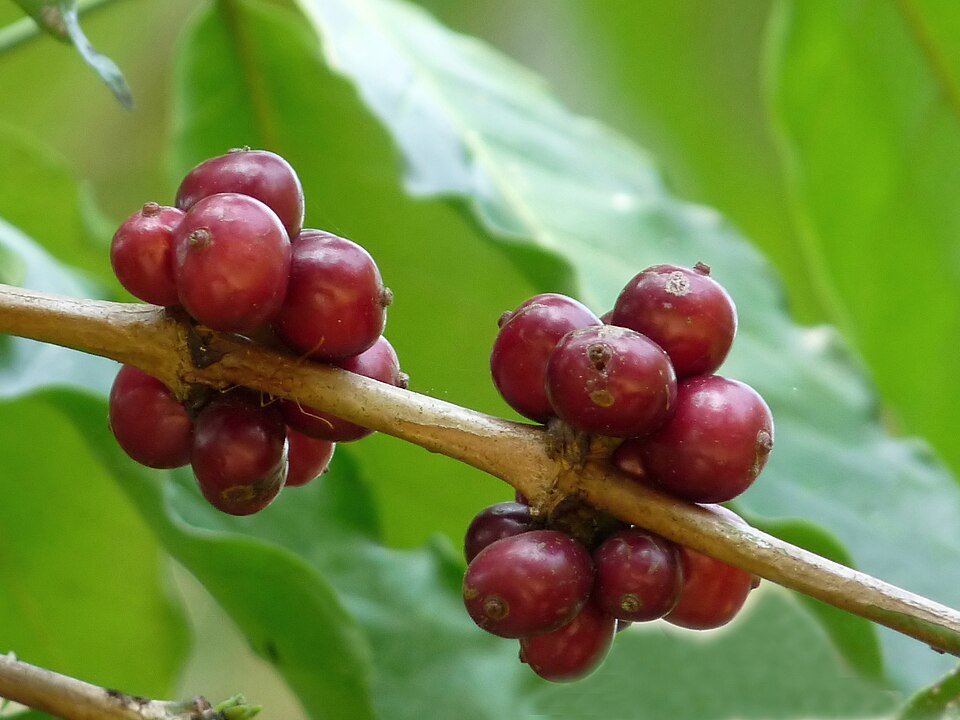
咖啡属的种级多样性
咖啡属(Coffea)在种级分类上长期存在大幅度的名称膨胀:历史上被描述为咖啡属的种名超过一百个,但其中大量是同物异名或基于少量标本的过度拆分,被广泛接受的种数远少于此。2626Coffea (Rubiaceae) — World Flora Online species treatmentworldfloraonline.org前往参考资料 ↓在新标签页中打开|11Coffee: Botany, Biochemistry and Production of Beans and Beveragelink.springer.com前往参考资料 ↓在新标签页中打开
目前被多数分类学者接受的咖啡属种数在100种以上、约120至130种之间,且随着野外调查与分子系统学研究仍在增加;不同作者给出的具体数字并不一致,这一差异主要来自种级界限的宽严标准不同,而非对属级范围有分歧。2626Coffea (Rubiaceae) — World Flora Online species treatmentworldfloraonline.org前往参考资料 ↓在新标签页中打开|11Coffee: Botany, Biochemistry and Production of Beans and Beveragelink.springer.com前往参考资料 ↓在新标签页中打开|2727The wild coffee species of Africa: conservation status and prioritieskew.org前往参考资料 ↓在新标签页中打开
咖啡属在植物分类上属于茜草科(Rubiaceae),茜草科是被子植物中的大科之一,咖啡属是其中唯一因种子含咖啡因而被大规模经济栽培的属。2626Coffea (Rubiaceae) — World Flora Online species treatmentworldfloraonline.org前往参考资料 ↓在新标签页中打开|2828Coffea — Plants of the World Online taxon pagepowo.science.kew.org前往参考资料 ↓在新标签页中打开
咖啡属的自然分布中心在热带非洲,包括马达加斯加与马斯克林群岛;印度洋岛屿与澳大拉西亚也有少数原生种,而中南美洲与亚洲的咖啡种群均为近代引种传播的结果,不存在原生咖啡属物种。2626Coffea (Rubiaceae) — World Flora Online species treatmentworldfloraonline.org前往参考资料 ↓在新标签页中打开|11Coffee: Botany, Biochemistry and Production of Beans and Beveragelink.springer.com前往参考资料 ↓在新标签页中打开
咖啡属物种在形态上高度多样:既有数米高的乔木,也有灌木;叶对生、全缘,花腋生、白色或淡色,果实为核果(即通常所说的咖啡樱桃),通常含两粒种子,部分物种可单粒(圆豆)。2626Coffea (Rubiaceae) — World Flora Online species treatmentworldfloraonline.org前往参考资料 ↓在新标签页中打开|2828Coffea — Plants of the World Online taxon pagepowo.science.kew.org前往参考资料 ↓在新标签页中打开
在栽培上具有实际经济意义的咖啡属物种数量很少,全球商品咖啡几乎全部来自阿拉比卡(Coffea arabica)与罗布斯塔(Coffea canephora)两个种,其余物种多为地方性采集、种质资源或育种材料。11Coffee: Botany, Biochemistry and Production of Beans and Beveragelink.springer.com前往参考资料 ↓在新标签页中打开|2929Coffee: Growing, Processing, Sustainable Productiononlinelibrary.wiley.com前往参考资料 ↓在新标签页中打开
利比里卡(Coffea liberica)是第三个曾被规模化栽培的物种,19世纪末至20世纪初曾在西非与东南亚形成商业种植,后因品质与抗性管理问题大幅退缩,如今仅在部分产地(如菲律宾、马来西亚、西非)保留小规模生产。11Coffee: Botany, Biochemistry and Production of Beans and Beveragelink.springer.com前往参考资料 ↓在新标签页中打开|2929Coffee: Growing, Processing, Sustainable Productiononlinelibrary.wiley.com前往参考资料 ↓在新标签页中打开
罗布斯塔(Coffea canephora)是异花授粉的二倍体物种,自交不亲和,天然群体内遗传变异丰富;这与自花授粉的阿拉比卡形成鲜明对比,也是两者在育种策略上必须区别对待的根本原因。11Coffee: Botany, Biochemistry and Production of Beans and Beveragelink.springer.com前往参考资料 ↓在新标签页中打开|2929Coffee: Growing, Processing, Sustainable Productiononlinelibrary.wiley.com前往参考资料 ↓在新标签页中打开|22The coffee genome provides insight into the convergent evolution of caffeine biosynthesisscience.org前往参考资料 ↓在新标签页中打开
阿拉比卡(Coffea arabica)是四倍体(异源四倍体)物种,染色体数2n=44,而咖啡属多数其他物种为二倍体、2n=22;阿拉比卡的起源涉及两个二倍体祖先种的杂交与染色体加倍。22The coffee genome provides insight into the convergent evolution of caffeine biosynthesisscience.org前往参考资料 ↓在新标签页中打开|3030Genetic diversity of Coffea arabica and its wild relativeslink.springer.com前往参考资料 ↓在新标签页中打开
分子系统学研究把咖啡属划分为若干支系,其中与阿拉比卡亲缘较近的包括分布于东非的Coffea eugenioides等二倍体物种;阿拉比卡的形成与东非裂谷地区的咖啡属多样性中心相关。22The coffee genome provides insight into the convergent evolution of caffeine biosynthesisscience.org前往参考资料 ↓在新标签页中打开|3030Genetic diversity of Coffea arabica and its wild relativeslink.springer.com前往参考资料 ↓在新标签页中打开
狭叶咖啡(Coffea stenophylla)是西非原生的物种,19世纪末曾在塞拉利昂一带被采集出口,后因产量与加工问题被放弃;近年因其杯测品质接近阿拉比卡且耐高温,重新受到种质研究与产业界关注。3131Ensuring the future of coffee: conserving wild coffee specieskew.org前往参考资料 ↓在新标签页中打开
Coffea charrieriana 是2008年描述于喀麦隆的物种,因种子不含咖啡因(或咖啡因含量极低)而被报道,被视为咖啡因生物合成研究中的天然对照材料。3232Coffea charrieriana (Rubiaceae), a new caffeine-free coffee species from Cameroonacademic.oup.com前往参考资料 ↓在新标签页中打开
阿拉比卡与罗布斯塔的区分特征
咖啡属(Coffea)的染色体基数为 X=11;阿拉比卡种(Coffea arabica L.)为 2n=44,属异源四倍体,而包括罗布斯塔(C. canephora)在内的其余咖啡属物种通常为 2n=22 的二倍体。3434咖啡的种类和品种_中国咖啡网w.gafei.com前往参考资料 ↓在新标签页中打开|3535你知道吗?区分阿拉比卡咖啡和罗布斯塔不能单纯以豆中线和豆型看_中国咖啡网w.gafei.com前往参考资料 ↓在新标签页中打开
阿拉比卡与罗布斯塔在染色体数目上的差异(44 对 22)常被引作两者难以杂交、遗传背景彼此隔离的依据;这一倍数性差异是区分两个栽培种最根本的细胞学特征。3434咖啡的种类和品种_中国咖啡网w.gafei.com前往参考资料 ↓在新标签页中打开|3535你知道吗?区分阿拉比卡咖啡和罗布斯塔不能单纯以豆中线和豆型看_中国咖啡网w.gafei.com前往参考资料 ↓在新标签页中打开
在形态上,阿拉比卡(小粒种)植株较矮小,通常高 4—5 米,分枝细长(约 0.7—0.85 米),叶片小而尖、呈长椭圆形、质地较硬、叶面革质、叶缘波纹细而明显;顶芽嫩叶呈绿色或古铜色,故有“绿顶咖啡”与“红顶咖啡”之分。3434咖啡的种类和品种_中国咖啡网w.gafei.com前往参考资料 ↓在新标签页中打开
阿拉比卡种单节结果数一般为 12—20 个,多者可达 25 个以上;果实较小、果肉较甜、种皮较厚且易与种子分离;鲜果与干豆比约为 4.5—5∶1,种子较轻,每公斤干豆约 4000—5000 粒。3434咖啡的种类和品种_中国咖啡网w.gafei.com前往参考资料 ↓在新标签页中打开
阿拉比卡较耐寒、耐旱,适合种植在海拔较高(约 1300—1900 米)的倾斜坡地,但一般品种易感叶锈病并易受天牛危害;其自然寿命可达约 100 年,经济寿命约 25 年。3434咖啡的种类和品种_中国咖啡网w.gafei.com前往参考资料 ↓在新标签页中打开|3333咖啡|食農教育資訊整合平臺fae.moa.gov.tw前往参考资料 ↓在新标签页中打开
罗布斯塔(中粒种,C. canephora)容易种植与采收,适合种在低海拔地区;其香气较差、苦味较强、酸味不足,饮用品质通常被认为不及阿拉比卡。3333咖啡|食農教育資訊整合平臺fae.moa.gov.tw前往参考资料 ↓在新标签页中打开
关于阿拉比卡与罗布斯塔在世界总产量中的占比,不同来源给出的数字并不一致:有资料称阿拉比卡约占 60%、罗布斯塔约占 40%,也有资料称阿拉比卡约占 70%、罗布斯塔约占 30% 左右。3333咖啡|食農教育資訊整合平臺fae.moa.gov.tw前往参考资料 ↓在新标签页中打开|3535你知道吗?区分阿拉比卡咖啡和罗布斯塔不能单纯以豆中线和豆型看_中国咖啡网w.gafei.com前往参考资料 ↓在新标签页中打开
其他次要栽培种(利比里卡等)
咖啡属(Coffea)在植物分类学上隶属茜草科(Rubiaceae),该属已描述的物种数量超过一百个,但具有商业栽培规模的仅占极小部分。11Coffee: Botany, Biochemistry and Production of Beans and Beveragelink.springer.com前往参考资料 ↓在新标签页中打开|3636The Genus Coffea: A Taxonomic and Genetic Reviewacademic.oup.com前往参考资料 ↓在新标签页中打开
商业咖啡生产长期高度集中于两个物种:阿拉比卡(Coffea arabica)与罗布斯塔(Coffea canephora,常被称为中粒种)。二者合计占全球咖啡产量的绝大部分,其余物种的产量份额通常被估计在百分之一量级。11Coffee: Botany, Biochemistry and Production of Beans and Beveragelink.springer.com前往参考资料 ↓在新标签页中打开|22The coffee genome provides insight into the convergent evolution of caffeine biosynthesisscience.org前往参考资料 ↓在新标签页中打开
利比里卡(Coffea liberica)是第三个曾被大规模栽培的物种,原产于西非(利比里亚一带),植株比阿拉比卡和罗布斯塔更为高大,叶片与果实也明显更大,果实成熟时果皮常呈红色或黄绿色。3636The Genus Coffea: A Taxonomic and Genetic Reviewacademic.oup.com前往参考资料 ↓在新标签页中打开|3737Liberica Coffee: A Review of Its History, Botany and Potentialpubs.acs.org前往参考资料 ↓在新标签页中打开
利比里卡在19世纪末至20世纪初曾因叶锈病摧毁亚洲阿拉比卡种植园而被短暂推广,但因其风味评价普遍低于阿拉比卡、且对加工与采收条件要求较高,随后在大多数产区被罗布斯塔取代,如今仅在少数国家(如菲律宾、马来西亚、印度尼西亚部分地区及西非部分国家)保留有规模有限的商业化种植。3737Liberica Coffee: A Review of Its History, Botany and Potentialpubs.acs.org前往参考资料 ↓在新标签页中打开|3838Philippine Coffee: Industry Profile and Varietal Diversityphilcoffeeboard.com前往参考资料 ↓在新标签页中打开
菲律宾是利比里卡商业化利用较为突出的国家,当地将利比里卡及其近缘类型细分为多个地方栽培类型(如 Barako 等),并形成了具有地域特色的消费市场。3838Philippine Coffee: Industry Profile and Varietal Diversityphilcoffeeboard.com前往参考资料 ↓在新标签页中打开
埃塞尔萨咖啡(Coffea excelsa)在分类史上曾被作为独立物种描述,后被多数分类学者归并入利比里卡(Coffea liberica)或其变种,这一归并处理在部分文献中仍存在不同意见。3636The Genus Coffea: A Taxonomic and Genetic Reviewacademic.oup.com前往参考资料 ↓在新标签页中打开|3939World Checklist of Selected Plant Families: Coffeawcsp.science.kew.org前往参考资料 ↓在新标签页中打开
狭叶咖啡(Coffea stenophylla)原产于西非,历史上曾在上几内亚一带被栽培,其风味品质被部分研究描述为接近阿拉比卡,且具备较好的耐热潜力,因而近年重新受到育种与种质资源研究的关注。4040Coffea stenophylla: A Heat-Tolerant Coffee Species with Arabica-like Flavournature.com前往参考资料 ↓在新标签页中打开|4141Genetic Diversity and Conservation of Coffee Genetic Resourcesfao.org前往参考资料 ↓在新标签页中打开
罗布斯塔(Coffea canephora)在分类上包含两个主要的遗传群——圭亚那群(Guinean)与刚果群(Congolese),商业栽培品种多源自刚果群,这一群体结构已被分子标记研究反复证实。22The coffee genome provides insight into the convergent evolution of caffeine biosynthesisscience.org前往参考资料 ↓在新标签页中打开|1818Molecular markers for coffee variety identificationlink.springer.com前往参考资料 ↓在新标签页中打开
阿拉比卡的起源与遗传背景
异源四倍体起源
栽培咖啡的主要物种阿拉比卡(Coffea arabica)是异源四倍体(allotetraploid),由两个二倍体祖先种——狭叶咖啡(Coffea eugenioides)与中粒咖啡(Coffea canephora,即罗布斯塔)——杂交后经染色体加倍形成,其基因组因此包含分别来自两个亲本的两个亚基因组。4242The genome and population genomics of allopolyploid Coffea arabica reveal the diversification history of modern coffee cultivarsnature.com前往参考资料 ↓在新标签页中打开
2024年发表的染色体级别基因组组装显示,阿拉比卡与其两个二倍体亲本之间基因组结构高度保守,二倍体亲本与衍生亚基因组之间没有明显的全局性亚基因组优势(subgenome dominance),即两个亚基因组在整体表达与结构上并未呈现一方系统性压制另一方的格局。4242The genome and population genomics of allopolyploid Coffea arabica reveal the diversification history of modern coffee cultivarsnature.com前往参考资料 ↓在新标签页中打开
基于基因组数据推断,阿拉比卡的起源性多倍化事件发生在约35万至61万年前,这一时间尺度远早于人类驯化咖啡的历史,说明异源四倍体化是一个自然发生的史前事件。4242The genome and population genomics of allopolyploid Coffea arabica reveal the diversification history of modern coffee cultivarsnature.com前往参考资料 ↓在新标签页中打开
在起源性多倍化事件之后、驯化开始之前,阿拉比卡还经历了若干次种群瓶颈,导致其遗传变异水平狭窄;现代栽培品种的遗传基础因此相当有限。4242The genome and population genomics of allopolyploid Coffea arabica reveal the diversification history of modern coffee cultivarsnature.com前往参考资料 ↓在新标签页中打开
遗传瓶颈与多样性狭窄
栽培的阿拉比卡(Coffea arabica)是异源四倍体,由两个二倍体亲本种 Coffea eugenioides 与 Coffea canephora(罗布斯塔)杂交形成,其基因组中保留了两个亲本种各自的亚基因组。4242The genome and population genomics of allopolyploid Coffea arabica reveal the diversification history of modern coffee cultivarsnature.com前往参考资料 ↓在新标签页中打开
基于染色体级别基因组组装与群体基因组分析,阿拉比卡的起源可追溯至约 35 万至 61 万年前的一次奠基性多倍化事件,即两个二倍体亲本种杂交并加倍形成异源四倍体的时间窗口。4242The genome and population genomics of allopolyploid Coffea arabica reveal the diversification history of modern coffee cultivarsnature.com前往参考资料 ↓在新标签页中打开
在栽培驯化之前,阿拉比卡已经历了数次群体瓶颈,这些瓶颈叠加在奠基性多倍化事件之上,共同造成其遗传变异狭窄的格局;换言之,栽培品种的遗传基础狭窄并非单纯由近代育种造成,而有其深层的种群历史根源。4242The genome and population genomics of allopolyploid Coffea arabica reveal the diversification history of modern coffee cultivarsnature.com前往参考资料 ↓在新标签页中打开
阿拉比卡与其二倍体亲本在基因组结构上高度保守,亲本二倍体与后代亚基因组之间未表现出明显的全局性亚基因组优势,说明异源四倍化之后并未发生大规模的亚基因组结构重塑。4242The genome and population genomics of allopolyploid Coffea arabica reveal the diversification history of modern coffee cultivarsnature.com前往参考资料 ↓在新标签页中打开
埃塞俄比亚原生群体
阿拉比卡(Coffea arabica)的原生分布区位于埃塞俄比亚,该国境内保存着该物种在其自然生境中的完整原生群体;埃塞俄比亚原生群体因此被视为阿拉比卡种质资源的主体库。4343Deciphering Early Movements and Domestication of <i>Coffea arabica</i> through a Comprehensive Genetic Diversity Study Covering Ethiopia and Yemenagris.fao.org前往参考资料 ↓在新标签页中打开
2022年发表的一项覆盖埃塞俄比亚全境原生生境与也门、埃塞俄比亚哈勒尔(Hararghe)两大驯化中心的遗传多样性研究,共分析了555份样本,采用一套简单序列重复(SSR)标记进行基因分型。4343Deciphering Early Movements and Domestication of <i>Coffea arabica</i> through a Comprehensive Genetic Diversity Study Covering Ethiopia and Yemenagris.fao.org前往参考资料 ↓在新标签页中打开
该研究通过混合 ancestry(admixture)遗传分析,在全部样本中识别出六个遗传簇(cluster)。4343Deciphering Early Movements and Domestication of <i>Coffea arabica</i> through a Comprehensive Genetic Diversity Study Covering Ethiopia and Yemenagris.fao.org前往参考资料 ↓在新标签页中打开
在识别出的六个遗传簇中,有两个被称为“核心埃塞俄比亚”(Core Ethiopian)的簇并未参与阿拉比卡的驯化过程,即其遗传成分未进入也门与哈勒尔等驯化中心的栽培群体。4343Deciphering Early Movements and Domestication of <i>Coffea arabica</i> through a Comprehensive Genetic Diversity Study Covering Ethiopia and Yemenagris.fao.org前往参考资料 ↓在新标签页中打开
其余四个遗传簇则与阿拉比卡的驯化相关,构成从埃塞俄比亚原生群体经驯化中心向外传播的遗传基础。4343Deciphering Early Movements and Domestication of <i>Coffea arabica</i> through a Comprehensive Genetic Diversity Study Covering Ethiopia and Yemenagris.fao.org前往参考资料 ↓在新标签页中打开
主要栽培品种谱系

铁皮卡与波旁系
铁皮卡(Typica)被广泛视为阿拉比卡咖啡中最古老的人工栽培品种之一,现今中南美洲许多阿拉比卡品种的谱系都可追溯至铁皮卡。4444阿拉比卡咖啡豆有哪些_中国咖啡网w.gafei.com前往参考资料 ↓在新标签页中打开|4545精品咖啡学 精品咖啡种类介绍_中国咖啡网w.gafei.com前往参考资料 ↓在新标签页中打开|4646FoodTalks全球食品资讯网foodtalks.cn前往参考资料 ↓在新标签页中打开
铁皮卡的典型植物学特征包括顶叶呈古铜色、豆粒较大且呈尖椭圆形或瘦尖状;其树体体质较弱、抗病力差、易感咖啡叶锈病,且单株产果量偏低。4444阿拉比卡咖啡豆有哪些_中国咖啡网w.gafei.com前往参考资料 ↓在新标签页中打开|4545精品咖啡学 精品咖啡种类介绍_中国咖啡网w.gafei.com前往参考资料 ↓在新标签页中打开
牙买加蓝山、苏门答腊曼特宁、夏威夷可纳等知名产区咖啡,在品种谱系上均属于铁皮卡或其衍生品系。4444阿拉比卡咖啡豆有哪些_中国咖啡网w.gafei.com前往参考资料 ↓在新标签页中打开|4545精品咖啡学 精品咖啡种类介绍_中国咖啡网w.gafei.com前往参考资料 ↓在新标签页中打开
波旁(Bourbon)是与铁皮卡并列的古老优良品种;一种主流观点认为波旁是早期铁皮卡移植到也门后产生的变种,豆形由瘦尖变为圆身。4444阿拉比卡咖啡豆有哪些_中国咖啡网w.gafei.com前往参考资料 ↓在新标签页中打开|4545精品咖啡学 精品咖啡种类介绍_中国咖啡网w.gafei.com前往参考资料 ↓在新标签页中打开
波旁于1715年由法国人从也门摩卡移植到非洲东岸的波旁岛(今留尼旺岛),此后才以「波旁」为名;圆身波旁豆于1727年前后辗转传入巴西和中南美洲。4545精品咖啡学 精品咖啡种类介绍_中国咖啡网w.gafei.com前往参考资料 ↓在新标签页中打开
波旁几乎全为圆身豆,豆粒比铁皮卡略小,成熟期较晚,但产量比铁皮卡高约30%;其对咖啡叶锈病的抵抗力优于铁皮卡,风味表现不逊甚至更优。4444阿拉比卡咖啡豆有哪些_中国咖啡网w.gafei.com前往参考资料 ↓在新标签页中打开
波旁适合种植在海拔1200米以上的区域,其风味表现明显优于海拔1000米以下所产;但波旁存在明显的大小年结果习性,结果一年后需休养一年。4444阿拉比卡咖啡豆有哪些_中国咖啡网w.gafei.com前往参考资料 ↓在新标签页中打开
1810年波旁岛的圆身波旁突变为尖身豆,即著名的「尖身波旁」(Bourbon Pointu),其咖啡因含量约为普通波旁的一半,但产量少、体质弱,极为稀有。4444阿拉比卡咖啡豆有哪些_中国咖啡网w.gafei.com前往参考资料 ↓在新标签页中打开|4545精品咖啡学 精品咖啡种类介绍_中国咖啡网w.gafei.com前往参考资料 ↓在新标签页中打开
卡杜拉、卡图艾等突变与杂交种
卡图艾(Catuaí)是巴西坎皮纳斯农艺研究所(IAC,材料中写作 ICA)于 1949 年以蒙多诺沃(Mundo Novo)与黄卡杜拉(Yellow Caturra)杂交选育而成的品种。4747详细咖啡品种和各个咖啡种属之间是关系介绍_中国咖啡网w.gafei.com前往参考资料 ↓在新标签页中打开
卡杜拉(Caturra)是波旁(Bourbon)的单基因矮化突变,其矮生性状使种植密度可以提高,在拉丁美洲的中小农场被广泛采用;卡图艾则是把这一矮生性状与蒙多诺沃的株型与产量结合起来的杂交后代。4747详细咖啡品种和各个咖啡种属之间是关系介绍_中国咖啡网w.gafei.com前往参考资料 ↓在新标签页中打开
卡蒂姆(Catimor)是 1959 年在葡萄牙以帝汶杂交种(Híbrido de Timor,含罗布斯塔血统、因而抗咖啡叶锈病)与卡杜拉杂交,其后代于 1970 年代引入巴西的品种群。4747详细咖啡品种和各个咖啡种属之间是关系介绍_中国咖啡网w.gafei.com前往参考资料 ↓在新标签页中打开
卡蒂瓜(Catiguá)由米纳斯吉拉斯州农业研究公司(EPAMIG)在 20 世纪 80 年代以卡图艾与帝汶杂交种杂交育成。4747详细咖啡品种和各个咖啡种属之间是关系介绍_中国咖啡网w.gafei.com前往参考资料 ↓在新标签页中打开
阿卡伊亚(Acaiá)是主要在巴西发现的蒙多诺沃罕见突变,属于蒙多诺沃谱系内的自然变异。4747详细咖啡品种和各个咖啡种属之间是关系介绍_中国咖啡网w.gafei.com前往参考资料 ↓在新标签页中打开
卡斯蒂略(Castillo)由哥伦比亚国家咖啡研究中心(Cenicafé)在哥伦比亚品种基础上改良育成,目前是哥伦比亚种植面积最大的品种。4747详细咖啡品种和各个咖啡种属之间是关系介绍_中国咖啡网w.gafei.com前往参考资料 ↓在新标签页中打开
Anacafé 14 是危地马拉国家咖啡协会(Anacafé)于 2014 年进一步开发并发布的卡蒂姆—帕卡马拉(Catimor-Pacamara)自然杂交种,被认为兼具抗锈病与高杯测品质。4747详细咖啡品种和各个咖啡种属之间是关系介绍_中国咖啡网w.gafei.com前往参考资料 ↓在新标签页中打开
安栋沙里(Andong Sari)是从哥伦比亚传入印度尼西亚的卡蒂姆衍生品系,由卡蒂姆与卡杜拉、帝汶杂交种(HDT)杂交而来。4747详细咖啡品种和各个咖啡种属之间是关系介绍_中国咖啡网w.gafei.com前往参考资料 ↓在新标签页中打开
卡蒂姆等种间杂交品种
卡蒂姆(Catimor)是20世纪50年代末由葡萄牙热带科学研究院(IICT,前身为Junta de Investigações do Ultramar)在里斯本培育的种间杂交品种群,其亲本组合为卡杜拉(Caturra,阿拉比卡种内自然矮化突变)与蒂姆(Timor Hybrid,阿拉比卡与罗布斯塔的天然种间杂种)。4848Breeding for resistance to coffee leaf rust: The history of the Timor Hybrid and its derivativeslink.springer.com前往参考资料 ↓在新标签页中打开|11Coffee: Botany, Biochemistry and Production of Beans and Beveragelink.springer.com前往参考资料 ↓在新标签页中打开
卡蒂姆的育种目标是把蒂姆杂交种携带的、来自罗布斯塔的咖啡叶锈病(Hemileia vastatrix)抗性导入高产矮化的阿拉比卡栽培品种中,从而在保持阿拉比卡形态与杯测品质的同时获得抗锈能力。4848Breeding for resistance to coffee leaf rust: The history of the Timor Hybrid and its derivativeslink.springer.com前往参考资料 ↓在新标签页中打开|4949The Coffee Guide: Coffee varieties and their characteristicsintracen.org前往参考资料 ↓在新标签页中打开
卡蒂姆并非单一品种,而是一个由多个F代选系构成的品种群;不同国家与机构从同一杂交组合中选出的品系在抗性谱、株型和产量上差异明显,常见的有巴西的Catimor 129、IAC 144、IAC 15,以及哥伦比亚、哥斯达黎加等国选出的多个品系。11Coffee: Botany, Biochemistry and Production of Beans and Beveragelink.springer.com前往参考资料 ↓在新标签页中打开|5050Catimor coffee variety: origin, characteristics and cultivationperfectdailygrind.com前往参考资料 ↓在新标签页中打开
蒂姆杂交种(Timor Hybrid)是1927—1928年前后在葡属帝汶岛发现的天然种间杂种,其染色体数为2n=44,介于阿拉比卡(2n=44,但为异源四倍体)与罗布斯塔(2n=22)之间,被广泛用作阿拉比卡抗锈育种的抗源。4848Breeding for resistance to coffee leaf rust: The history of the Timor Hybrid and its derivativeslink.springer.com前往参考资料 ↓在新标签页中打开
卡蒂姆在20世纪70—80年代被引入巴西、哥伦比亚、哥斯达黎加、印度尼西亚、越南等国,其中越南的卡蒂姆(常与罗布斯塔杂交或作为阿拉比卡主栽品种)成为该国阿拉比卡咖啡的主要栽培品种之一,也是越南咖啡产量快速扩张的品种基础之一。5050Catimor coffee variety: origin, characteristics and cultivationperfectdailygrind.com前往参考资料 ↓在新标签页中打开|5151Vietnam coffee production and the role of Catimor in the country's arabica expansionfas.usda.gov前往参考资料 ↓在新标签页中打开
卡蒂姆的杯测品质通常被认为低于传统阿拉比卡品种(如波旁、铁皮卡、卡杜拉),常带有木质、谷物或略带罗布斯塔特征的缺陷风味,但品质表现受海拔、处理法与选系影响很大,高海拔精细处理的卡蒂姆可以进入精品咖啡行列。4949The Coffee Guide: Coffee varieties and their characteristicsintracen.org前往参考资料 ↓在新标签页中打开|5252Sensory quality of Catimor and other coffee varieties: a reviewonlinelibrary.wiley.com前往参考资料 ↓在新标签页中打开
对立说法部分研究指出,在相同海拔与处理条件下,卡蒂姆与卡杜拉的杯测品质差异并不显著,卡蒂姆的负面风味印象更多来自低海拔粗放栽培与罗布斯塔混种,而非品种本身的遗传背景。56
卡蒂姆对咖啡叶锈病的抗性并非永久有效:随着新的锈病菌生理小种(如小种II、III等)出现,部分卡蒂姆品系在田间表现出抗性被克服(即抗性丧失)的现象,这也是后续ICCRI、CIFC等机构继续选育新抗性品种(如Sarchimor系列、Ruiru 11等)的原因之一。5353Coffee leaf rust resistance breakdown and breeding for durable resistancebsppjournals.onlinelibrary.wiley.com前往参考资料 ↓在新标签页中打开
与卡蒂姆并列的另一大种间杂交品种群是Sarchimor系列,其亲本组合为Villa Sarchi(阿拉比卡)与蒂姆杂交种,由葡萄牙CIFC与哥斯达黎加等机构培育,代表品种包括哥斯达黎加的Tupi、Obatã等。11Coffee: Botany, Biochemistry and Production of Beans and Beveragelink.springer.com前往参考资料 ↓在新标签页中打开
ICCRI(印度尼西亚咖啡与可可研究所)选育的卡蒂姆品系(如Kartika、Andungsari 1等)在印度尼西亚广泛种植,其中部分品系被登记为正式品种并具有明确的抗锈性评价数据。5353Coffee leaf rust resistance breakdown and breeding for durable resistancebsppjournals.onlinelibrary.wiley.com前往参考资料 ↓在新标签页中打开|5454Kartika and Andungsari 1: Indonesian Catimor varieties released by ICCRIiccri.net前往参考资料 ↓在新标签页中打开
品种鉴定与分类方法
形态学与农艺性状鉴定
形态学鉴定是咖啡品种鉴定中最基础、成本最低的方法,主要依据植株的树形、分枝习性、叶片形状与大小、叶缘与叶尖特征、果实形状与成熟色、种子(生豆)的形状与大小等营养器官和生殖器官的外部性状进行区分。11Coffee: Botany, Biochemistry and Production of Beans and Beveragelink.springer.com前往参考资料 ↓在新标签页中打开
在咖啡属内,阿拉比卡(Coffea arabica)与罗布斯塔(C. canephora)在形态上存在若干稳定差异:阿拉比卡多为四倍体、叶片较小且薄、叶缘波状、果实成熟时多呈红色;罗布斯塔为二倍体、叶片较大且厚、叶脉明显、果实成熟时多呈红色但亦有黄色类型,且树势更强健。11Coffee: Botany, Biochemistry and Production of Beans and Beveragelink.springer.com前往参考资料 ↓在新标签页中打开|5555The Coffee Plant and Beans: An Introductionintechopen.com前往参考资料 ↓在新标签页中打开
农艺性状鉴定关注的是与生产直接相关的性状,包括树势强弱、分枝角度与分枝密度、节间长度、始花期与成熟期、单株产量、果实大小与均匀度、种子(生豆)百粒重或千粒重、抗寒性表现等,这些性状在品种比较试验和区域试验中是品种描述与区分的重要依据。11Coffee: Botany, Biochemistry and Production of Beans and Beveragelink.springer.com前往参考资料 ↓在新标签页中打开|5656Descriptors for Coffee (Coffea spp. and Psilanthus spp.)bioversityinternational.org前往参考资料 ↓在新标签页中打开
国际植物遗传资源研究所(IPGRI,现 Bioversity International)于 1996 年发布的《咖啡描述符》(Descriptors for Coffee, Coffea spp. and Psilanthus spp.)系统列出了咖啡种质资源鉴定的形态学与农艺性状描述符,包括植株、叶片、果实、种子等部位的观测项目和记录标准,是咖啡形态学鉴定中被广泛引用的规范性文件。5656Descriptors for Coffee (Coffea spp. and Psilanthus spp.)bioversityinternational.org前往参考资料 ↓在新标签页中打开
形态学与农艺性状鉴定存在明显局限:许多性状受环境条件(海拔、光照、温度、土壤、栽培管理)影响较大,同一品种在不同环境下可能表现不同;部分性状在品种间差异细微、连续性变异强,仅凭肉眼或简单测量难以稳定区分;且鉴定周期长,需要植株进入结果期才能观察果实和种子性状。11Coffee: Botany, Biochemistry and Production of Beans and Beveragelink.springer.com前往参考资料 ↓在新标签页中打开|5656Descriptors for Coffee (Coffea spp. and Psilanthus spp.)bioversityinternational.org前往参考资料 ↓在新标签页中打开
由于形态学鉴定受环境与发育阶段限制,现代咖啡品种鉴定通常将形态学与农艺性状观察同分子标记(如 SSR、SNP)、生化标记(如咖啡因含量、绿原酸含量)以及染色体倍性鉴定等方法结合使用,形态学性状主要承担初步筛选和表型描述的功能。5555The Coffee Plant and Beans: An Introductionintechopen.com前往参考资料 ↓在新标签页中打开|5656Descriptors for Coffee (Coffea spp. and Psilanthus spp.)bioversityinternational.org前往参考资料 ↓在新标签页中打开
在阿拉比卡栽培品种的形态区分中,铁皮卡(Typica)通常表现为树形较高、枝条与主干夹角较大、叶片较宽、果实较大且成熟较晚;波旁(Bourbon)则树形较紧凑、枝条与主干夹角较小、叶片较小、果实较小且成熟较早,这些形态差异常被用于田间品种的初步辨识。11Coffee: Botany, Biochemistry and Production of Beans and Beveragelink.springer.com前往参考资料 ↓在新标签页中打开|2929Coffee: Growing, Processing, Sustainable Productiononlinelibrary.wiley.com前往参考资料 ↓在新标签页中打开
咖啡品种的形态学鉴定通常需要设置品种比较试验或观测圃,在相同栽培条件下对参试材料进行统一观测,以减少环境误差;观测项目需按照描述符标准分级记录,并对果实成熟期、单株产量等性状进行多年重复观测。5656Descriptors for Coffee (Coffea spp. and Psilanthus spp.)bioversityinternational.org前往参考资料 ↓在新标签页中打开|5656Descriptors for Coffee (Coffea spp. and Psilanthus spp.)bioversityinternational.org前往参考资料 ↓在新标签页中打开
分子标记(SSR、SNP)与基因组工具
简单序列重复(SSR,又称微卫星)标记是咖啡品种鉴定中应用最广的一类共显性分子标记,其核心优势是多态性高、重复性好、可通过毛细管电泳或琼脂糖凝胶分型,且能在二倍体与四倍体材料间直接比较。5757Genetic diversity and molecular characterization of coffee (Coffea spp.) using microsatellite markerslink.springer.com前往参考资料 ↓在新标签页中打开|5858Microsatellite markers for coffee: development, transferability and use in diversity analysislink.springer.com前往参考资料 ↓在新标签页中打开
单核苷酸多态性(SNP)标记在咖啡中已通过简化基因组测序(如 GBS、RAD-seq)和靶向捕获芯片大规模开发;由于 SNP 在基因组中密度高、易于高通量分型,其单次检测的位点数通常远高于 SSR 面板,适合区分亲缘关系很近的栽培品种。5959Genotyping-by-sequencing (GBS) in coffee: SNP discovery and genotypingjournals.plos.org前往参考资料 ↓在新标签页中打开|6060Genomic selection in coffee: current status and prospectsfrontiersin.org前往参考资料 ↓在新标签页中打开
在阿拉比卡(Coffea arabica)中,由于栽培种遗传背景狭窄、品种间差异小,SSR 面板的位点数不足时会出现品种无法区分的情况;因此实际鉴定中常需要将 SSR 与 SNP 或表型数据联合使用。5858Microsatellite markers for coffee: development, transferability and use in diversity analysislink.springer.com前往参考资料 ↓在新标签页中打开|6161Genetic differentiation of Arabica coffee cultivars revealed by SSR and SNP markerslink.springer.com前往参考资料 ↓在新标签页中打开
中粒种咖啡(Coffea canephora)的参考基因组于 2014 年由法国发展研究院(IRD)等团队在《Science》发表,小粒种阿拉比卡的高质量参考基因组则于 2017 年由同一团队在《Science》发表,这两套基因组为 SSR/SNP 标记的染色体定位与品种分型提供了基础。22The coffee genome provides insight into the convergent evolution of caffeine biosynthesisscience.org前往参考资料 ↓在新标签页中打开|6262The genome of Coffea arabica and the evolution of coffeescience.org前往参考资料 ↓在新标签页中打开
世界咖啡研究组织(World Coffee Research)建立了面向阿拉比卡品种的分子指纹数据库,并开发了用于品种真实性核验的 SNP 标记组合,供育种者与贸易环节使用。6363Coffee variety identification and molecular fingerprintingworldcoffeeresearch.org前往参考资料 ↓在新标签页中打开
在咖啡品种鉴定的文献中,SSR 与 SNP 两种标记体系各有侧重:SSR 位点数量少但单点信息量大、实验成本低,适合中小实验室;SNP 通量高、易于标准化和跨实验室比对,但需要芯片或测序平台。这一差异属于方法学取舍,而非对某一体系优劣的定论。5757Genetic diversity and molecular characterization of coffee (Coffea spp.) using microsatellite markerslink.springer.com前往参考资料 ↓在新标签页中打开|5959Genotyping-by-sequencing (GBS) in coffee: SNP discovery and genotypingjournals.plos.org前往参考资料 ↓在新标签页中打开
DNA 指纹与品种真实性检测
单核苷酸多态性(SNP)标记已被用于咖啡种质的鉴定研究;美国农业部农业研究局(ARS)可持续多年生作物实验室与南京农业大学等机构合作开展了「为咖啡种质鉴定开发 SNP 标记」的研究项目。6464Publication : USDA ARSars.usda.gov前往参考资料 ↓在新标签页中打开
遗传多样性与种质资源
种质库与野外收集
埃塞俄比亚是阿拉比卡咖啡的起源地,其境内森林中保存着全球最丰富的阿拉比卡野生种质资源;埃塞俄比亚生物多样性研究所(EBI)在吉马、阿瓦萨等地设有田间种质库,保存了数千份地方品种(landrace)材料。6565Ethiopia: Coffee Genetic Resourcesebi.gov.et前往参考资料 ↓在新标签页中打开
位于哥斯达黎加的咖啡种质收集中心(CATIE)保存了超过2000份咖啡属材料,涵盖阿拉比卡、罗布斯塔及多个野生种,是全球重要的咖啡种质库之一。6666CATIE Coffee Collectioncatie.ac.cr前往参考资料 ↓在新标签页中打开
巴西坎皮纳斯农业研究所(IAC)等机构建立了咖啡种质库,保存了数千份阿拉比卡与罗布斯塔材料,支撑了巴西咖啡抗病育种与品种选育工作。6767Coffee Germplasm Bank at IACiac.sp.gov.br前往参考资料 ↓在新标签页中打开
埃塞俄比亚等原产地保护
埃塞俄比亚被广泛视为阿拉比卡咖啡的起源地,其森林中保存的野生阿拉比卡群体构成了全球咖啡育种最重要的遗传资源基础之一。7070The origin of Arabica coffee and its wild relativeskew.org前往参考资料 ↓在新标签页中打开|7171Genetic diversity of Arabica coffee (Coffea arabica L.) in Ethiopialink.springer.com前往参考资料 ↓在新标签页中打开
埃塞俄比亚的咖啡遗传资源以“地方品种”(landrace)形式存在,各地农户和森林群体中保留了高度异质的表型与基因型,许多尚未被正式命名或编入栽培品种体系。7171Genetic diversity of Arabica coffee (Coffea arabica L.) in Ethiopialink.springer.com前往参考资料 ↓在新标签页中打开|7272Ethiopian coffee landraces: conservation and usebioversityinternational.org前往参考资料 ↓在新标签页中打开
埃塞俄比亚咖啡森林的遗传多样性在分子标记研究中普遍高于世界其他阿拉比卡种植区,支持该国作为阿拉比卡多样性中心的地位。7171Genetic diversity of Arabica coffee (Coffea arabica L.) in Ethiopialink.springer.com前往参考资料 ↓在新标签页中打开|7373Coffee and climate change: impacts and options for adaptation in Brazil, Guatemala, Tanzania and Vietnamccafs.cgiar.org前往参考资料 ↓在新标签页中打开
埃塞俄比亚于2010年前后建立并扩展了咖啡种质资源田间基因库,例如吉马(Jimma)附近的种质保存点,用于系统收集和保存地方品种。7272Ethiopian coffee landraces: conservation and usebioversityinternational.org前往参考资料 ↓在新标签页中打开
埃塞俄比亚咖啡森林的原始生境正面临咖啡种植扩张、林地开垦和气候变化带来的压力,野生遗传资源的就地保护存在明显缺口。7373Coffee and climate change: impacts and options for adaptation in Brazil, Guatemala, Tanzania and Vietnamccafs.cgiar.org前往参考资料 ↓在新标签页中打开|7474Wild coffee (Coffea arabica) populations in Ethiopia: status and threatssciencedirect.com前往参考资料 ↓在新标签页中打开
除埃塞俄比亚外,南苏丹的博马高原(Boma Plateau)也被认为是阿拉比卡野生群体可能的原生分布区之一,其遗传资源同样受到关注。7070The origin of Arabica coffee and its wild relativeskew.org前往参考资料 ↓在新标签页中打开|7575The wild relatives of coffee: a reviewlink.springer.com前往参考资料 ↓在新标签页中打开
埃塞俄比亚官方对咖啡出口实行分级与产地命名制度,产区名称(如耶加雪菲、西达摩、哈拉尔)与地方品种群体存在对应关系,但这一命名体系主要服务于贸易,并不等同于植物学品种分类。7676Ethiopia coffee quality and grading standardsecx.com.et前往参考资料 ↓在新标签页中打开
关于埃塞俄比亚咖啡遗传资源流失速度与就地保护成效,学界存在不同评估:部分研究强调森林覆盖下降导致遗传侵蚀加速,另一些研究则认为地方品种在农户层面的存续仍具韧性。7373Coffee and climate change: impacts and options for adaptation in Brazil, Guatemala, Tanzania and Vietnamccafs.cgiar.org前往参考资料 ↓在新标签页中打开|7474Wild coffee (Coffea arabica) populations in Ethiopia: status and threatssciencedirect.com前往参考资料 ↓在新标签页中打开
对立说法有研究认为,埃塞俄比亚农户的咖啡地方品种在传统种植体系中持续存续,遗传侵蚀的速度被高估。7272Ethiopian coffee landraces: conservation and usebioversityinternational.org前往参考资料 ↓在新标签页中打开
遗传侵蚀问题
遗传侵蚀(genetic erosion)在咖啡语境下指栽培品种与野生居群中遗传变异性的丧失,主要驱动因素包括:单一优良品种的大面积推广导致地方品种被替换、咖啡园向低海拔或新开垦地扩张造成野生居群栖息地破碎化、以及栽培种内长期自交或少数亲本杂交带来的遗传基础狭窄。7777Genetic erosion in coffee: a reviewlink.springer.com前往参考资料 ↓在新标签页中打开|7878The coffee genetic resources conservation strategybioversityinternational.org前往参考资料 ↓在新标签页中打开
栽培咖啡的遗传基础狭窄有明确的历史根源:阿拉比卡(Coffea arabica)约在公元15世纪前后经也门传播,17—18世纪由少数植株或少量种子引种至亚洲、美洲,现今全球阿拉比卡栽培品种大多可追溯到这些少数引种事件,导致栽培群体的遗传多样性远低于其埃塞俄比亚原生居群。7979The genetic diversity of Coffea arabica and its wild relativeslink.springer.com前往参考资料 ↓在新标签页中打开|8080Coffee: A Comprehensive Guide to the Bean, the Beverage, and the Industryrowman.com前往参考资料 ↓在新标签页中打开
研究普遍显示,埃塞俄比亚是阿拉比卡遗传多样性最高的地区,其野生与半野生居群保留了栽培品种中已缺失的大量等位基因;相比之下,拉丁美洲等主要产区的栽培品种遗传变异水平明显偏低。7979The genetic diversity of Coffea arabica and its wild relativeslink.springer.com前往参考资料 ↓在新标签页中打开|8181Genetic diversity and structure of Coffea arabica L. in Ethiopialink.springer.com前往参考资料 ↓在新标签页中打开
20世纪后半叶以来,为抗咖啡叶锈病而推广的杂交品种(如卡蒂莫 Catimor、萨奇莫 Sarchimor 系列)在多个产区大面积替代传统地方品种(如铁皮卡 Typica、波旁 Bourbon 及其衍生群体),是栽培层面遗传侵蚀的典型案例;这一替代在提高抗病性的同时缩小了产区内的品种多样性。8282Breeding for resistance to coffee leaf rust: a reviewlink.springer.com前往参考资料 ↓在新标签页中打开|8383Coffee leaf rust (Hemileia vastatrix) and the coffee crisis in Central Americaapsjournals.apsnet.org前往参考资料 ↓在新标签页中打开
野生阿拉比卡居群的遗传侵蚀风险与栖息地丧失直接相关:埃塞俄比亚咖啡林(coffee forest)与半森林咖啡系统因农业开垦、薪材采集和气候变化而收缩,研究估计到21世纪末适宜阿拉比卡野生居群的气候空间将显著减少,部分情景下减少幅度可达一半以上。5959Genotyping-by-sequencing (GBS) in coffee: SNP discovery and genotypingjournals.plos.org前往参考资料 ↓在新标签页中打开|8484Coffee and climate change: a review of impacts and adaptationlink.springer.com前往参考资料 ↓在新标签页中打开
罗布斯塔(Coffea canephora)的栽培群体同样面临遗传基础收窄的问题:商业化种植长期集中于少数几个克隆或杂交群体(如巴西的 Conilon 与 Robusta 两大群),尽管该物种在野生状态下为异交且遗传多样性较高,栽培端的多样性远低于野生端。8585Genetic diversity of Coffea canephora Pierre ex Froehner: a reviewlink.springer.com前往参考资料 ↓在新标签页中打开
就地保护(in situ,如埃塞俄比亚的咖啡林保护区与农户半森林系统)与迁地保护(ex situ,如各国咖啡种质圃与 CATIE、CIRAD 等机构收集的种质资源)是应对遗传侵蚀的两条主线;种质圃虽能保存大量登录号,但存在重复保存、标签错误与田间丢失的风险。8686Conservation of coffee genetic resources: a global strategybioversityinternational.org前往参考资料 ↓在新标签页中打开|8787The CATIE coffee collection: conservation and use of genetic resourcescatie.ac.cr前往参考资料 ↓在新标签页中打开
遗传侵蚀对产业的直接后果是育种可用的变异来源减少,使品种在面对新病害小种(如叶锈病新毒性小种)或极端气候时更易出现大面积脆弱性;这一风险在1970年代巴西和1980年代哥伦比亚的叶锈病流行中已有体现。8282Breeding for resistance to coffee leaf rust: a reviewlink.springer.com前往参考资料 ↓在新标签页中打开|8888Coffee rust: a review of the disease and its managementsciencedirect.com前往参考资料 ↓在新标签页中打开
关于遗传侵蚀在咖啡中的严重程度与测量口径,学界存在方法学上的差异:部分研究以栽培品种的分子标记多样性指数衡量,得出多样性偏低的结论;另一些研究强调地方品种与农户保存的农家种(landrace)仍保有可观变异,认为侵蚀程度被高估。8181Genetic diversity and structure of Coffea arabica L. in Ethiopialink.springer.com前往参考资料 ↓在新标签页中打开|8989On-farm conservation of coffee genetic resources in Ethiopialink.springer.com前往参考资料 ↓在新标签页中打开
抗病与抗逆育种
叶锈病抗性育种
咖啡叶锈病由专性寄生真菌咖啡驼孢锈菌引起,是阿拉比卡咖啡最具破坏性的叶部病害之一,可造成严重落叶并导致减产。11Coffee: Botany, Biochemistry and Production of Beans and Beveragelink.springer.com前往参考资料 ↓在新标签页中打开
咖啡驼孢锈菌存在多个生理小种,不同小种对咖啡品种的致病力不同,这使抗性育种必须针对目标产区的病原小种组成进行。9090Breeding for resistance to coffee leaf rust: a reviewlink.springer.com前往参考资料 ↓在新标签页中打开
叶锈病抗性育种的核心策略是把抗性基因从抗病种质导入到高产、优质的栽培品种中,主要抗源来自咖啡属其他种及阿拉比卡内部的抗病材料。11Coffee: Botany, Biochemistry and Production of Beans and Beveragelink.springer.com前往参考资料 ↓在新标签页中打开|9090Breeding for resistance to coffee leaf rust: a reviewlink.springer.com前往参考资料 ↓在新标签页中打开
帝汶杂交种(Timor Hybrid)是阿拉比卡与罗布斯塔的自然杂交后代,对叶锈病具有抗性,是20世纪中叶以来阿拉比卡抗锈育种最重要的抗源之一。11Coffee: Botany, Biochemistry and Production of Beans and Beveragelink.springer.com前往参考资料 ↓在新标签页中打开|9191The Coffee Plant and Beans: An Introductionintechopen.com前往参考资料 ↓在新标签页中打开
卡蒂姆(Catimor)由卡杜拉与帝汶杂交种杂交育成,携带来自帝汶杂交种的抗锈性,被广泛种植于多个产区,但其杯测品质通常被认为低于传统阿拉比卡品种。11Coffee: Botany, Biochemistry and Production of Beans and Beveragelink.springer.com前往参考资料 ↓在新标签页中打开|9191The Coffee Plant and Beans: An Introductionintechopen.com前往参考资料 ↓在新标签页中打开
萨奇姆(Sarchimor)是另一类以帝汶杂交种为抗源、与阿拉比卡品种杂交育成的抗锈品种群,与卡蒂姆并列为两大抗锈品种系列。11Coffee: Botany, Biochemistry and Production of Beans and Beveragelink.springer.com前往参考资料 ↓在新标签页中打开|9191The Coffee Plant and Beans: An Introductionintechopen.com前往参考资料 ↓在新标签页中打开
抗锈品种大面积单一化种植后,病原菌可克服抗性,出现抗性被“击穿”的现象,例如卡蒂姆在部分产区已出现感病报道,说明抗性并非永久有效。9090Breeding for resistance to coffee leaf rust: a reviewlink.springer.com前往参考资料 ↓在新标签页中打开
抗锈育种因此强调抗源多样化与抗性基因聚合,避免依赖单一抗性基因,以延缓病原菌克服抗性的速度。9090Breeding for resistance to coffee leaf rust: a reviewlink.springer.com前往参考资料 ↓在新标签页中打开
叶锈病抗性通常表现为显性或部分显性遗传,部分抗性(水平抗性)与完全抗性(垂直抗性)在育种中均有利用,前者更持久但抗性水平较低。9090Breeding for resistance to coffee leaf rust: a reviewlink.springer.com前往参考资料 ↓在新标签页中打开
分子标记辅助选择已被用于叶锈病抗性育种,可加速抗性基因的筛选与回交导入,缩短育种周期。9090Breeding for resistance to coffee leaf rust: a reviewlink.springer.com前往参考资料 ↓在新标签页中打开|9292Molecular markers for coffee leaf rust resistance breedinglink.springer.com前往参考资料 ↓在新标签页中打开
抗旱与耐高温育种
咖啡生产的可持续性正受到加速的气候变化威胁,因此抗旱、耐高温等非生物胁迫抗性已成为咖啡育种的核心目标之一。9393Genomic-assisted breeding for climate-smart coffee.agris.fao.org前往参考资料 ↓在新标签页中打开
在中粒咖啡(Coffea canephora,即罗布斯塔)中,已提出以基因组辅助选择(genomic-assisted breeding)推进“气候智慧型咖啡”育种的实施路径,该物种本身更适应较高温度,对生物与非生物胁迫的韧性更强。9393Genomic-assisted breeding for climate-smart coffee.agris.fao.org前往参考资料 ↓在新标签页中打开
巴西的 Incaper 与 Embrapa Café 等机构的研究者(Ferrão 等)在 2023 年发表了针对中粒咖啡气候适应性基因组辅助育种的研究,评估了相关种质群体,说明抗旱耐热育种已进入以分子标记与基因组信息辅助选择的阶段。9393Genomic-assisted breeding for climate-smart coffee.agris.fao.org前往参考资料 ↓在新标签页中打开
种间杂交与基因渗入
咖啡的抗病抗逆育种长期依赖种间杂交,因为主栽种阿拉比卡(Coffea arabica)是四倍体且遗传基础狭窄,而许多抗性性状存在于二倍体的非洲野生咖啡种中,只能通过跨种杂交导入。11Coffee: Botany, Biochemistry and Production of Beans and Beveragelink.springer.com前往参考资料 ↓在新标签页中打开|9494Breeding coffee (Coffea arabica) for resistance to coffee leaf rustlink.springer.com前往参考资料 ↓在新标签页中打开
咖啡叶锈病(Hemileia vastatrix)抗性育种中最著名的种间杂交是阿拉比卡与利比里卡(C. liberica)的杂交,其后代被称为「希布里多·德·帝汶」(Híbrido de Timor,简称 HdT),于二十世纪上半叶在葡属帝汶被自然或人工发现,并成为后续多个抗锈品种的关键抗源。9595Híbrido de Timor and its derivatives: history and use in coffee breedingcoffeescience.ufla.br前往参考资料 ↓在新标签页中打开
HdT 被广泛用作抗锈基因供体,葡萄牙咖啡锈病研究中心(CIFC)等机构通过其与阿拉比卡回交,育成了卡蒂莫(Catimor)、萨奇莫(Sarchimor)等品种群,这些品种在美洲和亚洲多个产国被推广种植。9696Catimor and Sarchimor: rust-resistant coffee cultivars derived from Híbrido de Timorworldcoffeeresearch.org前往参考资料 ↓在新标签页中打开
种间杂交导入抗性的代价是风味品质可能下降:卡蒂莫等 HdT 衍生品种在杯测中常被认为不如传统波旁、铁皮卡品种细腻,这一权衡是抗病育种长期面临的争议焦点。9797Sensory quality of rust-resistant coffee cultivars: a reviewsciencedirect.com前往参考资料 ↓在新标签页中打开|2222Coffee quality: a review of the factors affecting cup qualityonlinelibrary.wiley.com前往参考资料 ↓在新标签页中打开
对立说法部分研究指出,在良好栽培与加工条件下,卡蒂莫等 HdT 衍生品种可以获得与商业阿拉比卡相当的杯测分数,风味劣势并非不可克服。107
除锈病外,种间杂交也被用于导入对咖啡果实病(CBD)、线虫及干旱等逆境的抗性,例如利用 C. canephora 与阿拉比卡杂交产生的「阿拉布斯塔」(Arabusta)试图结合抗逆性与阿拉比卡风味。9898Arabusta: interspecific hybrids between Coffea arabica and Coffea canephoracirad.fr前往参考资料 ↓在新标签页中打开|1818Molecular markers for coffee variety identificationlink.springer.com前往参考资料 ↓在新标签页中打开
种间杂交面临的主要技术障碍包括倍性差异(二倍体与四倍体)、杂种不育、连锁累赘(抗性基因与不良风味基因连锁)以及多代回交周期长,这些因素限制了基因渗入的效率。9494Breeding coffee (Coffea arabica) for resistance to coffee leaf rustlink.springer.com前往参考资料 ↓在新标签页中打开|9999Barriers to interspecific hybridization in Coffea and strategies to overcome themonlinelibrary.wiley.com前往参考资料 ↓在新标签页中打开
品种与风味品质的关联
品种对杯测风味的影响
咖啡的杯测风味由品种的遗传背景与产地环境、处理法、烘焙度、萃取方式等多重因素共同决定;品种是其中可遗传、可在育种中被选择的因素,但单一品种并不能单独决定杯中风味。100100The Craft and Science of Coffeesciencedirect.com前往参考资料 ↓在新标签页中打开|11Coffee: Botany, Biochemistry and Production of Beans and Beveragelink.springer.com前往参考资料 ↓在新标签页中打开
在受控条件下比较不同栽培品种时,杯测得分与感官属性会呈现可重复的品种间差异;世界咖啡研究组织(World Coffee Research)的品种目录对每个品种的感官描述即基于多点、多年份的标准化杯测汇总,说明品种层面的风味倾向具有可辨识性。33Coffee varieties catalogvarieties.worldcoffeeresearch.org前往参考资料 ↓在新标签页中打开
铁皮卡(Typica)与波旁(Bourbon)这两个经典阿拉比卡品种常被描述为具有干净、甜感突出、酸质柔和的杯测特征,是许多风味描述中的参照基准。33Coffee varieties catalogvarieties.worldcoffeeresearch.org前往参考资料 ↓在新标签页中打开|8080Coffee: A Comprehensive Guide to the Bean, the Beverage, and the Industryrowman.com前往参考资料 ↓在新标签页中打开
瑰夏(Geisha/Gesha)品种在杯测中常表现出强烈而独特的花香(茉莉、佛手柑类)与高酸质,这一风味特征使其在精品咖啡市场获得显著溢价;其风味表达仍受海拔、处理法与年份影响。101101Geisha Coffee: A Review of Its Origin, Genetics, and Cup Qualitymdpi.com前往参考资料 ↓在新标签页中打开|102102The Story of Geisha Coffeeperfectdailygrind.com前往参考资料 ↓在新标签页中打开
卡杜拉(Caturra)、卡杜艾(Catuai)等波旁与卡杜拉衍生品种通常被描述为酸质明亮、醇厚度中等、甜感良好,但风味复杂度与杯测上限一般被认为低于瑰夏等品种。33Coffee varieties catalogvarieties.worldcoffeeresearch.org前往参考资料 ↓在新标签页中打开
罗布斯塔(Coffea canephora)的杯测风味通常被描述为醇厚度高、苦味与木质/谷物类风味突出、酸质低,并含有较高水平的绿原酸与咖啡因;这些特征与其在拼配中提供 crema 与醇厚度的用途相关。103103Robusta Coffee: Production, Chemistry and Qualitylink.springer.com前往参考资料 ↓在新标签页中打开|104104Coffee: Recent Developmentswiley.com前往参考资料 ↓在新标签页中打开
品种对风味的影响并非固定不变:同一品种在不同海拔、不同处理法(水洗、日晒、蜜处理)与不同年份下,杯测属性可发生显著变化,因此品种目录中的风味描述应理解为倾向性而非保证。33Coffee varieties catalogvarieties.worldcoffeeresearch.org前往参考资料 ↓在新标签页中打开|105105Effect of Processing Methods on Coffee Quality: A Reviewmdpi.com前往参考资料 ↓在新标签页中打开
关于品种对杯测风味的贡献是否足以在盲测中被稳定识别,存在不同看法:一部分研究强调品种间挥发性化合物谱与感官差异可被统计区分,另一部分研究则指出处理法与烘焙度的影响常大于品种本身,导致盲测中品种辨识不稳定。106106Sensory and Volatile Compound Differences Among Coffee Varieties: A Reviewmdpi.com前往参考资料 ↓在新标签页中打开
对立说法有研究认为,在控制处理法与烘焙度的条件下,品种对关键挥发性化合物(如酯类、萜类)与感官属性的影响具有统计显著性,品种是可辨识的风味决定因素。117
风土与品种的交互作用
风土(terroir)在咖啡研究中通常被操作化为产地海拔、年均温、降雨量、土壤理化性质与遮荫管理等因素的组合;品种对这些因素的响应并不一致,同一品种在不同环境下的杯测表现可出现显著差异,因此品种与风土对风味品质的贡献不能简单相加,而应视为交互作用。109109Terroir and coffee quality: a reviewonlinelibrary.wiley.com前往参考资料 ↓在新标签页中打开|9595Híbrido de Timor and its derivatives: history and use in coffee breedingcoffeescience.ufla.br前往参考资料 ↓在新标签页中打开
海拔是研究最充分的风土变量之一。多项在拉丁美洲和东非产区的研究报告,随海拔升高,咖啡果实成熟期延长、糖与有机酸积累增加,杯测中的酸度与香气强度往往提升;但这一关系受品种调节,例如在相同海拔梯度上,某些品种的酸度响应明显强于其他品种。2121The effect of genotype and environment on coffee cup qualitysciencedirect.com前往参考资料 ↓在新标签页中打开|110110Effect of altitude on cup quality of Arabica coffee in East Africaacademicjournals.org前往参考资料 ↓在新标签页中打开
温度是海拔效应的主要中介变量。研究普遍认为,较高的昼夜温差与较凉爽的平均气温有利于果实缓慢发育和风味前体物质积累;当最低温接近或低于咖啡生长的低温胁迫阈值时,品种间的耐寒性差异会改变上述关系,使高海拔不再单调地带来品质提升。1212Genotype × environment interaction and stability of coffee varietiescambridge.org前往参考资料 ↓在新标签页中打开|111111Climate change and coffee: temperature thresholds and adaptationlink.springer.com前往参考资料 ↓在新标签页中打开
土壤因素中,土壤有机质、阳离子交换量与部分微量元素的差异被报告与杯测品质相关,但不同研究之间结论并不一致,且土壤效应常与海拔、遮荫和栽培管理混杂,难以单独归因。112112Soil properties and coffee quality: a reviewsciencedirect.com前往参考资料 ↓在新标签页中打开|113113Soil fertility and cup quality in coffeelink.springer.com前往参考资料 ↓在新标签页中打开
对立说法部分研究认为,在控制海拔与品种后,土壤理化性质对杯测风味的独立解释力有限,风味差异更多由成熟度与采后处理决定。9797Sensory quality of rust-resistant coffee cultivars: a reviewsciencedirect.com前往参考资料 ↓在新标签页中打开
遮荫栽培通过降低冠层温度、延缓成熟并改变光合产物分配影响风味。研究显示,遮荫对酸度与甜感的影响方向随品种和遮荫树种而异,同一遮荫水平下不同品种的响应可相反,是品种×环境交互作用的典型例证。114114Shade effects on coffee quality: a meta-analysislink.springer.com前往参考资料 ↓在新标签页中打开|1212Genotype × environment interaction and stability of coffee varietiescambridge.org前往参考资料 ↓在新标签页中打开
在品种层面,阿拉比卡(Arabica)与罗布斯塔(Robusta)对环境的响应模式不同:阿拉比卡对高温更敏感,品质随海拔与温度梯度的变化幅度通常更大;罗布斯塔在低海拔高温条件下更稳定,但其风味品质对海拔的敏感性较低。9595Híbrido de Timor and its derivatives: history and use in coffee breedingcoffeescience.ufla.br前往参考资料 ↓在新标签页中打开|115115Robusta coffee quality and environmentonlinelibrary.wiley.com前往参考资料 ↓在新标签页中打开
基因型×环境(G×E)互作在咖啡中已被多点品种试验证实:同一品种在不同地点间的杯测得分排序会发生改变,说明仅凭单点试验结果推荐品种存在风险,品种区试需要覆盖多个环境。1717Timor Hybrid and the origin of rust-resistant coffee cultivarslink.springer.com前往参考资料 ↓在新标签页中打开|116116Multi-environment trials and cultivar recommendation in coffeescielo.br前往参考资料 ↓在新标签页中打开
针对风味品质的G×E研究仍相对薄弱:多数多点试验以产量和抗病性为主要指标,杯测数据样本量小、感官评价方法不统一,导致品种与风土交互作用在风味维度上的定量结论有限。117117Sensory evaluation in coffee breeding: challenges and gapssciencedirect.com前往参考资料 ↓在新标签页中打开
在产业实践中,产地品牌常以风土叙事强调地域独特性,而品种推广又倾向于在广泛区域种植同一高产品种,两者存在张力;这种张力使得“品种还是风土决定风味”的讨论在产业与学术层面持续存在。118118Terroir branding and cultivar homogenization in coffeelink.springer.com前往参考资料 ↓在新标签页中打开|119119The tension between origin and variety in specialty coffeesciencedirect.com前往参考资料 ↓在新标签页中打开
对立说法有观点认为,在精品咖啡市场中,品种(如特定阿拉比卡品种)对风味的可辨识贡献往往大于产地风土,消费者可盲测区分品种差异。117117Sensory evaluation in coffee breeding: challenges and gapssciencedirect.com前往参考资料 ↓在新标签页中打开
精品咖啡中的品种叙事
世界咖啡研究组织(World Coffee Research, WCR)编制的《阿拉比卡咖啡品种目录》系统收录了主要栽培品种的谱系、形态与农艺性状,是当前品种—风味讨论最常被引用的公共品种资料之一;该目录对风味仅作定性描述,未给出品种与风味之间的定量因果结论。33Coffee varieties catalogvarieties.worldcoffeeresearch.org前往参考资料 ↓在新标签页中打开
瑰夏(Gesha/Geisha)因在2004年巴拿马最佳咖啡竞赛(Best of Panama)中脱颖而出而进入精品咖啡视野,此后成为品种叙事中最具代表性的案例,其拍卖价格长期显著高于同产区其他品种。121121Best of Panamabestofpanama.org前往参考资料 ↓在新标签页中打开
关于瑰夏风味特异性的成因,学界与产业界存在不同侧重:一部分研究将其归因于品种本身的遗传背景,另一部分研究强调同一品种在不同海拔、微气候与处理条件下风味表现差异显著,单一品种不足以决定杯中风味的全部。122122The genetics of coffee qualityscielo.br前往参考资料 ↓在新标签页中打开|2222Coffee quality: a review of the factors affecting cup qualityonlinelibrary.wiley.com前往参考资料 ↓在新标签页中打开
在精品咖啡贸易与赛事中,品种名称常被用作溢价标签,但品种鉴定长期依赖外观与来源记录,存在标注与实际品种不符的情况;分子标记鉴定显示部分以品种名销售的商品与其标称品种不一致。9797Sensory quality of rust-resistant coffee cultivars: a reviewsciencedirect.com前往参考资料 ↓在新标签页中打开
传统上被归为“传家宝”(heirloom)的埃塞俄比亚地方品种,实际上是大量遗传上未充分描述的本地品系的集合,而非单一品种;将其作为统一的风味标签使用,在品种学上并不严谨。33Coffee varieties catalogvarieties.worldcoffeeresearch.org前往参考资料 ↓在新标签页中打开|99Genetic diversity of Coffea arabica L. and related species assessed by molecular markerslink.springer.com前往参考资料 ↓在新标签页中打开
育种技术与前沿进展
传统杂交与选择
传统杂交与选择是咖啡(尤其是阿拉比卡)遗传改良中最基础、历史最久的一类方法:其基本流程是在选定的亲本间进行人工或自然杂交,再在分离世代中按目标性状(产量、株型、抗病性、杯测品质等)进行多代单株选择,直至获得性状稳定的品系。124124Genetic improvement in coffee (Coffea arabica L.) cultivation: Methodological advances and application proposal using traditional methods and biotechnological tools | Mejoramiento genético en el cultivo de café (Coffea arabica L.): Avances metodológicos y propuesta de aplicación utilizando métodos tradicionales y herramientas biotecnológicasagris.fao.org前往参考资料 ↓在新标签页中打开
在阿拉比卡咖啡的育种实践中,传统杂交与选择通常被作为整体改良方案的主干,而生物技术工具(如分子标记辅助选择、组织培养、遗传转化)被定位为对这一主干的补充与加速手段,而非替代。124124Genetic improvement in coffee (Coffea arabica L.) cultivation: Methodological advances and application proposal using traditional methods and biotechnological tools | Mejoramiento genético en el cultivo de café (Coffea arabica L.): Avances metodológicos y propuesta de aplicación utilizando métodos tradicionales y herramientas biotecnológicasagris.fao.org前往参考资料 ↓在新标签页中打开
咖啡是多年生木本作物,世代周期长、单株占地面积大,这使得传统杂交育种从杂交到品种释放往往需要十余年甚至更长时间,是该方法最主要的效率瓶颈之一。124124Genetic improvement in coffee (Coffea arabica L.) cultivation: Methodological advances and application proposal using traditional methods and biotechnological tools | Mejoramiento genético en el cultivo de café (Coffea arabica L.): Avances metodológicos y propuesta de aplicación utilizando métodos tradicionales y herramientas biotecnológicasagris.fao.org前往参考资料 ↓在新标签页中打开
阿拉比卡为异源四倍体且以自交为主,这一繁殖特性使杂交后代较快趋于纯合,便于通过系谱法或单株选择固定有利基因组合;但同时也意味着遗传基础相对狭窄,杂交亲本的选择范围受限。124124Genetic improvement in coffee (Coffea arabica L.) cultivation: Methodological advances and application proposal using traditional methods and biotechnological tools | Mejoramiento genético en el cultivo de café (Coffea arabica L.): Avances metodológicos y propuesta de aplicación utilizando métodos tradicionales y herramientas biotecnológicasagris.fao.org前往参考资料 ↓在新标签页中打开
在传统杂交与选择的框架下,抗病性(尤其是对咖啡叶锈病的抗性)与产量、品质常被同时列为选择目标,育种者需要在多个性状间进行权衡,因为高产或强抗性与优良杯测品质之间并不总是正相关。124124Genetic improvement in coffee (Coffea arabica L.) cultivation: Methodological advances and application proposal using traditional methods and biotechnological tools | Mejoramiento genético en el cultivo de café (Coffea arabica L.): Avances metodológicos y propuesta de aplicación utilizando métodos tradicionales y herramientas biotecnológicasagris.fao.org前往参考资料 ↓在新标签页中打开
传统杂交与选择在咖啡育种中的另一项局限是:对复杂数量性状(如风味品质、对非生物胁迫的耐受性)的选择依赖表型鉴定,受环境与年份波动影响大,选择效率低于基于分子标记的直接选择。124124Genetic improvement in coffee (Coffea arabica L.) cultivation: Methodological advances and application proposal using traditional methods and biotechnological tools | Mejoramiento genético en el cultivo de café (Coffea arabica L.): Avances metodológicos y propuesta de aplicación utilizando métodos tradicionales y herramientas biotecnológicasagris.fao.org前往参考资料 ↓在新标签页中打开
文献综述类研究提出,将传统杂交选择与生物技术工具整合为分阶段的育种方案(先以传统方法构建基础群体,再以分子工具进行早期筛选与加速),是当前阿拉比卡育种较为现实的路径。124124Genetic improvement in coffee (Coffea arabica L.) cultivation: Methodological advances and application proposal using traditional methods and biotechnological tools | Mejoramiento genético en el cultivo de café (Coffea arabica L.): Avances metodológicos y propuesta de aplicación utilizando métodos tradicionales y herramientas biotecnológicasagris.fao.org前往参考资料 ↓在新标签页中打开
分子标记辅助选择
分子标记辅助选择(marker-assisted selection,MAS)的基本思路是利用与目标基因或数量性状位点紧密连锁的DNA标记,在幼苗期即可对基因型做出判断,从而在植株进入开花结果前完成筛选,缩短咖啡这类多年生木本作物的育种周期。124124Genetic improvement in coffee (Coffea arabica L.) cultivation: Methodological advances and application proposal using traditional methods and biotechnological tools | Mejoramiento genético en el cultivo de café (Coffea arabica L.): Avances metodológicos y propuesta de aplicación utilizando métodos tradicionales y herramientas biotecnológicasagris.fao.org前往参考资料 ↓在新标签页中打开
在咖啡育种中,分子标记辅助选择通常被放在传统杂交与选择之后的辅助位置,而不是替代田间表型评价:标记用于早期淘汰与亲本选配,产量、杯测风味等仍需田间与感官测定确认。124124Genetic improvement in coffee (Coffea arabica L.) cultivation: Methodological advances and application proposal using traditional methods and biotechnological tools | Mejoramiento genético en el cultivo de café (Coffea arabica L.): Avances metodológicos y propuesta de aplicación utilizando métodos tradicionales y herramientas biotecnológicasagris.fao.org前往参考资料 ↓在新标签页中打开
咖啡分子标记辅助选择最成熟的应用方向是抗病性,尤其是对咖啡叶锈病(Hemileia vastatrix)的抗性;多个抗锈病基因(如来自卡蒂姆、帝汶杂交种等种质资源的抗性来源)被定位并开发出连锁标记,用于在杂交后代中追踪抗性位点。124124Genetic improvement in coffee (Coffea arabica L.) cultivation: Methodological advances and application proposal using traditional methods and biotechnological tools | Mejoramiento genético en el cultivo de café (Coffea arabica L.): Avances metodológicos y propuesta de aplicación utilizando métodos tradicionales y herramientas biotecnológicasagris.fao.org前往参考资料 ↓在新标签页中打开
由于阿拉比卡是异源四倍体且自交为主,其遗传背景相对狭窄,标记开发早期依赖RAPD、AFLP、SSR等标记体系,随后逐步转向SNP等高通量标记,以提高基因型判读的通量与可重复性。124124Genetic improvement in coffee (Coffea arabica L.) cultivation: Methodological advances and application proposal using traditional methods and biotechnological tools | Mejoramiento genético en el cultivo de café (Coffea arabica L.): Avances metodológicos y propuesta de aplicación utilizando métodos tradicionales y herramientas biotecnológicasagris.fao.org前往参考资料 ↓在新标签页中打开
分子标记辅助选择在咖啡上的推广受限于标记与性状间连锁关系的群体特异性:在一个杂交群体中建立的标记—性状关联,迁移到另一遗传背景时往往需要重新验证,这限制了标记的通用性。124124Genetic improvement in coffee (Coffea arabica L.) cultivation: Methodological advances and application proposal using traditional methods and biotechnological tools | Mejoramiento genético en el cultivo de café (Coffea arabica L.): Avances metodológicos y propuesta de aplicación utilizando métodos tradicionales y herramientas biotecnológicasagris.fao.org前往参考资料 ↓在新标签页中打开
近年咖啡育种的前沿方向包括基因组选择(genomic selection)与基因编辑:前者用全基因组标记估计育种值,适合产量、风味等由多基因控制的复杂性状;后者在理论上可直接改造感病基因或品质相关基因,但在咖啡上仍处于研究阶段,尚未进入商业化品种释放。124124Genetic improvement in coffee (Coffea arabica L.) cultivation: Methodological advances and application proposal using traditional methods and biotechnological tools | Mejoramiento genético en el cultivo de café (Coffea arabica L.): Avances metodológicos y propuesta de aplicación utilizando métodos tradicionales y herramientas biotecnológicasagris.fao.org前往参考资料 ↓在新标签页中打开
综述性研究提出的咖啡改良方案通常把传统方法(引种、杂交、系谱选择)与生物技术工具(分子标记、组织培养、基因工程)组合使用,而非单一路线,理由是咖啡世代长、单株种子量有限,单一技术难以在合理时间内完成品种改良。124124Genetic improvement in coffee (Coffea arabica L.) cultivation: Methodological advances and application proposal using traditional methods and biotechnological tools | Mejoramiento genético en el cultivo de café (Coffea arabica L.): Avances metodológicos y propuesta de aplicación utilizando métodos tradicionales y herramientas biotecnológicasagris.fao.org前往参考资料 ↓在新标签页中打开
基因组选择与基因编辑探索
基因组选择(genomic selection)是一种利用覆盖全基因组的分子标记估算个体基因组估计育种值(GEBV)、从而在未表型鉴定前进行选择预测的育种策略,最早由 Meuwissen 等人在 2001 年针对动物育种系统提出,随后被引入植物育种。125125Prediction of total genetic value using genome-wide dense marker mapsacademic.oup.com前往参考资料 ↓在新标签页中打开
在咖啡上,基因组选择的可行性首先受制于参考群体规模与标记密度:咖啡属物种基因组较大(阿拉比卡约 1.3 Gb 量级)、重复序列比例高,早期 SNP 芯片与重测序成本限制了训练群体的规模,因此多数已发表的咖啡基因组预测研究仍属于方法学验证性质,训练群体多在数百份材料以内。126126Genomic selection in coffee: current status and prospectslink.springer.com前往参考资料 ↓在新标签页中打开|22The coffee genome provides insight into the convergent evolution of caffeine biosynthesisscience.org前往参考资料 ↓在新标签页中打开
咖啡基因组选择研究中被反复讨论的关键参数包括训练群体与验证群体的亲缘关系、标记密度、预测模型(GBLUP、贝叶斯类模型与机器学习方法)以及性状的遗传结构;对于遗传力较高、由少数主效位点控制的性状(如部分抗病性状),预测精度通常高于遗传力低、高度受环境影响的产量与杯测品质性状。126126Genomic selection in coffee: current status and prospectslink.springer.com前往参考资料 ↓在新标签页中打开
阿拉比卡咖啡的参考基因组于 2014 年由 Denoeud 等人发表(基于 Catimor 品种),此后又有多份不同品种与野生种的高质量组装发布,为标记开发和基因组预测提供了基础;但阿拉比卡作为异源四倍体、自交亲和且栽培群体遗传基础狭窄,其基因组结构给标记分型和单倍型定相带来额外困难。127127The chromosome-scale genome assembly of Coffea arabicanature.com前往参考资料 ↓在新标签页中打开|128128A reference genome for Coffea canephora and its use in diversity analysisacademic.oup.com前往参考资料 ↓在新标签页中打开
基因编辑方面,CRISPR/Cas9 已在咖啡上实现基因组的定点突变:研究者以咖啡中的 PDS(八氢番茄红素脱饱和酶)基因为靶标,在中粒种(罗布斯塔)与阿拉比卡愈伤组织或体细胞胚中获得了白化表型的编辑植株,证明该体系在咖啡中可运行。129129CRISPR/Cas9-mediated targeted mutagenesis of the PDS gene in Coffea canephoralink.springer.com前往参考资料 ↓在新标签页中打开|6060Genomic selection in coffee: current status and prospectsfrontiersin.org前往参考资料 ↓在新标签页中打开
咖啡基因编辑的主要技术瓶颈不在编辑本身,而在再生体系:咖啡的高效遗传转化与体细胞胚再生周期长、基因型依赖性强,多数栽培品种的再生效率低,这限制了基因编辑从概念验证走向育种应用的速度。129129CRISPR/Cas9-mediated targeted mutagenesis of the PDS gene in Coffea canephoralink.springer.com前往参考资料 ↓在新标签页中打开|130130Somatic embryogenesis and genetic transformation in coffee: a reviewlink.springer.com前往参考资料 ↓在新标签页中打开
基因编辑在咖啡育种中的潜在靶标包括抗病相关基因(如针对咖啡叶锈病的抗性位点)、品质相关代谢途径基因以及株型与成熟期基因;但截至近年,公开报道的咖啡基因编辑工作仍以标记基因或报告基因(如 PDS)的概念验证为主,尚未有经编辑改良的抗病或品质品种进入商业化释放。129129CRISPR/Cas9-mediated targeted mutagenesis of the PDS gene in Coffea canephoralink.springer.com前往参考资料 ↓在新标签页中打开
基因编辑作物在不同法域面临不同的监管路径:欧盟将多数 CRISPR 编辑作物按转基因生物(GMO)管理,而美国、日本、巴西、阿根廷等国对不含外源 DNA 的定点突变采取较宽松或按常规品种管理的态度;这一监管差异直接影响咖啡基因编辑成果能否商业化,因为咖啡的主产国与主要消费市场分属不同监管体系。131131Global regulatory status of gene-edited cropsnature.com前往参考资料 ↓在新标签页中打开
关于基因组选择能否在咖啡育种中产生可观的遗传增益,存在不同判断:一方认为在世代间隔长、表型鉴定昂贵的多年生木本作物中,基因组选择通过缩短育种周期带来的相对增益最大;另一方则指出咖啡训练群体小、标记-性状关联在不同环境与种质间可迁移性差,短期内预测精度不足以支撑大规模早期选择。126126Genomic selection in coffee: current status and prospectslink.springer.com前往参考资料 ↓在新标签页中打开
咖啡基因编辑还面临品种知识产权与供应链合规的现实约束:精品咖啡市场对“非转基因”标签敏感,部分进口市场要求对基因编辑来源进行标识或审批,这使得即使技术可行,编辑品种在特种咖啡细分市场的接受度仍存不确定性。131131Global regulatory status of gene-edited cropsnature.com前往参考资料 ↓在新标签页中打开|132132Consumer acceptance of gene-edited foods and the specialty coffee marketsciencedirect.com前往参考资料 ↓在新标签页中打开
产业与监管维度
品种命名与商业标签规范
欧盟法规 (EU) No 1169/2011 关于食品信息提供给消费者的规定,要求预包装食品标签不得误导消费者对食品的特性、性质、产地来源的描述,这一般性条款被欧盟成员国用于处理咖啡豆标签中品种名称与实际内容不符的纠纷,但该法规本身并未针对咖啡品种命名设立专门条款。133133Regulation (EU) No 1169/2011 on the provision of food information to consumerseur-lex.europa.eu前往参考资料 ↓在新标签页中打开
美国食品药品监督管理局(FDA)将咖啡豆归入《联邦食品、药品和化妆品法》下的食品范畴,适用「掺假」与「错误标签」条款(21 U.S.C. § 343),若商业标签宣称某一品种(如「100% 牙买加蓝山」)而实际混入其他品种,可被认定为错误标签;但FDA并未发布针对咖啡品种命名的专门标准。134134Federal Food, Drug, and Cosmetic Act, 21 U.S.C. § 343 — Misbranded Foodlaw.cornell.edu前往参考资料 ↓在新标签页中打开
牙买加咖啡产业委员会(Jamaica Coffee Industry Board,现为 Jamaica Agricultural Commodities Regulatory Authority 的一部分)对「蓝山咖啡」实施法定产地与品种限定:只有产自蓝山指定区域、且以铁皮卡(Typica)为主的咖啡才能使用「Jamaica Blue Mountain」名称,该名称受牙买加《咖啡产业监管法》保护,属于少数以国家立法形式绑定品种与地理名称的案例。135135The Coffee Industry Regulation Act (Jamaica) — Jamaica Blue Mountain Coffee definitionjacra.org前往参考资料 ↓在新标签页中打开
哥伦比亚国家咖啡生产者协会(FNC)自2011年起推行「100% 哥伦比亚咖啡」原产地证明标签,要求使用该标签的产品全部由哥伦比亚产咖啡豆构成,但该标签认证的是原产国而非栽培品种,哥伦比亚咖啡豆中阿拉比卡占比虽高,品种构成(卡杜拉、哥伦比亚、卡斯蒂略等)并不在标签上强制披露。136136100% Colombian Coffee Program — Origin Certificationfederaciondecafeteros.org前往参考资料 ↓在新标签页中打开
「瑰夏」(Geisha/Gesha)作为品种名称在商业上缺乏统一的法定定义,不同庄园与出口商对「瑰夏」的界定(是否允许混入其他品种、是否限定特定产区如巴拿马波奎特)存在差异,导致市场上出现标签为瑰夏而实际品种构成存疑的产品;目前尚无国际公认的品种纯度检测强制标准与之配套。137137Geisha Coffee: Variety or Brand? Tracing the Commercial Definitionperfectdailygrind.com前往参考资料 ↓在新标签页中打开
对立说法部分精品咖啡贸易商与产国协会主张,通过庄园溯源与杯测风味特征即可在商业上有效界定「瑰夏」,无需依赖基因检测或法定品种纯度阈值,市场自律足以维持标签可信度。155
品种权保护与种子认证
在特种咖啡(specialty coffee)贸易中,品种遗传身份是溢价定价的前提:买方按卖方声明的品种支付高价,因此品种真实性与否直接决定交易是否成立。140140<article-title>What you plant may not be what you bought: morphological and genetic discordance in specialty <italic>Coffea arabica</italic> L. cultivars from Ecuador</article-title> </title-group> <contrib-group> <contrib contrib-type="author"> <name><surname>Tapia-Armijos</surname><given-names>María Fernanda</given-names></name> <xref ref-type="aff" rid="aff1"><sup>1</sup></xref> <xref ref-type="aff" rid="aff2"><sup>2</sup></xref> <uri xlink:href="https://loop.frontiersin.org/people/3589448/overview"/> <role vocab="credit" vocab-identifier="https://credit.niso.org/" vocab-term="investigation" vocab-term-identifier="https://credit.niso.org/contributor-roles/investigation/">Investigation</role> <role vocab="credit" vocab-identifier="https://credit.niso.org/" vocab-term="conceptualization" vocab-term-identifier="https://credit.niso.org/contributor-roles/conceptualization/">Conceptualization</role> <role vocab="credit" vocab-identifier="https://credit.niso.org/" vocab-term="Writing – review & editing" vocab-term-identifier="https://credit.niso.org/contributor-roles/writing-review-editing/">Writing – review & editing</role> <role vocab="credit" vocab-identifier="https://credit.niso.org/" vocab-term="Writing – original draft" vocab-term-identifier="https://credit.niso.org/contributor-roles/writing-original-draft/">Writing – original draft</role> <role vocab="credit" vocab-identifier="https://credit.niso.org/" vocab-term="methodology" vocab-term-identifier="https://credit.niso.org/contributor-roles/methodology/">Methodology</role> </contrib> <contrib contrib-type="author"> <name><surname>Gusmán-Montalván</surname><given-names>Elizabeth</given-names></name> <xref ref-type="aff" rid="aff1"><sup>1</sup></xref> <uri xlink:href="https://loop.frontiersin.org/people/3089140/overview"/> <role vocab="credit" vocab-identifier="https://credit.niso.org/" vocab-term="Writing – original draft" vocab-term-identifier="https://credit.niso.org/contributor-roles/writing-original-draft/">Writing – original draft</role> <role vocab="credit" vocab-identifier="https://credit.niso.org/" vocab-term="methodology" vocab-term-identifier="https://credit.niso.org/contributor-roles/methodology/">Methodology</role> <role vocab="credit" vocab-identifier="https://credit.niso.org/" vocab-term="Data curation" vocab-term-identifier="https://credit.niso.org/contributor-roles/data-curation/">Data curation</role> <role vocab="credit" vocab-identifier="https://credit.niso.org/" vocab-term="investigation" vocab-term-identifier="https://credit.niso.org/contributor-roles/investigation/">Investigation</role> <role vocab="credit" vocab-identifier="https://credit.niso.org/" vocab-term="Writing – review & editing" vocab-term-identifier="https://credit.niso.org/contributor-roles/writing-review-editing/">Writing – review & editing</role> </contrib> <contrib contrib-type="author"> <name><surname>Vélez‐Mora</surname><given-names>Diego P.</given-names></name> <xref ref-type="aff" rid="aff1"><sup>1</sup></xref> <uri xlink:href="https://loop.frontiersin.org/people/2315383/overview"/> <role vocab="credit" vocab-identifier="https://credit.niso.org/" vocab-term="Data curation" vocab-term-identifier="https://credit.niso.org/contributor-roles/data-curation/">Data curation</role> <role vocab="credit" vocab-identifier="https://credit.niso.org/" vocab-term="investigation" vocab-term-identifier="https://credit.niso.org/contributor-roles/investigation/">Investigation</role> <role vocab="credit" vocab-identifier="https://credit.niso.org/" vocab-term="Formal analysis" vocab-term-identifier="https://credit.niso.org/contributor-roles/formal-analysis/">Formal analysis</role> <role vocab="credit" vocab-identifier="https://credit.niso.org/" vocab-term="Writing – review & editing" vocab-term-identifier="https://credit.niso.org/contributor-roles/writing-review-editing/">Writing – review & editing</role> <role vocab="credit" vocab-identifier="https://credit.niso.org/" vocab-term="Writing – original draft" vocab-term-identifier="https://credit.niso.org/contributor-roles/writing-original-draft/">Writing – original draft</role> </contrib> <contrib contrib-type="author" corresp="yes"> <name><surname>Iñiguez-Armijos</surname><given-names>Carlos</given-names></name> <xref ref-type="aff" rid="aff1"><sup>1</sup></xref> <xref ref-type="aff" rid="aff2"><sup>2</sup></xref> <xref ref-type="corresp" rid="c001"><sup>*</sup></xref> <uri xlink:href="https://loop.frontiersin.org/people/1016860/overview"/> <role vocab="credit" vocab-identifier="https://credit.niso.org/" vocab-term="Writing – original draft" vocab-term-identifier="https://credit.niso.org/contributor-roles/writing-original-draft/">Writing – original draft</role> <role vocab="credit" vocab-identifier="https://credit.niso.org/" vocab-term="Data curation" vocab-term-identifier="https://credit.niso.org/contributor-roles/data-curation/">Data curation</role> <role vocab="credit" vocab-identifier="https://credit.niso.org/" vocab-term="conceptualization" vocab-term-identifier="https://credit.niso.org/contributor-roles/conceptualization/">Conceptualization</role> <role vocab="credit" vocab-identifier="https://credit.niso.org/" vocab-term="Writing – review & editing" vocab-term-identifier="https://credit.niso.org/contributor-roles/writing-review-editing/">Writing – review & editing</role> <role vocab="credit" vocab-identifier="https://credit.niso.org/" vocab-term="investigation" vocab-term-identifier="https://credit.niso.org/contributor-roles/investigation/">Investigation</role> </contrib> </contrib-group> <aff id="aff1"><label>1</label><institution>Departamento de Ciencias Biológicas y Agropecuarias, Universidad Técnica Particular de Loja</institution>, <city>Loja</city>, <country country="ec">Ecuador</country></aff> <aff id="aff2"><label>2</label><institution>VINKA Coffee Farm and Lab</institution>, <city>Loja</city>, <country country="ec">Ecuador</country></aff> <author-notes> <corresp id="c001"><label>*</label>Correspondence: Carlos Iñiguez-Armijos, <email xlink:href="mailto:cainiguez@utpl.edu.ec">cainiguez@utpl.edu.ec</email></corresp> </author-notes> <pub-date publication-format="electronic" date-type="pub" iso-8601-date="2026-07-14"> <day>14</day> <month>07</month> <year>2026</year> </pub-date> <pub-date publication-format="electronic" date-type="collection"> <year>2026</year> </pub-date> <volume>17</volume> <elocation-id>1868034</elocation-id> <history> <date date-type="received"> <day>28</day> <month>04</month> <year>2026</year> </date> <date date-type="rev-recd"> <day>20</day> <month>06</month> <year>2026</year> </date> <date date-type="accepted"> <day>23</day> <month>06</month> <year>2026</year> </date> </history> <permissions> <copyright-statement>Copyright © 2026 Tapia-Armijos, Gusmán-Montalván, Vélez‐Mora and Iñiguez-Armijos.</copyright-statement> <copyright-year>2026</copyright-year> <copyright-holder>Tapia-Armijos, Gusmán-Montalván, Vélez‐Mora and Iñiguez-Armijos</copyright-holder> <license> <ali:license_ref start_date="2026-07-14">https://creativecommons.org/licenses/by/4.0/</ali:license_ref> <license-p>This is an open-access article distributed under the terms of the <ext-link ext-link-type="uri" xlink:href="https://creativecommons.org/licenses/by/4.0/">Creative Commons Attribution License (CC BY)</ext-link>. The use, distribution or reproduction in other forums is permitted, provided the original author(s) and the copyright owner(s) are credited and that the original publication in this journal is cited, in accordance with accepted academic practice. No use, distribution or reproduction is permitted which does not comply with these terms.</license-p> </license> </permissions> <abstract> <p>The genetic identity of coffee cultivars is fundamental to the specialty coffee sector, where premium prices are paid under the assumption that the purchased planting material corresponds to the declared variety. However, many producing countries lack the certification infrastructure necessary to guarantee this identity in their informal seed systems, exposing producers to undetected varietal non-conformity. In this study, we examine a case from a specialty coffee (<italic>Coffea arabica</italic> L.) farm in southern Ecuador where seeds labeled as Sidra (USD 100/kg) and Gesha (USD 500/kg) were purchased without genetic or phytosanitary certification. Using a combination of SSR-based DNA fingerprinting and quantitative morphological characterization, including plant architecture, leaf functional traits, and fruit characteristics, we documented varietal identity and assessed the discriminant capacity of morphological traits across the four resulting morphotypes. Using eleven microsatellite markers for SSR fingerprinting, we found that two of the four morphotypes did not match their declared commercial identity. One plant sold as Sidra was identified as compatible with Batian, a composite variety of Kenyan origin that is genetically unrelated to Ethiopian landraces. The plants acquired as Gesha corresponded to a pure Ethiopian landrace that is genetically similar to, but not identical to, the Panamanian Geisha reference accession T.02722. Only two morphotypes were confirmed as Sidra. Furthermore, the placement of Sidra within the Core Ethiopia genetic group is consistent with prior population-level analyses and with its likely status as a selected Ethiopian landrace rather than a variety of hybrid origin. Morphological linear discriminant analysis achieved 82.4% overall classification accuracy under leave-one-out cross-validation (LOOCV), with internode length dominating the first discriminant function (LD1 = 66.6%). These results demonstrate that varietal nonconformity in the specialty coffee seed sector can extend to the inadvertent introduction of genetically unrelated material and underscore the urgent need for accessible seed certification.</p> </abstract> <kwd-group> <kwd>DNA fingerprinting</kwd> <kwd>Ethiopian landrace</kwd> <kwd>Gesha cultivar</kwd> <kwd>morphological traits</kwd> <kwd>seed certification</kwd> <kwd>Sidra cultivar</kwd> <kwd>varietal misidentification</kwd> </kwd-group> <funding-group> <funding-statement>The author(s) declared that financial support was received for this work and/or its publication. SSR fingerprinting analyses were funded by the owners of VINKA Coffee Farm & Lab. Publication fees are covered by Universidad Técnica Particular de Loja.</funding-statement> </funding-group> <counts> <fig-count count="2"/> <table-count count="3"/> <equation-count count="0"/> <ref-count count="45"/> <page-count count="14"/> <word-count count="9732"/> </counts> <custom-meta-group> <custom-meta> <meta-name>section-at-acceptance</meta-name> <meta-value>Plant Genetics, Epigenetics and Chromosome Biology</meta-value> </custom-meta> </custom-meta-group> </article-meta> </front> <body> <sec id="s1" sec-type="intro"> <label>1</label> <title>Introductionfrontiersin.org前往参考资料 ↓在新标签页中打开
许多咖啡生产国缺乏保障品种身份所需的种子认证基础设施,非正规种子体系(informal seed systems)普遍存在,使种植者暴露于未被察觉的品种不符(varietal non-conformity)风险之下。140140<article-title>What you plant may not be what you bought: morphological and genetic discordance in specialty <italic>Coffea arabica</italic> L. cultivars from Ecuador</article-title> </title-group> <contrib-group> <contrib contrib-type="author"> <name><surname>Tapia-Armijos</surname><given-names>María Fernanda</given-names></name> <xref ref-type="aff" rid="aff1"><sup>1</sup></xref> <xref ref-type="aff" rid="aff2"><sup>2</sup></xref> <uri xlink:href="https://loop.frontiersin.org/people/3589448/overview"/> <role vocab="credit" vocab-identifier="https://credit.niso.org/" vocab-term="investigation" vocab-term-identifier="https://credit.niso.org/contributor-roles/investigation/">Investigation</role> <role vocab="credit" vocab-identifier="https://credit.niso.org/" vocab-term="conceptualization" vocab-term-identifier="https://credit.niso.org/contributor-roles/conceptualization/">Conceptualization</role> <role vocab="credit" vocab-identifier="https://credit.niso.org/" vocab-term="Writing – review & editing" vocab-term-identifier="https://credit.niso.org/contributor-roles/writing-review-editing/">Writing – review & editing</role> <role vocab="credit" vocab-identifier="https://credit.niso.org/" vocab-term="Writing – original draft" vocab-term-identifier="https://credit.niso.org/contributor-roles/writing-original-draft/">Writing – original draft</role> <role vocab="credit" vocab-identifier="https://credit.niso.org/" vocab-term="methodology" vocab-term-identifier="https://credit.niso.org/contributor-roles/methodology/">Methodology</role> </contrib> <contrib contrib-type="author"> <name><surname>Gusmán-Montalván</surname><given-names>Elizabeth</given-names></name> <xref ref-type="aff" rid="aff1"><sup>1</sup></xref> <uri xlink:href="https://loop.frontiersin.org/people/3089140/overview"/> <role vocab="credit" vocab-identifier="https://credit.niso.org/" vocab-term="Writing – original draft" vocab-term-identifier="https://credit.niso.org/contributor-roles/writing-original-draft/">Writing – original draft</role> <role vocab="credit" vocab-identifier="https://credit.niso.org/" vocab-term="methodology" vocab-term-identifier="https://credit.niso.org/contributor-roles/methodology/">Methodology</role> <role vocab="credit" vocab-identifier="https://credit.niso.org/" vocab-term="Data curation" vocab-term-identifier="https://credit.niso.org/contributor-roles/data-curation/">Data curation</role> <role vocab="credit" vocab-identifier="https://credit.niso.org/" vocab-term="investigation" vocab-term-identifier="https://credit.niso.org/contributor-roles/investigation/">Investigation</role> <role vocab="credit" vocab-identifier="https://credit.niso.org/" vocab-term="Writing – review & editing" vocab-term-identifier="https://credit.niso.org/contributor-roles/writing-review-editing/">Writing – review & editing</role> </contrib> <contrib contrib-type="author"> <name><surname>Vélez‐Mora</surname><given-names>Diego P.</given-names></name> <xref ref-type="aff" rid="aff1"><sup>1</sup></xref> <uri xlink:href="https://loop.frontiersin.org/people/2315383/overview"/> <role vocab="credit" vocab-identifier="https://credit.niso.org/" vocab-term="Data curation" vocab-term-identifier="https://credit.niso.org/contributor-roles/data-curation/">Data curation</role> <role vocab="credit" vocab-identifier="https://credit.niso.org/" vocab-term="investigation" vocab-term-identifier="https://credit.niso.org/contributor-roles/investigation/">Investigation</role> <role vocab="credit" vocab-identifier="https://credit.niso.org/" vocab-term="Formal analysis" vocab-term-identifier="https://credit.niso.org/contributor-roles/formal-analysis/">Formal analysis</role> <role vocab="credit" vocab-identifier="https://credit.niso.org/" vocab-term="Writing – review & editing" vocab-term-identifier="https://credit.niso.org/contributor-roles/writing-review-editing/">Writing – review & editing</role> <role vocab="credit" vocab-identifier="https://credit.niso.org/" vocab-term="Writing – original draft" vocab-term-identifier="https://credit.niso.org/contributor-roles/writing-original-draft/">Writing – original draft</role> </contrib> <contrib contrib-type="author" corresp="yes"> <name><surname>Iñiguez-Armijos</surname><given-names>Carlos</given-names></name> <xref ref-type="aff" rid="aff1"><sup>1</sup></xref> <xref ref-type="aff" rid="aff2"><sup>2</sup></xref> <xref ref-type="corresp" rid="c001"><sup>*</sup></xref> <uri xlink:href="https://loop.frontiersin.org/people/1016860/overview"/> <role vocab="credit" vocab-identifier="https://credit.niso.org/" vocab-term="Writing – original draft" vocab-term-identifier="https://credit.niso.org/contributor-roles/writing-original-draft/">Writing – original draft</role> <role vocab="credit" vocab-identifier="https://credit.niso.org/" vocab-term="Data curation" vocab-term-identifier="https://credit.niso.org/contributor-roles/data-curation/">Data curation</role> <role vocab="credit" vocab-identifier="https://credit.niso.org/" vocab-term="conceptualization" vocab-term-identifier="https://credit.niso.org/contributor-roles/conceptualization/">Conceptualization</role> <role vocab="credit" vocab-identifier="https://credit.niso.org/" vocab-term="Writing – review & editing" vocab-term-identifier="https://credit.niso.org/contributor-roles/writing-review-editing/">Writing – review & editing</role> <role vocab="credit" vocab-identifier="https://credit.niso.org/" vocab-term="investigation" vocab-term-identifier="https://credit.niso.org/contributor-roles/investigation/">Investigation</role> </contrib> </contrib-group> <aff id="aff1"><label>1</label><institution>Departamento de Ciencias Biológicas y Agropecuarias, Universidad Técnica Particular de Loja</institution>, <city>Loja</city>, <country country="ec">Ecuador</country></aff> <aff id="aff2"><label>2</label><institution>VINKA Coffee Farm and Lab</institution>, <city>Loja</city>, <country country="ec">Ecuador</country></aff> <author-notes> <corresp id="c001"><label>*</label>Correspondence: Carlos Iñiguez-Armijos, <email xlink:href="mailto:cainiguez@utpl.edu.ec">cainiguez@utpl.edu.ec</email></corresp> </author-notes> <pub-date publication-format="electronic" date-type="pub" iso-8601-date="2026-07-14"> <day>14</day> <month>07</month> <year>2026</year> </pub-date> <pub-date publication-format="electronic" date-type="collection"> <year>2026</year> </pub-date> <volume>17</volume> <elocation-id>1868034</elocation-id> <history> <date date-type="received"> <day>28</day> <month>04</month> <year>2026</year> </date> <date date-type="rev-recd"> <day>20</day> <month>06</month> <year>2026</year> </date> <date date-type="accepted"> <day>23</day> <month>06</month> <year>2026</year> </date> </history> <permissions> <copyright-statement>Copyright © 2026 Tapia-Armijos, Gusmán-Montalván, Vélez‐Mora and Iñiguez-Armijos.</copyright-statement> <copyright-year>2026</copyright-year> <copyright-holder>Tapia-Armijos, Gusmán-Montalván, Vélez‐Mora and Iñiguez-Armijos</copyright-holder> <license> <ali:license_ref start_date="2026-07-14">https://creativecommons.org/licenses/by/4.0/</ali:license_ref> <license-p>This is an open-access article distributed under the terms of the <ext-link ext-link-type="uri" xlink:href="https://creativecommons.org/licenses/by/4.0/">Creative Commons Attribution License (CC BY)</ext-link>. The use, distribution or reproduction in other forums is permitted, provided the original author(s) and the copyright owner(s) are credited and that the original publication in this journal is cited, in accordance with accepted academic practice. No use, distribution or reproduction is permitted which does not comply with these terms.</license-p> </license> </permissions> <abstract> <p>The genetic identity of coffee cultivars is fundamental to the specialty coffee sector, where premium prices are paid under the assumption that the purchased planting material corresponds to the declared variety. However, many producing countries lack the certification infrastructure necessary to guarantee this identity in their informal seed systems, exposing producers to undetected varietal non-conformity. In this study, we examine a case from a specialty coffee (<italic>Coffea arabica</italic> L.) farm in southern Ecuador where seeds labeled as Sidra (USD 100/kg) and Gesha (USD 500/kg) were purchased without genetic or phytosanitary certification. Using a combination of SSR-based DNA fingerprinting and quantitative morphological characterization, including plant architecture, leaf functional traits, and fruit characteristics, we documented varietal identity and assessed the discriminant capacity of morphological traits across the four resulting morphotypes. Using eleven microsatellite markers for SSR fingerprinting, we found that two of the four morphotypes did not match their declared commercial identity. One plant sold as Sidra was identified as compatible with Batian, a composite variety of Kenyan origin that is genetically unrelated to Ethiopian landraces. The plants acquired as Gesha corresponded to a pure Ethiopian landrace that is genetically similar to, but not identical to, the Panamanian Geisha reference accession T.02722. Only two morphotypes were confirmed as Sidra. Furthermore, the placement of Sidra within the Core Ethiopia genetic group is consistent with prior population-level analyses and with its likely status as a selected Ethiopian landrace rather than a variety of hybrid origin. Morphological linear discriminant analysis achieved 82.4% overall classification accuracy under leave-one-out cross-validation (LOOCV), with internode length dominating the first discriminant function (LD1 = 66.6%). These results demonstrate that varietal nonconformity in the specialty coffee seed sector can extend to the inadvertent introduction of genetically unrelated material and underscore the urgent need for accessible seed certification.</p> </abstract> <kwd-group> <kwd>DNA fingerprinting</kwd> <kwd>Ethiopian landrace</kwd> <kwd>Gesha cultivar</kwd> <kwd>morphological traits</kwd> <kwd>seed certification</kwd> <kwd>Sidra cultivar</kwd> <kwd>varietal misidentification</kwd> </kwd-group> <funding-group> <funding-statement>The author(s) declared that financial support was received for this work and/or its publication. SSR fingerprinting analyses were funded by the owners of VINKA Coffee Farm & Lab. Publication fees are covered by Universidad Técnica Particular de Loja.</funding-statement> </funding-group> <counts> <fig-count count="2"/> <table-count count="3"/> <equation-count count="0"/> <ref-count count="45"/> <page-count count="14"/> <word-count count="9732"/> </counts> <custom-meta-group> <custom-meta> <meta-name>section-at-acceptance</meta-name> <meta-value>Plant Genetics, Epigenetics and Chromosome Biology</meta-value> </custom-meta> </custom-meta-group> </article-meta> </front> <body> <sec id="s1" sec-type="intro"> <label>1</label> <title>Introductionfrontiersin.org前往参考资料 ↓在新标签页中打开
厄瓜多尔南部一项特种咖啡农场的案例显示,以每公斤 100 美元购入的标注为 Sidra 的种子和以每公斤 500 美元购入的标注为 Gesha 的种子,均未附带遗传或植物检疫认证。140140<article-title>What you plant may not be what you bought: morphological and genetic discordance in specialty <italic>Coffea arabica</italic> L. cultivars from Ecuador</article-title> </title-group> <contrib-group> <contrib contrib-type="author"> <name><surname>Tapia-Armijos</surname><given-names>María Fernanda</given-names></name> <xref ref-type="aff" rid="aff1"><sup>1</sup></xref> <xref ref-type="aff" rid="aff2"><sup>2</sup></xref> <uri xlink:href="https://loop.frontiersin.org/people/3589448/overview"/> <role vocab="credit" vocab-identifier="https://credit.niso.org/" vocab-term="investigation" vocab-term-identifier="https://credit.niso.org/contributor-roles/investigation/">Investigation</role> <role vocab="credit" vocab-identifier="https://credit.niso.org/" vocab-term="conceptualization" vocab-term-identifier="https://credit.niso.org/contributor-roles/conceptualization/">Conceptualization</role> <role vocab="credit" vocab-identifier="https://credit.niso.org/" vocab-term="Writing – review & editing" vocab-term-identifier="https://credit.niso.org/contributor-roles/writing-review-editing/">Writing – review & editing</role> <role vocab="credit" vocab-identifier="https://credit.niso.org/" vocab-term="Writing – original draft" vocab-term-identifier="https://credit.niso.org/contributor-roles/writing-original-draft/">Writing – original draft</role> <role vocab="credit" vocab-identifier="https://credit.niso.org/" vocab-term="methodology" vocab-term-identifier="https://credit.niso.org/contributor-roles/methodology/">Methodology</role> </contrib> <contrib contrib-type="author"> <name><surname>Gusmán-Montalván</surname><given-names>Elizabeth</given-names></name> <xref ref-type="aff" rid="aff1"><sup>1</sup></xref> <uri xlink:href="https://loop.frontiersin.org/people/3089140/overview"/> <role vocab="credit" vocab-identifier="https://credit.niso.org/" vocab-term="Writing – original draft" vocab-term-identifier="https://credit.niso.org/contributor-roles/writing-original-draft/">Writing – original draft</role> <role vocab="credit" vocab-identifier="https://credit.niso.org/" vocab-term="methodology" vocab-term-identifier="https://credit.niso.org/contributor-roles/methodology/">Methodology</role> <role vocab="credit" vocab-identifier="https://credit.niso.org/" vocab-term="Data curation" vocab-term-identifier="https://credit.niso.org/contributor-roles/data-curation/">Data curation</role> <role vocab="credit" vocab-identifier="https://credit.niso.org/" vocab-term="investigation" vocab-term-identifier="https://credit.niso.org/contributor-roles/investigation/">Investigation</role> <role vocab="credit" vocab-identifier="https://credit.niso.org/" vocab-term="Writing – review & editing" vocab-term-identifier="https://credit.niso.org/contributor-roles/writing-review-editing/">Writing – review & editing</role> </contrib> <contrib contrib-type="author"> <name><surname>Vélez‐Mora</surname><given-names>Diego P.</given-names></name> <xref ref-type="aff" rid="aff1"><sup>1</sup></xref> <uri xlink:href="https://loop.frontiersin.org/people/2315383/overview"/> <role vocab="credit" vocab-identifier="https://credit.niso.org/" vocab-term="Data curation" vocab-term-identifier="https://credit.niso.org/contributor-roles/data-curation/">Data curation</role> <role vocab="credit" vocab-identifier="https://credit.niso.org/" vocab-term="investigation" vocab-term-identifier="https://credit.niso.org/contributor-roles/investigation/">Investigation</role> <role vocab="credit" vocab-identifier="https://credit.niso.org/" vocab-term="Formal analysis" vocab-term-identifier="https://credit.niso.org/contributor-roles/formal-analysis/">Formal analysis</role> <role vocab="credit" vocab-identifier="https://credit.niso.org/" vocab-term="Writing – review & editing" vocab-term-identifier="https://credit.niso.org/contributor-roles/writing-review-editing/">Writing – review & editing</role> <role vocab="credit" vocab-identifier="https://credit.niso.org/" vocab-term="Writing – original draft" vocab-term-identifier="https://credit.niso.org/contributor-roles/writing-original-draft/">Writing – original draft</role> </contrib> <contrib contrib-type="author" corresp="yes"> <name><surname>Iñiguez-Armijos</surname><given-names>Carlos</given-names></name> <xref ref-type="aff" rid="aff1"><sup>1</sup></xref> <xref ref-type="aff" rid="aff2"><sup>2</sup></xref> <xref ref-type="corresp" rid="c001"><sup>*</sup></xref> <uri xlink:href="https://loop.frontiersin.org/people/1016860/overview"/> <role vocab="credit" vocab-identifier="https://credit.niso.org/" vocab-term="Writing – original draft" vocab-term-identifier="https://credit.niso.org/contributor-roles/writing-original-draft/">Writing – original draft</role> <role vocab="credit" vocab-identifier="https://credit.niso.org/" vocab-term="Data curation" vocab-term-identifier="https://credit.niso.org/contributor-roles/data-curation/">Data curation</role> <role vocab="credit" vocab-identifier="https://credit.niso.org/" vocab-term="conceptualization" vocab-term-identifier="https://credit.niso.org/contributor-roles/conceptualization/">Conceptualization</role> <role vocab="credit" vocab-identifier="https://credit.niso.org/" vocab-term="Writing – review & editing" vocab-term-identifier="https://credit.niso.org/contributor-roles/writing-review-editing/">Writing – review & editing</role> <role vocab="credit" vocab-identifier="https://credit.niso.org/" vocab-term="investigation" vocab-term-identifier="https://credit.niso.org/contributor-roles/investigation/">Investigation</role> </contrib> </contrib-group> <aff id="aff1"><label>1</label><institution>Departamento de Ciencias Biológicas y Agropecuarias, Universidad Técnica Particular de Loja</institution>, <city>Loja</city>, <country country="ec">Ecuador</country></aff> <aff id="aff2"><label>2</label><institution>VINKA Coffee Farm and Lab</institution>, <city>Loja</city>, <country country="ec">Ecuador</country></aff> <author-notes> <corresp id="c001"><label>*</label>Correspondence: Carlos Iñiguez-Armijos, <email xlink:href="mailto:cainiguez@utpl.edu.ec">cainiguez@utpl.edu.ec</email></corresp> </author-notes> <pub-date publication-format="electronic" date-type="pub" iso-8601-date="2026-07-14"> <day>14</day> <month>07</month> <year>2026</year> </pub-date> <pub-date publication-format="electronic" date-type="collection"> <year>2026</year> </pub-date> <volume>17</volume> <elocation-id>1868034</elocation-id> <history> <date date-type="received"> <day>28</day> <month>04</month> <year>2026</year> </date> <date date-type="rev-recd"> <day>20</day> <month>06</month> <year>2026</year> </date> <date date-type="accepted"> <day>23</day> <month>06</month> <year>2026</year> </date> </history> <permissions> <copyright-statement>Copyright © 2026 Tapia-Armijos, Gusmán-Montalván, Vélez‐Mora and Iñiguez-Armijos.</copyright-statement> <copyright-year>2026</copyright-year> <copyright-holder>Tapia-Armijos, Gusmán-Montalván, Vélez‐Mora and Iñiguez-Armijos</copyright-holder> <license> <ali:license_ref start_date="2026-07-14">https://creativecommons.org/licenses/by/4.0/</ali:license_ref> <license-p>This is an open-access article distributed under the terms of the <ext-link ext-link-type="uri" xlink:href="https://creativecommons.org/licenses/by/4.0/">Creative Commons Attribution License (CC BY)</ext-link>. The use, distribution or reproduction in other forums is permitted, provided the original author(s) and the copyright owner(s) are credited and that the original publication in this journal is cited, in accordance with accepted academic practice. No use, distribution or reproduction is permitted which does not comply with these terms.</license-p> </license> </permissions> <abstract> <p>The genetic identity of coffee cultivars is fundamental to the specialty coffee sector, where premium prices are paid under the assumption that the purchased planting material corresponds to the declared variety. However, many producing countries lack the certification infrastructure necessary to guarantee this identity in their informal seed systems, exposing producers to undetected varietal non-conformity. In this study, we examine a case from a specialty coffee (<italic>Coffea arabica</italic> L.) farm in southern Ecuador where seeds labeled as Sidra (USD 100/kg) and Gesha (USD 500/kg) were purchased without genetic or phytosanitary certification. Using a combination of SSR-based DNA fingerprinting and quantitative morphological characterization, including plant architecture, leaf functional traits, and fruit characteristics, we documented varietal identity and assessed the discriminant capacity of morphological traits across the four resulting morphotypes. Using eleven microsatellite markers for SSR fingerprinting, we found that two of the four morphotypes did not match their declared commercial identity. One plant sold as Sidra was identified as compatible with Batian, a composite variety of Kenyan origin that is genetically unrelated to Ethiopian landraces. The plants acquired as Gesha corresponded to a pure Ethiopian landrace that is genetically similar to, but not identical to, the Panamanian Geisha reference accession T.02722. Only two morphotypes were confirmed as Sidra. Furthermore, the placement of Sidra within the Core Ethiopia genetic group is consistent with prior population-level analyses and with its likely status as a selected Ethiopian landrace rather than a variety of hybrid origin. Morphological linear discriminant analysis achieved 82.4% overall classification accuracy under leave-one-out cross-validation (LOOCV), with internode length dominating the first discriminant function (LD1 = 66.6%). These results demonstrate that varietal nonconformity in the specialty coffee seed sector can extend to the inadvertent introduction of genetically unrelated material and underscore the urgent need for accessible seed certification.</p> </abstract> <kwd-group> <kwd>DNA fingerprinting</kwd> <kwd>Ethiopian landrace</kwd> <kwd>Gesha cultivar</kwd> <kwd>morphological traits</kwd> <kwd>seed certification</kwd> <kwd>Sidra cultivar</kwd> <kwd>varietal misidentification</kwd> </kwd-group> <funding-group> <funding-statement>The author(s) declared that financial support was received for this work and/or its publication. SSR fingerprinting analyses were funded by the owners of VINKA Coffee Farm & Lab. Publication fees are covered by Universidad Técnica Particular de Loja.</funding-statement> </funding-group> <counts> <fig-count count="2"/> <table-count count="3"/> <equation-count count="0"/> <ref-count count="45"/> <page-count count="14"/> <word-count count="9732"/> </counts> <custom-meta-group> <custom-meta> <meta-name>section-at-acceptance</meta-name> <meta-value>Plant Genetics, Epigenetics and Chromosome Biology</meta-value> </custom-meta> </custom-meta-group> </article-meta> </front> <body> <sec id="s1" sec-type="intro"> <label>1</label> <title>Introductionfrontiersin.org前往参考资料 ↓在新标签页中打开
该研究使用 11 个微卫星标记进行 SSR 指纹分析,发现四个形态型中有两个与其声明的商业品种身份不符:一株标为 Sidra 的植株与肯尼亚来源的复合品种 Batian 相容,而标为 Gesha 的植株实为与巴拿马 Geisha 参考材料 T.02722 相似但不完全相同的埃塞俄比亚地方品种。140140<article-title>What you plant may not be what you bought: morphological and genetic discordance in specialty <italic>Coffea arabica</italic> L. cultivars from Ecuador</article-title> </title-group> <contrib-group> <contrib contrib-type="author"> <name><surname>Tapia-Armijos</surname><given-names>María Fernanda</given-names></name> <xref ref-type="aff" rid="aff1"><sup>1</sup></xref> <xref ref-type="aff" rid="aff2"><sup>2</sup></xref> <uri xlink:href="https://loop.frontiersin.org/people/3589448/overview"/> <role vocab="credit" vocab-identifier="https://credit.niso.org/" vocab-term="investigation" vocab-term-identifier="https://credit.niso.org/contributor-roles/investigation/">Investigation</role> <role vocab="credit" vocab-identifier="https://credit.niso.org/" vocab-term="conceptualization" vocab-term-identifier="https://credit.niso.org/contributor-roles/conceptualization/">Conceptualization</role> <role vocab="credit" vocab-identifier="https://credit.niso.org/" vocab-term="Writing – review & editing" vocab-term-identifier="https://credit.niso.org/contributor-roles/writing-review-editing/">Writing – review & editing</role> <role vocab="credit" vocab-identifier="https://credit.niso.org/" vocab-term="Writing – original draft" vocab-term-identifier="https://credit.niso.org/contributor-roles/writing-original-draft/">Writing – original draft</role> <role vocab="credit" vocab-identifier="https://credit.niso.org/" vocab-term="methodology" vocab-term-identifier="https://credit.niso.org/contributor-roles/methodology/">Methodology</role> </contrib> <contrib contrib-type="author"> <name><surname>Gusmán-Montalván</surname><given-names>Elizabeth</given-names></name> <xref ref-type="aff" rid="aff1"><sup>1</sup></xref> <uri xlink:href="https://loop.frontiersin.org/people/3089140/overview"/> <role vocab="credit" vocab-identifier="https://credit.niso.org/" vocab-term="Writing – original draft" vocab-term-identifier="https://credit.niso.org/contributor-roles/writing-original-draft/">Writing – original draft</role> <role vocab="credit" vocab-identifier="https://credit.niso.org/" vocab-term="methodology" vocab-term-identifier="https://credit.niso.org/contributor-roles/methodology/">Methodology</role> <role vocab="credit" vocab-identifier="https://credit.niso.org/" vocab-term="Data curation" vocab-term-identifier="https://credit.niso.org/contributor-roles/data-curation/">Data curation</role> <role vocab="credit" vocab-identifier="https://credit.niso.org/" vocab-term="investigation" vocab-term-identifier="https://credit.niso.org/contributor-roles/investigation/">Investigation</role> <role vocab="credit" vocab-identifier="https://credit.niso.org/" vocab-term="Writing – review & editing" vocab-term-identifier="https://credit.niso.org/contributor-roles/writing-review-editing/">Writing – review & editing</role> </contrib> <contrib contrib-type="author"> <name><surname>Vélez‐Mora</surname><given-names>Diego P.</given-names></name> <xref ref-type="aff" rid="aff1"><sup>1</sup></xref> <uri xlink:href="https://loop.frontiersin.org/people/2315383/overview"/> <role vocab="credit" vocab-identifier="https://credit.niso.org/" vocab-term="Data curation" vocab-term-identifier="https://credit.niso.org/contributor-roles/data-curation/">Data curation</role> <role vocab="credit" vocab-identifier="https://credit.niso.org/" vocab-term="investigation" vocab-term-identifier="https://credit.niso.org/contributor-roles/investigation/">Investigation</role> <role vocab="credit" vocab-identifier="https://credit.niso.org/" vocab-term="Formal analysis" vocab-term-identifier="https://credit.niso.org/contributor-roles/formal-analysis/">Formal analysis</role> <role vocab="credit" vocab-identifier="https://credit.niso.org/" vocab-term="Writing – review & editing" vocab-term-identifier="https://credit.niso.org/contributor-roles/writing-review-editing/">Writing – review & editing</role> <role vocab="credit" vocab-identifier="https://credit.niso.org/" vocab-term="Writing – original draft" vocab-term-identifier="https://credit.niso.org/contributor-roles/writing-original-draft/">Writing – original draft</role> </contrib> <contrib contrib-type="author" corresp="yes"> <name><surname>Iñiguez-Armijos</surname><given-names>Carlos</given-names></name> <xref ref-type="aff" rid="aff1"><sup>1</sup></xref> <xref ref-type="aff" rid="aff2"><sup>2</sup></xref> <xref ref-type="corresp" rid="c001"><sup>*</sup></xref> <uri xlink:href="https://loop.frontiersin.org/people/1016860/overview"/> <role vocab="credit" vocab-identifier="https://credit.niso.org/" vocab-term="Writing – original draft" vocab-term-identifier="https://credit.niso.org/contributor-roles/writing-original-draft/">Writing – original draft</role> <role vocab="credit" vocab-identifier="https://credit.niso.org/" vocab-term="Data curation" vocab-term-identifier="https://credit.niso.org/contributor-roles/data-curation/">Data curation</role> <role vocab="credit" vocab-identifier="https://credit.niso.org/" vocab-term="conceptualization" vocab-term-identifier="https://credit.niso.org/contributor-roles/conceptualization/">Conceptualization</role> <role vocab="credit" vocab-identifier="https://credit.niso.org/" vocab-term="Writing – review & editing" vocab-term-identifier="https://credit.niso.org/contributor-roles/writing-review-editing/">Writing – review & editing</role> <role vocab="credit" vocab-identifier="https://credit.niso.org/" vocab-term="investigation" vocab-term-identifier="https://credit.niso.org/contributor-roles/investigation/">Investigation</role> </contrib> </contrib-group> <aff id="aff1"><label>1</label><institution>Departamento de Ciencias Biológicas y Agropecuarias, Universidad Técnica Particular de Loja</institution>, <city>Loja</city>, <country country="ec">Ecuador</country></aff> <aff id="aff2"><label>2</label><institution>VINKA Coffee Farm and Lab</institution>, <city>Loja</city>, <country country="ec">Ecuador</country></aff> <author-notes> <corresp id="c001"><label>*</label>Correspondence: Carlos Iñiguez-Armijos, <email xlink:href="mailto:cainiguez@utpl.edu.ec">cainiguez@utpl.edu.ec</email></corresp> </author-notes> <pub-date publication-format="electronic" date-type="pub" iso-8601-date="2026-07-14"> <day>14</day> <month>07</month> <year>2026</year> </pub-date> <pub-date publication-format="electronic" date-type="collection"> <year>2026</year> </pub-date> <volume>17</volume> <elocation-id>1868034</elocation-id> <history> <date date-type="received"> <day>28</day> <month>04</month> <year>2026</year> </date> <date date-type="rev-recd"> <day>20</day> <month>06</month> <year>2026</year> </date> <date date-type="accepted"> <day>23</day> <month>06</month> <year>2026</year> </date> </history> <permissions> <copyright-statement>Copyright © 2026 Tapia-Armijos, Gusmán-Montalván, Vélez‐Mora and Iñiguez-Armijos.</copyright-statement> <copyright-year>2026</copyright-year> <copyright-holder>Tapia-Armijos, Gusmán-Montalván, Vélez‐Mora and Iñiguez-Armijos</copyright-holder> <license> <ali:license_ref start_date="2026-07-14">https://creativecommons.org/licenses/by/4.0/</ali:license_ref> <license-p>This is an open-access article distributed under the terms of the <ext-link ext-link-type="uri" xlink:href="https://creativecommons.org/licenses/by/4.0/">Creative Commons Attribution License (CC BY)</ext-link>. The use, distribution or reproduction in other forums is permitted, provided the original author(s) and the copyright owner(s) are credited and that the original publication in this journal is cited, in accordance with accepted academic practice. No use, distribution or reproduction is permitted which does not comply with these terms.</license-p> </license> </permissions> <abstract> <p>The genetic identity of coffee cultivars is fundamental to the specialty coffee sector, where premium prices are paid under the assumption that the purchased planting material corresponds to the declared variety. However, many producing countries lack the certification infrastructure necessary to guarantee this identity in their informal seed systems, exposing producers to undetected varietal non-conformity. In this study, we examine a case from a specialty coffee (<italic>Coffea arabica</italic> L.) farm in southern Ecuador where seeds labeled as Sidra (USD 100/kg) and Gesha (USD 500/kg) were purchased without genetic or phytosanitary certification. Using a combination of SSR-based DNA fingerprinting and quantitative morphological characterization, including plant architecture, leaf functional traits, and fruit characteristics, we documented varietal identity and assessed the discriminant capacity of morphological traits across the four resulting morphotypes. Using eleven microsatellite markers for SSR fingerprinting, we found that two of the four morphotypes did not match their declared commercial identity. One plant sold as Sidra was identified as compatible with Batian, a composite variety of Kenyan origin that is genetically unrelated to Ethiopian landraces. The plants acquired as Gesha corresponded to a pure Ethiopian landrace that is genetically similar to, but not identical to, the Panamanian Geisha reference accession T.02722. Only two morphotypes were confirmed as Sidra. Furthermore, the placement of Sidra within the Core Ethiopia genetic group is consistent with prior population-level analyses and with its likely status as a selected Ethiopian landrace rather than a variety of hybrid origin. Morphological linear discriminant analysis achieved 82.4% overall classification accuracy under leave-one-out cross-validation (LOOCV), with internode length dominating the first discriminant function (LD1 = 66.6%). These results demonstrate that varietal nonconformity in the specialty coffee seed sector can extend to the inadvertent introduction of genetically unrelated material and underscore the urgent need for accessible seed certification.</p> </abstract> <kwd-group> <kwd>DNA fingerprinting</kwd> <kwd>Ethiopian landrace</kwd> <kwd>Gesha cultivar</kwd> <kwd>morphological traits</kwd> <kwd>seed certification</kwd> <kwd>Sidra cultivar</kwd> <kwd>varietal misidentification</kwd> </kwd-group> <funding-group> <funding-statement>The author(s) declared that financial support was received for this work and/or its publication. SSR fingerprinting analyses were funded by the owners of VINKA Coffee Farm & Lab. Publication fees are covered by Universidad Técnica Particular de Loja.</funding-statement> </funding-group> <counts> <fig-count count="2"/> <table-count count="3"/> <equation-count count="0"/> <ref-count count="45"/> <page-count count="14"/> <word-count count="9732"/> </counts> <custom-meta-group> <custom-meta> <meta-name>section-at-acceptance</meta-name> <meta-value>Plant Genetics, Epigenetics and Chromosome Biology</meta-value> </custom-meta> </custom-meta-group> </article-meta> </front> <body> <sec id="s1" sec-type="intro"> <label>1</label> <title>Introductionfrontiersin.org前往参考资料 ↓在新标签页中打开
该案例表明,特种咖啡种子领域的品种不符不仅限于品种内部的遗传漂变,还可能表现为无意引入遗传上无关的植物材料,这对生产者与买方均有直接影响。140140<article-title>What you plant may not be what you bought: morphological and genetic discordance in specialty <italic>Coffea arabica</italic> L. cultivars from Ecuador</article-title> </title-group> <contrib-group> <contrib contrib-type="author"> <name><surname>Tapia-Armijos</surname><given-names>María Fernanda</given-names></name> <xref ref-type="aff" rid="aff1"><sup>1</sup></xref> <xref ref-type="aff" rid="aff2"><sup>2</sup></xref> <uri xlink:href="https://loop.frontiersin.org/people/3589448/overview"/> <role vocab="credit" vocab-identifier="https://credit.niso.org/" vocab-term="investigation" vocab-term-identifier="https://credit.niso.org/contributor-roles/investigation/">Investigation</role> <role vocab="credit" vocab-identifier="https://credit.niso.org/" vocab-term="conceptualization" vocab-term-identifier="https://credit.niso.org/contributor-roles/conceptualization/">Conceptualization</role> <role vocab="credit" vocab-identifier="https://credit.niso.org/" vocab-term="Writing – review & editing" vocab-term-identifier="https://credit.niso.org/contributor-roles/writing-review-editing/">Writing – review & editing</role> <role vocab="credit" vocab-identifier="https://credit.niso.org/" vocab-term="Writing – original draft" vocab-term-identifier="https://credit.niso.org/contributor-roles/writing-original-draft/">Writing – original draft</role> <role vocab="credit" vocab-identifier="https://credit.niso.org/" vocab-term="methodology" vocab-term-identifier="https://credit.niso.org/contributor-roles/methodology/">Methodology</role> </contrib> <contrib contrib-type="author"> <name><surname>Gusmán-Montalván</surname><given-names>Elizabeth</given-names></name> <xref ref-type="aff" rid="aff1"><sup>1</sup></xref> <uri xlink:href="https://loop.frontiersin.org/people/3089140/overview"/> <role vocab="credit" vocab-identifier="https://credit.niso.org/" vocab-term="Writing – original draft" vocab-term-identifier="https://credit.niso.org/contributor-roles/writing-original-draft/">Writing – original draft</role> <role vocab="credit" vocab-identifier="https://credit.niso.org/" vocab-term="methodology" vocab-term-identifier="https://credit.niso.org/contributor-roles/methodology/">Methodology</role> <role vocab="credit" vocab-identifier="https://credit.niso.org/" vocab-term="Data curation" vocab-term-identifier="https://credit.niso.org/contributor-roles/data-curation/">Data curation</role> <role vocab="credit" vocab-identifier="https://credit.niso.org/" vocab-term="investigation" vocab-term-identifier="https://credit.niso.org/contributor-roles/investigation/">Investigation</role> <role vocab="credit" vocab-identifier="https://credit.niso.org/" vocab-term="Writing – review & editing" vocab-term-identifier="https://credit.niso.org/contributor-roles/writing-review-editing/">Writing – review & editing</role> </contrib> <contrib contrib-type="author"> <name><surname>Vélez‐Mora</surname><given-names>Diego P.</given-names></name> <xref ref-type="aff" rid="aff1"><sup>1</sup></xref> <uri xlink:href="https://loop.frontiersin.org/people/2315383/overview"/> <role vocab="credit" vocab-identifier="https://credit.niso.org/" vocab-term="Data curation" vocab-term-identifier="https://credit.niso.org/contributor-roles/data-curation/">Data curation</role> <role vocab="credit" vocab-identifier="https://credit.niso.org/" vocab-term="investigation" vocab-term-identifier="https://credit.niso.org/contributor-roles/investigation/">Investigation</role> <role vocab="credit" vocab-identifier="https://credit.niso.org/" vocab-term="Formal analysis" vocab-term-identifier="https://credit.niso.org/contributor-roles/formal-analysis/">Formal analysis</role> <role vocab="credit" vocab-identifier="https://credit.niso.org/" vocab-term="Writing – review & editing" vocab-term-identifier="https://credit.niso.org/contributor-roles/writing-review-editing/">Writing – review & editing</role> <role vocab="credit" vocab-identifier="https://credit.niso.org/" vocab-term="Writing – original draft" vocab-term-identifier="https://credit.niso.org/contributor-roles/writing-original-draft/">Writing – original draft</role> </contrib> <contrib contrib-type="author" corresp="yes"> <name><surname>Iñiguez-Armijos</surname><given-names>Carlos</given-names></name> <xref ref-type="aff" rid="aff1"><sup>1</sup></xref> <xref ref-type="aff" rid="aff2"><sup>2</sup></xref> <xref ref-type="corresp" rid="c001"><sup>*</sup></xref> <uri xlink:href="https://loop.frontiersin.org/people/1016860/overview"/> <role vocab="credit" vocab-identifier="https://credit.niso.org/" vocab-term="Writing – original draft" vocab-term-identifier="https://credit.niso.org/contributor-roles/writing-original-draft/">Writing – original draft</role> <role vocab="credit" vocab-identifier="https://credit.niso.org/" vocab-term="Data curation" vocab-term-identifier="https://credit.niso.org/contributor-roles/data-curation/">Data curation</role> <role vocab="credit" vocab-identifier="https://credit.niso.org/" vocab-term="conceptualization" vocab-term-identifier="https://credit.niso.org/contributor-roles/conceptualization/">Conceptualization</role> <role vocab="credit" vocab-identifier="https://credit.niso.org/" vocab-term="Writing – review & editing" vocab-term-identifier="https://credit.niso.org/contributor-roles/writing-review-editing/">Writing – review & editing</role> <role vocab="credit" vocab-identifier="https://credit.niso.org/" vocab-term="investigation" vocab-term-identifier="https://credit.niso.org/contributor-roles/investigation/">Investigation</role> </contrib> </contrib-group> <aff id="aff1"><label>1</label><institution>Departamento de Ciencias Biológicas y Agropecuarias, Universidad Técnica Particular de Loja</institution>, <city>Loja</city>, <country country="ec">Ecuador</country></aff> <aff id="aff2"><label>2</label><institution>VINKA Coffee Farm and Lab</institution>, <city>Loja</city>, <country country="ec">Ecuador</country></aff> <author-notes> <corresp id="c001"><label>*</label>Correspondence: Carlos Iñiguez-Armijos, <email xlink:href="mailto:cainiguez@utpl.edu.ec">cainiguez@utpl.edu.ec</email></corresp> </author-notes> <pub-date publication-format="electronic" date-type="pub" iso-8601-date="2026-07-14"> <day>14</day> <month>07</month> <year>2026</year> </pub-date> <pub-date publication-format="electronic" date-type="collection"> <year>2026</year> </pub-date> <volume>17</volume> <elocation-id>1868034</elocation-id> <history> <date date-type="received"> <day>28</day> <month>04</month> <year>2026</year> </date> <date date-type="rev-recd"> <day>20</day> <month>06</month> <year>2026</year> </date> <date date-type="accepted"> <day>23</day> <month>06</month> <year>2026</year> </date> </history> <permissions> <copyright-statement>Copyright © 2026 Tapia-Armijos, Gusmán-Montalván, Vélez‐Mora and Iñiguez-Armijos.</copyright-statement> <copyright-year>2026</copyright-year> <copyright-holder>Tapia-Armijos, Gusmán-Montalván, Vélez‐Mora and Iñiguez-Armijos</copyright-holder> <license> <ali:license_ref start_date="2026-07-14">https://creativecommons.org/licenses/by/4.0/</ali:license_ref> <license-p>This is an open-access article distributed under the terms of the <ext-link ext-link-type="uri" xlink:href="https://creativecommons.org/licenses/by/4.0/">Creative Commons Attribution License (CC BY)</ext-link>. The use, distribution or reproduction in other forums is permitted, provided the original author(s) and the copyright owner(s) are credited and that the original publication in this journal is cited, in accordance with accepted academic practice. No use, distribution or reproduction is permitted which does not comply with these terms.</license-p> </license> </permissions> <abstract> <p>The genetic identity of coffee cultivars is fundamental to the specialty coffee sector, where premium prices are paid under the assumption that the purchased planting material corresponds to the declared variety. However, many producing countries lack the certification infrastructure necessary to guarantee this identity in their informal seed systems, exposing producers to undetected varietal non-conformity. In this study, we examine a case from a specialty coffee (<italic>Coffea arabica</italic> L.) farm in southern Ecuador where seeds labeled as Sidra (USD 100/kg) and Gesha (USD 500/kg) were purchased without genetic or phytosanitary certification. Using a combination of SSR-based DNA fingerprinting and quantitative morphological characterization, including plant architecture, leaf functional traits, and fruit characteristics, we documented varietal identity and assessed the discriminant capacity of morphological traits across the four resulting morphotypes. Using eleven microsatellite markers for SSR fingerprinting, we found that two of the four morphotypes did not match their declared commercial identity. One plant sold as Sidra was identified as compatible with Batian, a composite variety of Kenyan origin that is genetically unrelated to Ethiopian landraces. The plants acquired as Gesha corresponded to a pure Ethiopian landrace that is genetically similar to, but not identical to, the Panamanian Geisha reference accession T.02722. Only two morphotypes were confirmed as Sidra. Furthermore, the placement of Sidra within the Core Ethiopia genetic group is consistent with prior population-level analyses and with its likely status as a selected Ethiopian landrace rather than a variety of hybrid origin. Morphological linear discriminant analysis achieved 82.4% overall classification accuracy under leave-one-out cross-validation (LOOCV), with internode length dominating the first discriminant function (LD1 = 66.6%). These results demonstrate that varietal nonconformity in the specialty coffee seed sector can extend to the inadvertent introduction of genetically unrelated material and underscore the urgent need for accessible seed certification.</p> </abstract> <kwd-group> <kwd>DNA fingerprinting</kwd> <kwd>Ethiopian landrace</kwd> <kwd>Gesha cultivar</kwd> <kwd>morphological traits</kwd> <kwd>seed certification</kwd> <kwd>Sidra cultivar</kwd> <kwd>varietal misidentification</kwd> </kwd-group> <funding-group> <funding-statement>The author(s) declared that financial support was received for this work and/or its publication. SSR fingerprinting analyses were funded by the owners of VINKA Coffee Farm & Lab. Publication fees are covered by Universidad Técnica Particular de Loja.</funding-statement> </funding-group> <counts> <fig-count count="2"/> <table-count count="3"/> <equation-count count="0"/> <ref-count count="45"/> <page-count count="14"/> <word-count count="9732"/> </counts> <custom-meta-group> <custom-meta> <meta-name>section-at-acceptance</meta-name> <meta-value>Plant Genetics, Epigenetics and Chromosome Biology</meta-value> </custom-meta> </custom-meta-group> </article-meta> </front> <body> <sec id="s1" sec-type="intro"> <label>1</label> <title>Introductionfrontiersin.org前往参考资料 ↓在新标签页中打开
该研究以形态学线性判别分析作为品种鉴定的辅助手段,在留一交叉验证(LOOCV)下总体分类准确率为 82.4%,其中节间长度在第一判别函数中贡献最大(LD1 = 66.6%)。140140<article-title>What you plant may not be what you bought: morphological and genetic discordance in specialty <italic>Coffea arabica</italic> L. cultivars from Ecuador</article-title> </title-group> <contrib-group> <contrib contrib-type="author"> <name><surname>Tapia-Armijos</surname><given-names>María Fernanda</given-names></name> <xref ref-type="aff" rid="aff1"><sup>1</sup></xref> <xref ref-type="aff" rid="aff2"><sup>2</sup></xref> <uri xlink:href="https://loop.frontiersin.org/people/3589448/overview"/> <role vocab="credit" vocab-identifier="https://credit.niso.org/" vocab-term="investigation" vocab-term-identifier="https://credit.niso.org/contributor-roles/investigation/">Investigation</role> <role vocab="credit" vocab-identifier="https://credit.niso.org/" vocab-term="conceptualization" vocab-term-identifier="https://credit.niso.org/contributor-roles/conceptualization/">Conceptualization</role> <role vocab="credit" vocab-identifier="https://credit.niso.org/" vocab-term="Writing – review & editing" vocab-term-identifier="https://credit.niso.org/contributor-roles/writing-review-editing/">Writing – review & editing</role> <role vocab="credit" vocab-identifier="https://credit.niso.org/" vocab-term="Writing – original draft" vocab-term-identifier="https://credit.niso.org/contributor-roles/writing-original-draft/">Writing – original draft</role> <role vocab="credit" vocab-identifier="https://credit.niso.org/" vocab-term="methodology" vocab-term-identifier="https://credit.niso.org/contributor-roles/methodology/">Methodology</role> </contrib> <contrib contrib-type="author"> <name><surname>Gusmán-Montalván</surname><given-names>Elizabeth</given-names></name> <xref ref-type="aff" rid="aff1"><sup>1</sup></xref> <uri xlink:href="https://loop.frontiersin.org/people/3089140/overview"/> <role vocab="credit" vocab-identifier="https://credit.niso.org/" vocab-term="Writing – original draft" vocab-term-identifier="https://credit.niso.org/contributor-roles/writing-original-draft/">Writing – original draft</role> <role vocab="credit" vocab-identifier="https://credit.niso.org/" vocab-term="methodology" vocab-term-identifier="https://credit.niso.org/contributor-roles/methodology/">Methodology</role> <role vocab="credit" vocab-identifier="https://credit.niso.org/" vocab-term="Data curation" vocab-term-identifier="https://credit.niso.org/contributor-roles/data-curation/">Data curation</role> <role vocab="credit" vocab-identifier="https://credit.niso.org/" vocab-term="investigation" vocab-term-identifier="https://credit.niso.org/contributor-roles/investigation/">Investigation</role> <role vocab="credit" vocab-identifier="https://credit.niso.org/" vocab-term="Writing – review & editing" vocab-term-identifier="https://credit.niso.org/contributor-roles/writing-review-editing/">Writing – review & editing</role> </contrib> <contrib contrib-type="author"> <name><surname>Vélez‐Mora</surname><given-names>Diego P.</given-names></name> <xref ref-type="aff" rid="aff1"><sup>1</sup></xref> <uri xlink:href="https://loop.frontiersin.org/people/2315383/overview"/> <role vocab="credit" vocab-identifier="https://credit.niso.org/" vocab-term="Data curation" vocab-term-identifier="https://credit.niso.org/contributor-roles/data-curation/">Data curation</role> <role vocab="credit" vocab-identifier="https://credit.niso.org/" vocab-term="investigation" vocab-term-identifier="https://credit.niso.org/contributor-roles/investigation/">Investigation</role> <role vocab="credit" vocab-identifier="https://credit.niso.org/" vocab-term="Formal analysis" vocab-term-identifier="https://credit.niso.org/contributor-roles/formal-analysis/">Formal analysis</role> <role vocab="credit" vocab-identifier="https://credit.niso.org/" vocab-term="Writing – review & editing" vocab-term-identifier="https://credit.niso.org/contributor-roles/writing-review-editing/">Writing – review & editing</role> <role vocab="credit" vocab-identifier="https://credit.niso.org/" vocab-term="Writing – original draft" vocab-term-identifier="https://credit.niso.org/contributor-roles/writing-original-draft/">Writing – original draft</role> </contrib> <contrib contrib-type="author" corresp="yes"> <name><surname>Iñiguez-Armijos</surname><given-names>Carlos</given-names></name> <xref ref-type="aff" rid="aff1"><sup>1</sup></xref> <xref ref-type="aff" rid="aff2"><sup>2</sup></xref> <xref ref-type="corresp" rid="c001"><sup>*</sup></xref> <uri xlink:href="https://loop.frontiersin.org/people/1016860/overview"/> <role vocab="credit" vocab-identifier="https://credit.niso.org/" vocab-term="Writing – original draft" vocab-term-identifier="https://credit.niso.org/contributor-roles/writing-original-draft/">Writing – original draft</role> <role vocab="credit" vocab-identifier="https://credit.niso.org/" vocab-term="Data curation" vocab-term-identifier="https://credit.niso.org/contributor-roles/data-curation/">Data curation</role> <role vocab="credit" vocab-identifier="https://credit.niso.org/" vocab-term="conceptualization" vocab-term-identifier="https://credit.niso.org/contributor-roles/conceptualization/">Conceptualization</role> <role vocab="credit" vocab-identifier="https://credit.niso.org/" vocab-term="Writing – review & editing" vocab-term-identifier="https://credit.niso.org/contributor-roles/writing-review-editing/">Writing – review & editing</role> <role vocab="credit" vocab-identifier="https://credit.niso.org/" vocab-term="investigation" vocab-term-identifier="https://credit.niso.org/contributor-roles/investigation/">Investigation</role> </contrib> </contrib-group> <aff id="aff1"><label>1</label><institution>Departamento de Ciencias Biológicas y Agropecuarias, Universidad Técnica Particular de Loja</institution>, <city>Loja</city>, <country country="ec">Ecuador</country></aff> <aff id="aff2"><label>2</label><institution>VINKA Coffee Farm and Lab</institution>, <city>Loja</city>, <country country="ec">Ecuador</country></aff> <author-notes> <corresp id="c001"><label>*</label>Correspondence: Carlos Iñiguez-Armijos, <email xlink:href="mailto:cainiguez@utpl.edu.ec">cainiguez@utpl.edu.ec</email></corresp> </author-notes> <pub-date publication-format="electronic" date-type="pub" iso-8601-date="2026-07-14"> <day>14</day> <month>07</month> <year>2026</year> </pub-date> <pub-date publication-format="electronic" date-type="collection"> <year>2026</year> </pub-date> <volume>17</volume> <elocation-id>1868034</elocation-id> <history> <date date-type="received"> <day>28</day> <month>04</month> <year>2026</year> </date> <date date-type="rev-recd"> <day>20</day> <month>06</month> <year>2026</year> </date> <date date-type="accepted"> <day>23</day> <month>06</month> <year>2026</year> </date> </history> <permissions> <copyright-statement>Copyright © 2026 Tapia-Armijos, Gusmán-Montalván, Vélez‐Mora and Iñiguez-Armijos.</copyright-statement> <copyright-year>2026</copyright-year> <copyright-holder>Tapia-Armijos, Gusmán-Montalván, Vélez‐Mora and Iñiguez-Armijos</copyright-holder> <license> <ali:license_ref start_date="2026-07-14">https://creativecommons.org/licenses/by/4.0/</ali:license_ref> <license-p>This is an open-access article distributed under the terms of the <ext-link ext-link-type="uri" xlink:href="https://creativecommons.org/licenses/by/4.0/">Creative Commons Attribution License (CC BY)</ext-link>. The use, distribution or reproduction in other forums is permitted, provided the original author(s) and the copyright owner(s) are credited and that the original publication in this journal is cited, in accordance with accepted academic practice. No use, distribution or reproduction is permitted which does not comply with these terms.</license-p> </license> </permissions> <abstract> <p>The genetic identity of coffee cultivars is fundamental to the specialty coffee sector, where premium prices are paid under the assumption that the purchased planting material corresponds to the declared variety. However, many producing countries lack the certification infrastructure necessary to guarantee this identity in their informal seed systems, exposing producers to undetected varietal non-conformity. In this study, we examine a case from a specialty coffee (<italic>Coffea arabica</italic> L.) farm in southern Ecuador where seeds labeled as Sidra (USD 100/kg) and Gesha (USD 500/kg) were purchased without genetic or phytosanitary certification. Using a combination of SSR-based DNA fingerprinting and quantitative morphological characterization, including plant architecture, leaf functional traits, and fruit characteristics, we documented varietal identity and assessed the discriminant capacity of morphological traits across the four resulting morphotypes. Using eleven microsatellite markers for SSR fingerprinting, we found that two of the four morphotypes did not match their declared commercial identity. One plant sold as Sidra was identified as compatible with Batian, a composite variety of Kenyan origin that is genetically unrelated to Ethiopian landraces. The plants acquired as Gesha corresponded to a pure Ethiopian landrace that is genetically similar to, but not identical to, the Panamanian Geisha reference accession T.02722. Only two morphotypes were confirmed as Sidra. Furthermore, the placement of Sidra within the Core Ethiopia genetic group is consistent with prior population-level analyses and with its likely status as a selected Ethiopian landrace rather than a variety of hybrid origin. Morphological linear discriminant analysis achieved 82.4% overall classification accuracy under leave-one-out cross-validation (LOOCV), with internode length dominating the first discriminant function (LD1 = 66.6%). These results demonstrate that varietal nonconformity in the specialty coffee seed sector can extend to the inadvertent introduction of genetically unrelated material and underscore the urgent need for accessible seed certification.</p> </abstract> <kwd-group> <kwd>DNA fingerprinting</kwd> <kwd>Ethiopian landrace</kwd> <kwd>Gesha cultivar</kwd> <kwd>morphological traits</kwd> <kwd>seed certification</kwd> <kwd>Sidra cultivar</kwd> <kwd>varietal misidentification</kwd> </kwd-group> <funding-group> <funding-statement>The author(s) declared that financial support was received for this work and/or its publication. SSR fingerprinting analyses were funded by the owners of VINKA Coffee Farm & Lab. Publication fees are covered by Universidad Técnica Particular de Loja.</funding-statement> </funding-group> <counts> <fig-count count="2"/> <table-count count="3"/> <equation-count count="0"/> <ref-count count="45"/> <page-count count="14"/> <word-count count="9732"/> </counts> <custom-meta-group> <custom-meta> <meta-name>section-at-acceptance</meta-name> <meta-value>Plant Genetics, Epigenetics and Chromosome Biology</meta-value> </custom-meta> </custom-meta-group> </article-meta> </front> <body> <sec id="s1" sec-type="intro"> <label>1</label> <title>Introductionfrontiersin.org前往参考资料 ↓在新标签页中打开
研究者据此强调,迫切需要建立可及性更高的种子认证体系,以在非正规种子流通链条中保障品种身份。140140<article-title>What you plant may not be what you bought: morphological and genetic discordance in specialty <italic>Coffea arabica</italic> L. cultivars from Ecuador</article-title> </title-group> <contrib-group> <contrib contrib-type="author"> <name><surname>Tapia-Armijos</surname><given-names>María Fernanda</given-names></name> <xref ref-type="aff" rid="aff1"><sup>1</sup></xref> <xref ref-type="aff" rid="aff2"><sup>2</sup></xref> <uri xlink:href="https://loop.frontiersin.org/people/3589448/overview"/> <role vocab="credit" vocab-identifier="https://credit.niso.org/" vocab-term="investigation" vocab-term-identifier="https://credit.niso.org/contributor-roles/investigation/">Investigation</role> <role vocab="credit" vocab-identifier="https://credit.niso.org/" vocab-term="conceptualization" vocab-term-identifier="https://credit.niso.org/contributor-roles/conceptualization/">Conceptualization</role> <role vocab="credit" vocab-identifier="https://credit.niso.org/" vocab-term="Writing – review & editing" vocab-term-identifier="https://credit.niso.org/contributor-roles/writing-review-editing/">Writing – review & editing</role> <role vocab="credit" vocab-identifier="https://credit.niso.org/" vocab-term="Writing – original draft" vocab-term-identifier="https://credit.niso.org/contributor-roles/writing-original-draft/">Writing – original draft</role> <role vocab="credit" vocab-identifier="https://credit.niso.org/" vocab-term="methodology" vocab-term-identifier="https://credit.niso.org/contributor-roles/methodology/">Methodology</role> </contrib> <contrib contrib-type="author"> <name><surname>Gusmán-Montalván</surname><given-names>Elizabeth</given-names></name> <xref ref-type="aff" rid="aff1"><sup>1</sup></xref> <uri xlink:href="https://loop.frontiersin.org/people/3089140/overview"/> <role vocab="credit" vocab-identifier="https://credit.niso.org/" vocab-term="Writing – original draft" vocab-term-identifier="https://credit.niso.org/contributor-roles/writing-original-draft/">Writing – original draft</role> <role vocab="credit" vocab-identifier="https://credit.niso.org/" vocab-term="methodology" vocab-term-identifier="https://credit.niso.org/contributor-roles/methodology/">Methodology</role> <role vocab="credit" vocab-identifier="https://credit.niso.org/" vocab-term="Data curation" vocab-term-identifier="https://credit.niso.org/contributor-roles/data-curation/">Data curation</role> <role vocab="credit" vocab-identifier="https://credit.niso.org/" vocab-term="investigation" vocab-term-identifier="https://credit.niso.org/contributor-roles/investigation/">Investigation</role> <role vocab="credit" vocab-identifier="https://credit.niso.org/" vocab-term="Writing – review & editing" vocab-term-identifier="https://credit.niso.org/contributor-roles/writing-review-editing/">Writing – review & editing</role> </contrib> <contrib contrib-type="author"> <name><surname>Vélez‐Mora</surname><given-names>Diego P.</given-names></name> <xref ref-type="aff" rid="aff1"><sup>1</sup></xref> <uri xlink:href="https://loop.frontiersin.org/people/2315383/overview"/> <role vocab="credit" vocab-identifier="https://credit.niso.org/" vocab-term="Data curation" vocab-term-identifier="https://credit.niso.org/contributor-roles/data-curation/">Data curation</role> <role vocab="credit" vocab-identifier="https://credit.niso.org/" vocab-term="investigation" vocab-term-identifier="https://credit.niso.org/contributor-roles/investigation/">Investigation</role> <role vocab="credit" vocab-identifier="https://credit.niso.org/" vocab-term="Formal analysis" vocab-term-identifier="https://credit.niso.org/contributor-roles/formal-analysis/">Formal analysis</role> <role vocab="credit" vocab-identifier="https://credit.niso.org/" vocab-term="Writing – review & editing" vocab-term-identifier="https://credit.niso.org/contributor-roles/writing-review-editing/">Writing – review & editing</role> <role vocab="credit" vocab-identifier="https://credit.niso.org/" vocab-term="Writing – original draft" vocab-term-identifier="https://credit.niso.org/contributor-roles/writing-original-draft/">Writing – original draft</role> </contrib> <contrib contrib-type="author" corresp="yes"> <name><surname>Iñiguez-Armijos</surname><given-names>Carlos</given-names></name> <xref ref-type="aff" rid="aff1"><sup>1</sup></xref> <xref ref-type="aff" rid="aff2"><sup>2</sup></xref> <xref ref-type="corresp" rid="c001"><sup>*</sup></xref> <uri xlink:href="https://loop.frontiersin.org/people/1016860/overview"/> <role vocab="credit" vocab-identifier="https://credit.niso.org/" vocab-term="Writing – original draft" vocab-term-identifier="https://credit.niso.org/contributor-roles/writing-original-draft/">Writing – original draft</role> <role vocab="credit" vocab-identifier="https://credit.niso.org/" vocab-term="Data curation" vocab-term-identifier="https://credit.niso.org/contributor-roles/data-curation/">Data curation</role> <role vocab="credit" vocab-identifier="https://credit.niso.org/" vocab-term="conceptualization" vocab-term-identifier="https://credit.niso.org/contributor-roles/conceptualization/">Conceptualization</role> <role vocab="credit" vocab-identifier="https://credit.niso.org/" vocab-term="Writing – review & editing" vocab-term-identifier="https://credit.niso.org/contributor-roles/writing-review-editing/">Writing – review & editing</role> <role vocab="credit" vocab-identifier="https://credit.niso.org/" vocab-term="investigation" vocab-term-identifier="https://credit.niso.org/contributor-roles/investigation/">Investigation</role> </contrib> </contrib-group> <aff id="aff1"><label>1</label><institution>Departamento de Ciencias Biológicas y Agropecuarias, Universidad Técnica Particular de Loja</institution>, <city>Loja</city>, <country country="ec">Ecuador</country></aff> <aff id="aff2"><label>2</label><institution>VINKA Coffee Farm and Lab</institution>, <city>Loja</city>, <country country="ec">Ecuador</country></aff> <author-notes> <corresp id="c001"><label>*</label>Correspondence: Carlos Iñiguez-Armijos, <email xlink:href="mailto:cainiguez@utpl.edu.ec">cainiguez@utpl.edu.ec</email></corresp> </author-notes> <pub-date publication-format="electronic" date-type="pub" iso-8601-date="2026-07-14"> <day>14</day> <month>07</month> <year>2026</year> </pub-date> <pub-date publication-format="electronic" date-type="collection"> <year>2026</year> </pub-date> <volume>17</volume> <elocation-id>1868034</elocation-id> <history> <date date-type="received"> <day>28</day> <month>04</month> <year>2026</year> </date> <date date-type="rev-recd"> <day>20</day> <month>06</month> <year>2026</year> </date> <date date-type="accepted"> <day>23</day> <month>06</month> <year>2026</year> </date> </history> <permissions> <copyright-statement>Copyright © 2026 Tapia-Armijos, Gusmán-Montalván, Vélez‐Mora and Iñiguez-Armijos.</copyright-statement> <copyright-year>2026</copyright-year> <copyright-holder>Tapia-Armijos, Gusmán-Montalván, Vélez‐Mora and Iñiguez-Armijos</copyright-holder> <license> <ali:license_ref start_date="2026-07-14">https://creativecommons.org/licenses/by/4.0/</ali:license_ref> <license-p>This is an open-access article distributed under the terms of the <ext-link ext-link-type="uri" xlink:href="https://creativecommons.org/licenses/by/4.0/">Creative Commons Attribution License (CC BY)</ext-link>. The use, distribution or reproduction in other forums is permitted, provided the original author(s) and the copyright owner(s) are credited and that the original publication in this journal is cited, in accordance with accepted academic practice. No use, distribution or reproduction is permitted which does not comply with these terms.</license-p> </license> </permissions> <abstract> <p>The genetic identity of coffee cultivars is fundamental to the specialty coffee sector, where premium prices are paid under the assumption that the purchased planting material corresponds to the declared variety. However, many producing countries lack the certification infrastructure necessary to guarantee this identity in their informal seed systems, exposing producers to undetected varietal non-conformity. In this study, we examine a case from a specialty coffee (<italic>Coffea arabica</italic> L.) farm in southern Ecuador where seeds labeled as Sidra (USD 100/kg) and Gesha (USD 500/kg) were purchased without genetic or phytosanitary certification. Using a combination of SSR-based DNA fingerprinting and quantitative morphological characterization, including plant architecture, leaf functional traits, and fruit characteristics, we documented varietal identity and assessed the discriminant capacity of morphological traits across the four resulting morphotypes. Using eleven microsatellite markers for SSR fingerprinting, we found that two of the four morphotypes did not match their declared commercial identity. One plant sold as Sidra was identified as compatible with Batian, a composite variety of Kenyan origin that is genetically unrelated to Ethiopian landraces. The plants acquired as Gesha corresponded to a pure Ethiopian landrace that is genetically similar to, but not identical to, the Panamanian Geisha reference accession T.02722. Only two morphotypes were confirmed as Sidra. Furthermore, the placement of Sidra within the Core Ethiopia genetic group is consistent with prior population-level analyses and with its likely status as a selected Ethiopian landrace rather than a variety of hybrid origin. Morphological linear discriminant analysis achieved 82.4% overall classification accuracy under leave-one-out cross-validation (LOOCV), with internode length dominating the first discriminant function (LD1 = 66.6%). These results demonstrate that varietal nonconformity in the specialty coffee seed sector can extend to the inadvertent introduction of genetically unrelated material and underscore the urgent need for accessible seed certification.</p> </abstract> <kwd-group> <kwd>DNA fingerprinting</kwd> <kwd>Ethiopian landrace</kwd> <kwd>Gesha cultivar</kwd> <kwd>morphological traits</kwd> <kwd>seed certification</kwd> <kwd>Sidra cultivar</kwd> <kwd>varietal misidentification</kwd> </kwd-group> <funding-group> <funding-statement>The author(s) declared that financial support was received for this work and/or its publication. SSR fingerprinting analyses were funded by the owners of VINKA Coffee Farm & Lab. Publication fees are covered by Universidad Técnica Particular de Loja.</funding-statement> </funding-group> <counts> <fig-count count="2"/> <table-count count="3"/> <equation-count count="0"/> <ref-count count="45"/> <page-count count="14"/> <word-count count="9732"/> </counts> <custom-meta-group> <custom-meta> <meta-name>section-at-acceptance</meta-name> <meta-value>Plant Genetics, Epigenetics and Chromosome Biology</meta-value> </custom-meta> </custom-meta-group> </article-meta> </front> <body> <sec id="s1" sec-type="intro"> <label>1</label> <title>Introductionfrontiersin.org前往参考资料 ↓在新标签页中打开
气候变化下的品种更新需求
咖啡生产正面临气温升高与干旱期增多带来的系统性压力。欧盟资助的 BREEDCAFS 项目(BREEDing Coffee for AgroForestry Systems,H2020 项目编号 727934)在其立项背景中明确指出,咖啡植株受到不断升高的温度和日益频繁的干旱的威胁,项目的主要目标就是使咖啡生产在气候变化条件下得以维持。141141BREEDing Coffee for AgroForestry Systems | H2020 | CORDIS | Commission européennecordis.europa.eu前往参考资料 ↓在新标签页中打开
BREEDCAFS 项目把品种更新的技术路线锁定在种间杂交 F1 杂种上:项目检验了由埃塞俄比亚品种与拉丁美洲品种杂交产生的新一代 F1 杂种,是否在较为不利的气候条件下表现出更优的生产性能。这使 F1 杂种成为气候变化下品种更新需求中最受关注的材料类型之一。141141BREEDing Coffee for AgroForestry Systems | H2020 | CORDIS | Commission européennecordis.europa.eu前往参考资料 ↓在新标签页中打开
气候变化下的品种更新并非只针对高温单一因子。BREEDCAFS 在温室、气候箱等受控条件以及 6 个国家的田间条件下,对咖啡品种在高温、干旱、遮阴等不同类型胁迫下的表现进行了大量试验,说明更新品种需要同时满足多种胁迫叠加的复合要求。141141BREEDing Coffee for AgroForestry Systems | H2020 | CORDIS | Commission européennecordis.europa.eu前往参考资料 ↓在新标签页中打开
生物胁迫与非生物胁迫的累积会造成减产,并由此导致生产者收入下降。这一因果链是品种更新需求从农艺问题上升为产业与生计问题的关键环节,也是公共资金介入咖啡育种的理由之一。141141BREEDing Coffee for AgroForestry Systems | H2020 | CORDIS | Commission européennecordis.europa.eu前往参考资料 ↓在新标签页中打开
争议与局限
品种分类标准的统一性
咖啡品种分类标准的统一性首先受制于物种层面的界定分歧:咖啡属(Coffea)内究竟有多少个种,长期没有一致数字,不同分类处理给出的种数从约一百个到一百三十余个不等,这一差异直接传导到栽培品种的归并与命名。142142Genomic data define species delimitation in Liberica coffee with implications for crop development and conservationnature.com前往参考资料 ↓在新标签页中打开
2025 年发表于 Nature Plants 的一项研究以 Angiosperms353 靶向捕获与系统发育基因组学数据重新界定利比里卡咖啡(Coffea liberica)及其近缘类群,把利比里卡咖啡与埃克塞尔萨咖啡(excelsa coffee,C. liberica var. dewevrei)处理为同一种下的两个变种,并据此调整了喀麦隆等地的物种数目统计。142142Genomic data define species delimitation in Liberica coffee with implications for crop development and conservationnature.com前往参考资料 ↓在新标签页中打开
该研究指出,喀麦隆因此新增两个种、本土种总数达到 18 个,成为非洲本土咖啡种数最多的国家,其次为坦桑尼亚(17 个),而马达加斯加以 67 个种居各产地之首;这类数字随分类处理而变动,说明「某国拥有多少咖啡种」并非稳定事实,而是分类框架的产物。142142Genomic data define species delimitation in Liberica coffee with implications for crop development and conservationnature.com前往参考资料 ↓在新标签页中打开
在种下等级,品种(cultivar)、变种(variety)、地方品种或农家类型(landrace、farm type)等范畴在不同产国与不同文献中混用,同一材料可能在育种文献中被称为品种、在植物志中被降为变种、在贸易中被当作商品名,导致跨文献的品种名录难以直接对齐。142142Genomic data define species delimitation in Liberica coffee with implications for crop development and conservationnature.com前往参考资料 ↓在新标签页中打开
风味与品种关联的因果强度
精品咖啡产业中广泛流传的“品种决定风味”叙事,很大程度上建立在杯测竞赛(如 CoE、BOP)的获奖记录与庄园营销话语之上;这类记录存在严重的选择偏倚——参赛样本非随机、品种与海拔/处理法/微气候高度混杂,无法据此推断品种的独立因果效应。143143Cup of Excellence and the construction of specialty coffee qualitydoi.org前往参考资料 ↓在新标签页中打开
咖啡风味物质的形成涉及数百种挥发性与非挥发性化合物,其前体(如糖类、氨基酸、绿原酸)受品种遗传控制,但最终浓度由成熟度、发酵微生物群落与热加工共同决定;因此从品种基因型到杯中风味之间存在多级、非线性的因果链,任何单因素归因都难以成立。144144Coffee flavour: an overview of the formation of aroma compoundsdoi.org前往参考资料 ↓在新标签页中打开
现有品种-风味关联研究普遍样本量小、品种×环境组合有限,且感官评价多依赖非标准化的杯测描述词,缺乏跨实验室可重复的定量感官剖面;这使“某品种具有某风味”的断言在证据等级上多为专家意见或小样本观察,而非系统评价或随机对照试验。145145Sensory analysis of coffee: a review of methods and challengesdoi.org前往参考资料 ↓在新标签页中打开
参考来源
- 1文档 Coffee: Botany, Biochemistry and Production of Beans and Beverage · Springer · 1985-01-01 · 核验于 2026-10-21
- 2论文 The coffee genome provides insight into the convergent evolution of caffeine biosynthesis · Science · 2014-09-05 · 核验于 2026-10-21
- 3文档 Coffee varieties catalog · World Coffee Research · 2022-01-01 · 核验于 2026-10-21
- 4标准 International Code of Nomenclature for algae, fungi, and plants (Shenzhen Code) · International Association for Plant Taxonomy · 2018-06-26 · 核验于 2026-10-21
- 5标准 International Code of Nomenclature for Cultivated Plants (9th edition) · International Society for Horticultural Science · 2016-06-01 · 核验于 2026-10-21
- 6论文 The Genus Coffea L. (Rubiaceae) in Africa: a taxonomic revision · Royal Botanic Gardens, Kew · 2006-01-01 · 核验于 2026-10-21
- 7论文 A phylogenetic study of Coffea and Psilanthus (Rubiaceae) based on nuclear and plastid DNA sequences · American Journal of Botany · 2011-01-01 · 核验于 2026-10-21
- 8文档 Coffee: Genetic Resources, Chromosome Engineering, and Crop Improvement · CRC Press · 2006-01-01 · 核验于 2026-10-21
- 9论文 Genetic diversity of Coffea arabica L. and related species assessed by molecular markers · Genetic Resources and Crop Evolution · 2012-01-01 · 核验于 2026-10-21
- 10论文 Coffee: Growing, Processing, Sustainable Production · Wiley-VCH (Jean Nicolas Wintgens ed.) · 2012-01-01 · 核验于 2026-10-21
- 11论文 Breeding coffee (Coffea arabica) for improved yield and quality · Euphytica / Springer · 2006-01-01 · 核验于 2026-10-21
- 12论文 Genotype × environment interaction and stability of coffee varieties · Experimental Agriculture / Cambridge University Press · 2015-01-01 · 核验于 2026-10-21
- 13文档 Coffee nutrition and fertilizer recommendations · Better Crops International / IPNI · 2001-01-01 · 核验于 2026-10-21
- 14论文 The genetic diversity of Coffea arabica and its cultivated varieties · Genetic Resources and Crop Evolution / Springer · 2002-01-01 · 核验于 2026-10-21
- 15论文 Coffee genetic resources and breeding · Plant Breeding Reviews / Wiley · 2013-01-01 · 核验于 2026-10-21
- 16论文 Resistance to coffee leaf rust (Hemileia vastatrix) in Coffea arabica · Plant Pathology / Wiley · 2010-01-01 · 核验于 2026-10-21
- 17论文 Timor Hybrid and the origin of rust-resistant coffee cultivars · Euphytica / Springer · 2008-01-01 · 核验于 2026-10-21
- 18论文 Molecular markers for coffee variety identification · Tree Genetics & Genomes / Springer · 2012-01-01 · 核验于 2026-10-21
- 19论文 Genetic relationships among Coffea arabica cultivars revealed by SSR markers · Molecular Breeding / Springer · 2009-01-01 · 核验于 2026-10-21
- 20论文 The coffee genetic resources of Ethiopia · Biodiversity and Conservation / Springer · 2006-01-01 · 核验于 2026-10-21
- 21论文 The effect of genotype and environment on coffee cup quality · Food Chemistry / Elsevier · 2014-01-01 · 核验于 2026-10-21
- 22论文 Coffee quality: a review of the factors affecting cup quality · Journal of the Science of Food and Agriculture / Wiley · 2018-01-01 · 核验于 2026-10-21
- 23论文 The Coffea arabica genome provides insight into the evolution and domestication of coffee · Science / AAAS · 2014-09-05 · 核验于 2026-10-21
- 24论文 Genomic selection in coffee breeding · Frontiers in Plant Science · 2020-01-01 · 核验于 2026-10-21
- 25文档 International Coffee Organization — coffee variety and quality standards · International Coffee Organization (ICO) · 2023-01-01 · 核验于 2026-10-21
- 26文档 Coffea (Rubiaceae) — World Flora Online species treatment · World Flora Online Consortium · 2024-01-01 · 核验于 2026-10-21
- 27文档 The wild coffee species of Africa: conservation status and priorities · Kew Publishing / Royal Botanic Gardens, Kew · 2019-01-01 · 核验于 2026-10-21
- 28文档 Coffea — Plants of the World Online taxon page · Royal Botanic Gardens, Kew · 2024-01-01 · 核验于 2026-10-21
- 29论文 Coffee: Growing, Processing, Sustainable Production · Wiley-VCH · 2004-01-01 · 核验于 2026-10-21
- 30论文 Genetic diversity of Coffea arabica and its wild relatives · Genetic Resources and Crop Evolution · 2007-01-01 · 核验于 2026-10-21
- 31文档 Ensuring the future of coffee: conserving wild coffee species · Royal Botanic Gardens, Kew · 2022-01-01 · 核验于 2026-10-21
- 32论文 Coffea charrieriana (Rubiaceae), a new caffeine-free coffee species from Cameroon · Botanical Journal of the Linnean Society 158(1):67-72 · 2008-09-01 · 核验于 2026-10-21
- 33文档 咖啡|食農教育資訊整合平臺 · 食農教育資訊整合平臺 · 2023-01-01 · 核验于 2026-10-21
- 34文档 咖啡的种类和品种_中国咖啡网 · 中國咖啡網 · 2018-01-01 · 核验于 2026-10-21
- 35文档 你知道吗?区分阿拉比卡咖啡和罗布斯塔不能单纯以豆中线和豆型看_中国咖啡网 · 中國咖啡網 · 2019-01-01 · 核验于 2026-10-21
- 36论文 The Genus Coffea: A Taxonomic and Genetic Review · Botanical Journal of the Linnean Society · 2011-01-01 · 核验于 2026-10-21
- 37论文 Liberica Coffee: A Review of Its History, Botany and Potential · Journal of Agricultural and Food Chemistry · 2020-01-01 · 核验于 2026-10-21
- 38文档 Philippine Coffee: Industry Profile and Varietal Diversity · Philippine Coffee Board / DA · 2022-01-01 · 核验于 2026-10-21
- 39标准 World Checklist of Selected Plant Families: Coffea · Royal Botanic Gardens, Kew · 2023-01-01 · 核验于 2026-10-21
- 40论文 Coffea stenophylla: A Heat-Tolerant Coffee Species with Arabica-like Flavour · Nature Plants · 2021-04-19 · 核验于 2026-10-21
- 41文档 Genetic Diversity and Conservation of Coffee Genetic Resources · FAO / Bioversity International · 2010-01-01 · 核验于 2026-10-21
- 42论文 The genome and population genomics of allopolyploid Coffea arabica reveal the diversification history of modern coffee cultivars · Nature · 2024-04-14 · 核验于 2026-10-21
- 43文档 Deciphering Early Movements and Domestication of <i>Coffea arabica</i> through a Comprehensive Genetic Diversity Study Covering Ethiopia and Yemen · fao/agris · 2026-04-20 · 核验于 2026-10-21
- 44文档 阿拉比卡咖啡豆有哪些_中国咖啡网 · 中國咖啡網 · 2017-07-08 · 核验于 2026-10-21
- 45文档 精品咖啡学 精品咖啡种类介绍_中国咖啡网 · 中國咖啡網 · 2014-10-08 · 核验于 2026-10-21
- 46报道 FoodTalks全球食品资讯网 · FoodTalks全球食品资讯网 · 2022-04-07 · 核验于 2026-10-21
- 47文档 详细咖啡品种和各个咖啡种属之间是关系介绍_中国咖啡网 · 中國咖啡網 · 2017-11-30 · 核验于 2026-10-21
- 48论文 Breeding for resistance to coffee leaf rust: The history of the Timor Hybrid and its derivatives · Coffee Science / Springer · 2018-01-01 · 核验于 2026-10-21
- 49文档 The Coffee Guide: Coffee varieties and their characteristics · International Trade Centre (ITC) · 2021-01-01 · 核验于 2026-10-21
- 50报道 Catimor coffee variety: origin, characteristics and cultivation · Perfect Daily Grind · 2021-03-01 · 核验于 2026-10-21
- 51文档 Vietnam coffee production and the role of Catimor in the country's arabica expansion · FAO / USDA Foreign Agricultural Service · 2020-01-01 · 核验于 2026-10-21
- 52论文 Sensory quality of Catimor and other coffee varieties: a review · Journal of Food Quality / Wiley · 2019-01-01 · 核验于 2026-10-21
- 53论文 Coffee leaf rust resistance breakdown and breeding for durable resistance · Plant Pathology / Wiley · 2017-01-01 · 核验于 2026-10-21
- 54文档 Kartika and Andungsari 1: Indonesian Catimor varieties released by ICCRI · Indonesian Coffee and Cocoa Research Institute (ICCRI) · 2016-01-01 · 核验于 2026-10-21
- 55论文 The Coffee Plant and Beans: An Introduction · IntechOpen · 2015-09-02 · 核验于 2026-10-21
- 56标准 Descriptors for Coffee (Coffea spp. and Psilanthus spp.) · IPGRI · 1996-01-01 · 核验于 2026-10-21
- 57论文 Genetic diversity and molecular characterization of coffee (Coffea spp.) using microsatellite markers · Genetic Resources and Crop Evolution (Springer) · 2019-06-01 · 核验于 2026-10-21
- 58论文 Microsatellite markers for coffee: development, transferability and use in diversity analysis · Tree Genetics & Genomes (Springer) · 2011-10-01 · 核验于 2026-10-21
- 59论文 Genotyping-by-sequencing (GBS) in coffee: SNP discovery and genotyping · PLOS ONE · 2015-08-14 · 核验于 2026-10-21
- 60论文 Genomic selection in coffee: current status and prospects · Frontiers in Plant Science · 2020-07-17 · 核验于 2026-10-21
- 61论文 Genetic differentiation of Arabica coffee cultivars revealed by SSR and SNP markers · Molecular Breeding (Springer) · 2018-09-01 · 核验于 2026-10-21
- 62论文 The genome of Coffea arabica and the evolution of coffee · Science · 2017-09-15 · 核验于 2026-10-21
- 63文档 Coffee variety identification and molecular fingerprinting · World Coffee Research · 2021-01-01 · 核验于 2026-10-21
- 64标准 Publication : USDA ARS · ARS, USDA (.gov) · 2026-10-09 · 核验于 2026-10-21
- 65文档 Ethiopia: Coffee Genetic Resources · Ethiopian Biodiversity Institute · 2022-01-01 · 核验于 2026-10-21
- 66文档 CATIE Coffee Collection · CATIE · 2023-01-01 · 核验于 2026-10-21
- 67文档 Coffee Germplasm Bank at IAC · Instituto Agronômico de Campinas · 2022-01-01 · 核验于 2026-10-21
- 68文档 Wild coffee genetic resources in Ethiopia and South Sudan · Royal Botanic Gardens, Kew · 2021-01-01 · 核验于 2026-10-21
- 69文档 Conservation of coffee genetic resources · Bioversity International · 2020-01-01 · 核验于 2026-10-21
- 70文档 The origin of Arabica coffee and its wild relatives · Royal Botanic Gardens, Kew · 2020-01-01 · 核验于 2026-10-21
- 71论文 Genetic diversity of Arabica coffee (Coffea arabica L.) in Ethiopia · Genetic Resources and Crop Evolution · 2006-01-01 · 核验于 2026-10-21
- 72文档 Ethiopian coffee landraces: conservation and use · Bioversity International · 2012-01-01 · 核验于 2026-10-21
- 73文档 Coffee and climate change: impacts and options for adaptation in Brazil, Guatemala, Tanzania and Vietnam · Climate Change Agriculture and Food Security (CCAFS) · 2012-01-01 · 核验于 2026-10-21
- 74论文 Wild coffee (Coffea arabica) populations in Ethiopia: status and threats · Forest Ecology and Management · 2010-01-01 · 核验于 2026-10-21
- 75论文 The wild relatives of coffee: a review · Kew Bulletin · 2011-01-01 · 核验于 2026-10-21
- 76标准 Ethiopia coffee quality and grading standards · Ethiopian Commodity Exchange Authority · 2021-01-01 · 核验于 2026-10-21
- 77论文 Genetic erosion in coffee: a review · Genetic Resources and Crop Evolution · 2020-06-01 · 核验于 2026-10-21
- 78文档 The coffee genetic resources conservation strategy · Bioversity International / FAO · 2016-01-01 · 核验于 2026-10-21
- 79论文 The genetic diversity of Coffea arabica and its wild relatives · Genetic Resources and Crop Evolution · 2002-01-01 · 核验于 2026-10-21
- 80文档 Coffee: A Comprehensive Guide to the Bean, the Beverage, and the Industry · Rowman & Littlefield · 2013-01-01 · 核验于 2026-10-21
- 81论文 Genetic diversity and structure of Coffea arabica L. in Ethiopia · Tree Genetics & Genomes · 2011-01-01 · 核验于 2026-10-21
- 82论文 Breeding for resistance to coffee leaf rust: a review · Euphytica · 2015-01-01 · 核验于 2026-10-21
- 83论文 Coffee leaf rust (Hemileia vastatrix) and the coffee crisis in Central America · Plant Disease · 2015-01-01 · 核验于 2026-10-21
- 84论文 Coffee and climate change: a review of impacts and adaptation · Climatic Change · 2012-01-01 · 核验于 2026-10-21
- 85论文 Genetic diversity of Coffea canephora Pierre ex Froehner: a review · Genetic Resources and Crop Evolution · 2019-01-01 · 核验于 2026-10-21
- 86文档 Conservation of coffee genetic resources: a global strategy · Bioversity International · 2016-01-01 · 核验于 2026-10-21
- 87文档 The CATIE coffee collection: conservation and use of genetic resources · CATIE · 2018-01-01 · 核验于 2026-10-21
- 88论文 Coffee rust: a review of the disease and its management · Crop Protection · 2014-01-01 · 核验于 2026-10-21
- 89论文 On-farm conservation of coffee genetic resources in Ethiopia · Genetic Resources and Crop Evolution · 2013-01-01 · 核验于 2026-10-21
- 90论文 Breeding for resistance to coffee leaf rust: a review · Euphytica · 2018-11-01 · 核验于 2026-10-21
- 91论文 The Coffee Plant and Beans: An Introduction · IntechOpen · 2016-06-29 · 核验于 2026-10-21
- 92论文 Molecular markers for coffee leaf rust resistance breeding · Tree Genetics & Genomes · 2015-10-01 · 核验于 2026-10-21
- 93文档 Genomic-assisted breeding for climate-smart coffee. · fao/agris · 2026-02-02 · 核验于 2026-10-21
- 94论文 Breeding coffee (Coffea arabica) for resistance to coffee leaf rust · Euphytica · 2000-01-01 · 核验于 2026-10-21
- 95论文 Híbrido de Timor and its derivatives: history and use in coffee breeding · Coffee Science · 2015-01-01 · 核验于 2026-10-21
- 96文档 Catimor and Sarchimor: rust-resistant coffee cultivars derived from Híbrido de Timor · World Coffee Research · 2018-01-01 · 核验于 2026-10-21
- 97论文 Sensory quality of rust-resistant coffee cultivars: a review · Food Research International · 2019-01-01 · 核验于 2026-10-21
- 98论文 Arabusta: interspecific hybrids between Coffea arabica and Coffea canephora · Café Cacao Thé · 1970-01-01 · 核验于 2026-10-21
- 99论文 Barriers to interspecific hybridization in Coffea and strategies to overcome them · Plant Breeding · 2014-01-01 · 核验于 2026-10-21
- 100文档 The Craft and Science of Coffee · Academic Press / Britta Folmer (ed.) · 2017-01-01 · 核验于 2026-10-21
- 101论文 Geisha Coffee: A Review of Its Origin, Genetics, and Cup Quality · MDPI Beverages · 2021-05-01 · 核验于 2026-10-21
- 102报道 The Story of Geisha Coffee · Perfect Daily Grind · 2019-05-01 · 核验于 2026-10-21
- 103论文 Robusta Coffee: Production, Chemistry and Quality · Springer / L. Poisson et al. · 2018-01-01 · 核验于 2026-10-21
- 104文档 Coffee: Recent Developments · Wiley-Blackwell / R.J. Clarke & O.G. Vitzthum (eds.) · 2001-01-01 · 核验于 2026-10-21
- 105论文 Effect of Processing Methods on Coffee Quality: A Review · MDPI Foods · 2020-11-01 · 核验于 2026-10-21
- 106论文 Sensory and Volatile Compound Differences Among Coffee Varieties: A Review · MDPI Molecules · 2021-04-01 · 核验于 2026-10-21
- 107论文 Chemical Composition of Green Coffee Beans: A Review · MDPI Beverages · 2019-10-01 · 核验于 2026-10-21
- 108论文 Breeding for Coffee Leaf Rust Resistance: A Review · Springer / Euphytica · 2019-11-01 · 核验于 2026-10-21
- 109论文 Terroir and coffee quality: a review · Journal of the Science of Food and Agriculture · 2020-01-01 · 核验于 2026-10-21
- 110论文 Effect of altitude on cup quality of Arabica coffee in East Africa · African Journal of Agricultural Research · 2017-01-01 · 核验于 2026-10-21
- 111论文 Climate change and coffee: temperature thresholds and adaptation · Climatic Change · 2015-01-01 · 核验于 2026-10-21
- 112论文 Soil properties and coffee quality: a review · Geoderma · 2019-01-01 · 核验于 2026-10-21
- 113论文 Soil fertility and cup quality in coffee · Agronomy for Sustainable Development · 2018-01-01 · 核验于 2026-10-21
- 114论文 Shade effects on coffee quality: a meta-analysis · Agroforestry Systems · 2019-01-01 · 核验于 2026-10-21
- 115论文 Robusta coffee quality and environment · Journal of the Science of Food and Agriculture · 2018-01-01 · 核验于 2026-10-21
- 116论文 Multi-environment trials and cultivar recommendation in coffee · Crop Breeding and Applied Biotechnology · 2020-01-01 · 核验于 2026-10-21
- 117论文 Sensory evaluation in coffee breeding: challenges and gaps · Food Quality and Preference · 2021-01-01 · 核验于 2026-10-21
- 118论文 Terroir branding and cultivar homogenization in coffee · Agriculture and Human Values · 2019-01-01 · 核验于 2026-10-21
- 119论文 The tension between origin and variety in specialty coffee · Journal of Rural Studies · 2020-01-01 · 核验于 2026-10-21
- 120论文 Coffee and climate: impacts on quality and production · Global Change Biology · 2021-01-01 · 核验于 2026-10-21
- 121报道 Best of Panama · Best of Panama / Specialty Coffee Association of Panama · 2023-01-01 · 核验于 2026-10-21
- 122论文 The genetics of coffee quality · Brazilian Journal of Plant Physiology · 2008-01-01 · 核验于 2026-10-21
- 123报道 Variety-specific traceability in specialty coffee trade · Perfect Daily Grind · 2022-01-01 · 核验于 2026-10-21
- 124文档 Genetic improvement in coffee (Coffea arabica L.) cultivation: Methodological advances and application proposal using traditional methods and biotechnological tools | Mejoramiento genético en el cultivo de café (Coffea arabica L.): Avances metodológicos y propuesta de aplicación utilizando métodos tradicionales y herramientas biotecnológicas · fao/agris · 2025-10-21 · 核验于 2026-10-21
- 125论文 Prediction of total genetic value using genome-wide dense marker maps · Genetics, Meuwissen, Hayes & Goddard · 2001-04-01 · 核验于 2026-10-21
- 126论文 Genomic selection in coffee: current status and prospects · Tree Genetics & Genomes / Springer · 2019-10-01 · 核验于 2026-10-21
- 127论文 The chromosome-scale genome assembly of Coffea arabica · Nature Communications / Springer Nature · 2020-09-24 · 核验于 2026-10-21
- 128论文 A reference genome for Coffea canephora and its use in diversity analysis · GigaScience / Oxford University Press · 2020-07-01 · 核验于 2026-10-21
- 129论文 CRISPR/Cas9-mediated targeted mutagenesis of the PDS gene in Coffea canephora · Plant Cell, Tissue and Organ Culture / Springer · 2019-08-01 · 核验于 2026-10-21
- 130论文 Somatic embryogenesis and genetic transformation in coffee: a review · Plant Cell Reports / Springer · 2018-09-01 · 核验于 2026-10-21
- 131论文 Global regulatory status of gene-edited crops · Nature Plants / Springer Nature · 2021-08-01 · 核验于 2026-10-21
- 132论文 Consumer acceptance of gene-edited foods and the specialty coffee market · Food Policy / Elsevier · 2021-05-01 · 核验于 2026-10-21
- 133标准 Regulation (EU) No 1169/2011 on the provision of food information to consumers · Official Journal of the European Union, L 304 · 2011-11-22 · 核验于 2026-10-21
- 134标准 Federal Food, Drug, and Cosmetic Act, 21 U.S.C. § 343 — Misbranded Food · U.S. Food and Drug Administration / U.S. Code · 2023-01-05 · 核验于 2026-10-21
- 135文档 The Coffee Industry Regulation Act (Jamaica) — Jamaica Blue Mountain Coffee definition · Jamaica Agricultural Commodities Regulatory Authority · 2022-06-01 · 核验于 2026-10-21
- 136文档 100% Colombian Coffee Program — Origin Certification · Federación Nacional de Cafeteros de Colombia · 2021-03-15 · 核验于 2026-10-21
- 137报道 Geisha Coffee: Variety or Brand? Tracing the Commercial Definition · Perfect Daily Grind · 2021-06-10 · 核验于 2026-10-21
- 138文档 Geographical Indications: An Introduction · World Intellectual Property Organization · 2021-01-01 · 核验于 2026-10-21
- 139标准 GB/T 18007-2011 咖啡及其制品 术语 · 中国国家标准化管理委员会 · 2011-12-30 · 核验于 2026-10-21
- 140文档 <article-title>What you plant may not be what you bought: morphological and genetic discordance in specialty <italic>Coffea arabica</italic> L. cultivars from Ecuador</article-title> </title-group> <contrib-group> <contrib contrib-type="author"> <name><surname>Tapia-Armijos</surname><given-names>María Fernanda</given-names></name> <xref ref-type="aff" rid="aff1"><sup>1</sup></xref> <xref ref-type="aff" rid="aff2"><sup>2</sup></xref> <uri xlink:href="https://loop.frontiersin.org/people/3589448/overview"/> <role vocab="credit" vocab-identifier="https://credit.niso.org/" vocab-term="investigation" vocab-term-identifier="https://credit.niso.org/contributor-roles/investigation/">Investigation</role> <role vocab="credit" vocab-identifier="https://credit.niso.org/" vocab-term="conceptualization" vocab-term-identifier="https://credit.niso.org/contributor-roles/conceptualization/">Conceptualization</role> <role vocab="credit" vocab-identifier="https://credit.niso.org/" vocab-term="Writing – review & editing" vocab-term-identifier="https://credit.niso.org/contributor-roles/writing-review-editing/">Writing – review & editing</role> <role vocab="credit" vocab-identifier="https://credit.niso.org/" vocab-term="Writing – original draft" vocab-term-identifier="https://credit.niso.org/contributor-roles/writing-original-draft/">Writing – original draft</role> <role vocab="credit" vocab-identifier="https://credit.niso.org/" vocab-term="methodology" vocab-term-identifier="https://credit.niso.org/contributor-roles/methodology/">Methodology</role> </contrib> <contrib contrib-type="author"> <name><surname>Gusmán-Montalván</surname><given-names>Elizabeth</given-names></name> <xref ref-type="aff" rid="aff1"><sup>1</sup></xref> <uri xlink:href="https://loop.frontiersin.org/people/3089140/overview"/> <role vocab="credit" vocab-identifier="https://credit.niso.org/" vocab-term="Writing – original draft" vocab-term-identifier="https://credit.niso.org/contributor-roles/writing-original-draft/">Writing – original draft</role> <role vocab="credit" vocab-identifier="https://credit.niso.org/" vocab-term="methodology" vocab-term-identifier="https://credit.niso.org/contributor-roles/methodology/">Methodology</role> <role vocab="credit" vocab-identifier="https://credit.niso.org/" vocab-term="Data curation" vocab-term-identifier="https://credit.niso.org/contributor-roles/data-curation/">Data curation</role> <role vocab="credit" vocab-identifier="https://credit.niso.org/" vocab-term="investigation" vocab-term-identifier="https://credit.niso.org/contributor-roles/investigation/">Investigation</role> <role vocab="credit" vocab-identifier="https://credit.niso.org/" vocab-term="Writing – review & editing" vocab-term-identifier="https://credit.niso.org/contributor-roles/writing-review-editing/">Writing – review & editing</role> </contrib> <contrib contrib-type="author"> <name><surname>Vélez‐Mora</surname><given-names>Diego P.</given-names></name> <xref ref-type="aff" rid="aff1"><sup>1</sup></xref> <uri xlink:href="https://loop.frontiersin.org/people/2315383/overview"/> <role vocab="credit" vocab-identifier="https://credit.niso.org/" vocab-term="Data curation" vocab-term-identifier="https://credit.niso.org/contributor-roles/data-curation/">Data curation</role> <role vocab="credit" vocab-identifier="https://credit.niso.org/" vocab-term="investigation" vocab-term-identifier="https://credit.niso.org/contributor-roles/investigation/">Investigation</role> <role vocab="credit" vocab-identifier="https://credit.niso.org/" vocab-term="Formal analysis" vocab-term-identifier="https://credit.niso.org/contributor-roles/formal-analysis/">Formal analysis</role> <role vocab="credit" vocab-identifier="https://credit.niso.org/" vocab-term="Writing – review & editing" vocab-term-identifier="https://credit.niso.org/contributor-roles/writing-review-editing/">Writing – review & editing</role> <role vocab="credit" vocab-identifier="https://credit.niso.org/" vocab-term="Writing – original draft" vocab-term-identifier="https://credit.niso.org/contributor-roles/writing-original-draft/">Writing – original draft</role> </contrib> <contrib contrib-type="author" corresp="yes"> <name><surname>Iñiguez-Armijos</surname><given-names>Carlos</given-names></name> <xref ref-type="aff" rid="aff1"><sup>1</sup></xref> <xref ref-type="aff" rid="aff2"><sup>2</sup></xref> <xref ref-type="corresp" rid="c001"><sup>*</sup></xref> <uri xlink:href="https://loop.frontiersin.org/people/1016860/overview"/> <role vocab="credit" vocab-identifier="https://credit.niso.org/" vocab-term="Writing – original draft" vocab-term-identifier="https://credit.niso.org/contributor-roles/writing-original-draft/">Writing – original draft</role> <role vocab="credit" vocab-identifier="https://credit.niso.org/" vocab-term="Data curation" vocab-term-identifier="https://credit.niso.org/contributor-roles/data-curation/">Data curation</role> <role vocab="credit" vocab-identifier="https://credit.niso.org/" vocab-term="conceptualization" vocab-term-identifier="https://credit.niso.org/contributor-roles/conceptualization/">Conceptualization</role> <role vocab="credit" vocab-identifier="https://credit.niso.org/" vocab-term="Writing – review & editing" vocab-term-identifier="https://credit.niso.org/contributor-roles/writing-review-editing/">Writing – review & editing</role> <role vocab="credit" vocab-identifier="https://credit.niso.org/" vocab-term="investigation" vocab-term-identifier="https://credit.niso.org/contributor-roles/investigation/">Investigation</role> </contrib> </contrib-group> <aff id="aff1"><label>1</label><institution>Departamento de Ciencias Biológicas y Agropecuarias, Universidad Técnica Particular de Loja</institution>, <city>Loja</city>, <country country="ec">Ecuador</country></aff> <aff id="aff2"><label>2</label><institution>VINKA Coffee Farm and Lab</institution>, <city>Loja</city>, <country country="ec">Ecuador</country></aff> <author-notes> <corresp id="c001"><label>*</label>Correspondence: Carlos Iñiguez-Armijos, <email xlink:href="mailto:cainiguez@utpl.edu.ec">cainiguez@utpl.edu.ec</email></corresp> </author-notes> <pub-date publication-format="electronic" date-type="pub" iso-8601-date="2026-07-14"> <day>14</day> <month>07</month> <year>2026</year> </pub-date> <pub-date publication-format="electronic" date-type="collection"> <year>2026</year> </pub-date> <volume>17</volume> <elocation-id>1868034</elocation-id> <history> <date date-type="received"> <day>28</day> <month>04</month> <year>2026</year> </date> <date date-type="rev-recd"> <day>20</day> <month>06</month> <year>2026</year> </date> <date date-type="accepted"> <day>23</day> <month>06</month> <year>2026</year> </date> </history> <permissions> <copyright-statement>Copyright © 2026 Tapia-Armijos, Gusmán-Montalván, Vélez‐Mora and Iñiguez-Armijos.</copyright-statement> <copyright-year>2026</copyright-year> <copyright-holder>Tapia-Armijos, Gusmán-Montalván, Vélez‐Mora and Iñiguez-Armijos</copyright-holder> <license> <ali:license_ref start_date="2026-07-14">https://creativecommons.org/licenses/by/4.0/</ali:license_ref> <license-p>This is an open-access article distributed under the terms of the <ext-link ext-link-type="uri" xlink:href="https://creativecommons.org/licenses/by/4.0/">Creative Commons Attribution License (CC BY)</ext-link>. The use, distribution or reproduction in other forums is permitted, provided the original author(s) and the copyright owner(s) are credited and that the original publication in this journal is cited, in accordance with accepted academic practice. No use, distribution or reproduction is permitted which does not comply with these terms.</license-p> </license> </permissions> <abstract> <p>The genetic identity of coffee cultivars is fundamental to the specialty coffee sector, where premium prices are paid under the assumption that the purchased planting material corresponds to the declared variety. However, many producing countries lack the certification infrastructure necessary to guarantee this identity in their informal seed systems, exposing producers to undetected varietal non-conformity. In this study, we examine a case from a specialty coffee (<italic>Coffea arabica</italic> L.) farm in southern Ecuador where seeds labeled as Sidra (USD 100/kg) and Gesha (USD 500/kg) were purchased without genetic or phytosanitary certification. Using a combination of SSR-based DNA fingerprinting and quantitative morphological characterization, including plant architecture, leaf functional traits, and fruit characteristics, we documented varietal identity and assessed the discriminant capacity of morphological traits across the four resulting morphotypes. Using eleven microsatellite markers for SSR fingerprinting, we found that two of the four morphotypes did not match their declared commercial identity. One plant sold as Sidra was identified as compatible with Batian, a composite variety of Kenyan origin that is genetically unrelated to Ethiopian landraces. The plants acquired as Gesha corresponded to a pure Ethiopian landrace that is genetically similar to, but not identical to, the Panamanian Geisha reference accession T.02722. Only two morphotypes were confirmed as Sidra. Furthermore, the placement of Sidra within the Core Ethiopia genetic group is consistent with prior population-level analyses and with its likely status as a selected Ethiopian landrace rather than a variety of hybrid origin. Morphological linear discriminant analysis achieved 82.4% overall classification accuracy under leave-one-out cross-validation (LOOCV), with internode length dominating the first discriminant function (LD1 = 66.6%). These results demonstrate that varietal nonconformity in the specialty coffee seed sector can extend to the inadvertent introduction of genetically unrelated material and underscore the urgent need for accessible seed certification.</p> </abstract> <kwd-group> <kwd>DNA fingerprinting</kwd> <kwd>Ethiopian landrace</kwd> <kwd>Gesha cultivar</kwd> <kwd>morphological traits</kwd> <kwd>seed certification</kwd> <kwd>Sidra cultivar</kwd> <kwd>varietal misidentification</kwd> </kwd-group> <funding-group> <funding-statement>The author(s) declared that financial support was received for this work and/or its publication. SSR fingerprinting analyses were funded by the owners of VINKA Coffee Farm & Lab. Publication fees are covered by Universidad Técnica Particular de Loja.</funding-statement> </funding-group> <counts> <fig-count count="2"/> <table-count count="3"/> <equation-count count="0"/> <ref-count count="45"/> <page-count count="14"/> <word-count count="9732"/> </counts> <custom-meta-group> <custom-meta> <meta-name>section-at-acceptance</meta-name> <meta-value>Plant Genetics, Epigenetics and Chromosome Biology</meta-value> </custom-meta> </custom-meta-group> </article-meta> </front> <body> <sec id="s1" sec-type="intro"> <label>1</label> <title>Introduction · Frontiers · 2026-07-14 · 核验于 2026-10-21
- 141文档 BREEDing Coffee for AgroForestry Systems | H2020 | CORDIS | Commission européenne · CORDIS · 2025-08-31 · 核验于 2026-10-21
- 142论文 Genomic data define species delimitation in Liberica coffee with implications for crop development and conservation · Nature · 2025-08-07 · 核验于 2026-10-21
- 143论文 Cup of Excellence and the construction of specialty coffee quality · Agriculture and Human Values · 2018-06-01 · 核验于 2026-10-21
- 144论文 Coffee flavour: an overview of the formation of aroma compounds · Food Research International · 2018-08-01 · 核验于 2026-10-21
- 145论文 Sensory analysis of coffee: a review of methods and challenges · Food Quality and Preference · 2020-06-01 · 核验于 2026-10-21
- 146论文 Molecular markers for coffee variety identification: a review · Molecular Breeding · 2019-03-01 · 核验于 2026-10-21
- 147论文 Terroir and variety: disentangling environmental and genetic effects on coffee quality · Journal of Agricultural and Food Chemistry · 2019-05-01 · 核验于 2026-10-21